
Cuantos Voltios Tiene Una Bateria De Carro
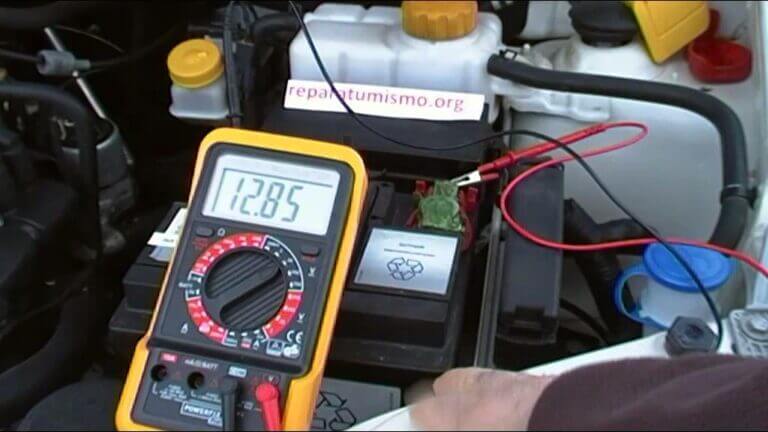
Understanding the voltage of your car battery is crucial for diagnostics, maintenance, and ensuring the reliable operation of your vehicle. While the seemingly simple answer is "12 volts," the reality is more nuanced. We'll delve into the specifics of automotive battery voltage, covering nominal voltage, state of charge, testing procedures, and what those voltage readings actually mean.
Nominal Voltage vs. Actual Voltage
The term "12-volt battery" is somewhat of a misnomer. The nominal voltage of a car battery is indeed 12 volts. Nominal voltage is a standard reference point. However, the actual voltage you measure will fluctuate depending on the battery's state of charge and whether the engine is running. Most automotive batteries are actually composed of six individual cells connected in series. Each cell produces roughly 2.1 volts. Multiply that by six and you get approximately 12.6 volts – a more accurate representation of a fully charged battery at rest.
Why 12 Volts?
The 12-volt standard has been in place for decades and stems from a balance between power delivery and safety. Lower voltages would require significantly higher currents to power vehicle components, necessitating thicker and heavier wiring. Higher voltages pose increased safety risks. 12 volts provides a practical compromise.
Understanding State of Charge (SoC) Through Voltage
The voltage reading of your car battery is a good indicator of its state of charge (SoC) – how much energy is currently stored within it. A fully charged battery will read higher than one that's partially discharged. Here's a general guideline, *measured with the engine off and after the battery has rested for at least 12 hours, or ideally overnight*:
- 12.6 volts or higher: Fully charged. This is ideal.
- 12.4 volts to 12.6 volts: 75% charged. Good, but could benefit from a charge.
- 12.2 volts to 12.4 volts: 50% charged. Consider charging soon.
- 12.0 volts to 12.2 volts: 25% charged. Needs immediate charging.
- Below 12.0 volts: Discharged. Attempt to charge, but the battery may be damaged. Sulfation (more on that later) becomes a significant concern at this level.
These values are approximate and can vary slightly depending on the battery manufacturer and type. Always consult the battery's specific documentation if available.
Testing Your Car Battery Voltage
You'll need a digital multimeter (DMM) to accurately measure your car battery's voltage. DMMs are readily available and relatively inexpensive. Here's how to perform a basic voltage test:
- Safety First: Wear safety glasses and gloves. Batteries can produce explosive gases, and battery acid is corrosive.
- Turn Off the Engine: Ensure the engine is completely off. Ideally, let the car sit for a few hours before testing to allow the surface charge to dissipate. A 12 hour rest is preferrable.
- Locate the Battery Terminals: Identify the positive (+) and negative (-) terminals. They are usually marked.
- Connect the Multimeter: Set your DMM to measure DC voltage (usually indicated by "VDC" or a similar symbol). Connect the red lead of the multimeter to the positive (+) battery terminal and the black lead to the negative (-) terminal.
- Read the Voltage: Observe the voltage reading on the DMM. This is your battery's resting voltage.
Interpreting the Results
Compare the voltage reading to the state-of-charge chart above. A healthy, fully charged battery should read 12.6 volts or higher. If the voltage is significantly lower, it suggests the battery is discharged or potentially nearing the end of its lifespan.
Voltage During Cranking
Another important test is to measure the voltage *while the engine is cranking*. This reveals the battery's ability to deliver current under load. Here's the procedure:
- Connect the Multimeter: As before, connect the DMM to the battery terminals.
- Cranking the Engine: Have someone attempt to start the car (crank the engine) while you observe the voltage reading on the multimeter. Do not crank for more than 10-15 seconds at a time to avoid overheating the starter.
- Observe the Voltage Drop: The voltage will drop during cranking. A healthy battery should maintain a voltage of at least 9.6 volts while cranking.
If the voltage drops below 9.6 volts during cranking, it indicates a weak battery that's struggling to provide sufficient current to the starter motor. This could also be a sign of a faulty starter motor drawing excessive current. It is important to use proper jumper cables if the battery is to weak to start the car. Do not use starting fluid, especially on modern vehicles.
Voltage with the Engine Running (Charging Voltage)
Once the engine is running, the alternator takes over supplying power to the vehicle's electrical system and recharges the battery. Measuring the voltage while the engine is running tests the charging system. The alternator's output voltage should be within a specific range. To perform this test:
- Start the Engine: Start the car and let it idle.
- Connect the Multimeter: Connect the DMM to the battery terminals as before.
- Observe the Voltage: The voltage should typically be between 13.7 volts and 14.7 volts.
If the voltage is significantly lower than 13.7 volts, the alternator may not be charging the battery effectively. This could be due to a faulty alternator, a worn-out voltage regulator, or a loose or corroded connection. If the voltage is significantly higher than 14.7 volts, the voltage regulator may be malfunctioning, potentially overcharging and damaging the battery. A reading in this condition could be a indication of needing to replace the voltage regulator.
Factors Affecting Battery Voltage and Lifespan
Several factors can influence your car battery's voltage and overall lifespan:
- Temperature: Extreme temperatures, both hot and cold, can negatively impact battery performance and longevity. Cold temperatures reduce the battery's ability to deliver current, while excessive heat can accelerate corrosion and sulfation.
- Sulfation: Sulfation is the formation of lead sulfate crystals on the battery plates. It occurs when a battery is left in a discharged state for an extended period. These crystals reduce the battery's ability to accept and deliver charge, leading to reduced capacity and eventual failure.
- Corrosion: Corrosion on the battery terminals and cable connections can impede current flow, leading to voltage drops and charging problems. Regularly cleaning the terminals with a wire brush and applying a corrosion-resistant grease can help prevent this.
- Excessive Drain: Leaving lights on, or having parasitic draws (electrical components that draw power even when the car is off) can drain the battery and shorten its lifespan. Modern vehicles have many computers that have parasitic drains.
- Charging System Issues: A faulty alternator or voltage regulator can undercharge or overcharge the battery, both of which can damage it.
- Age: Batteries have a limited lifespan, typically 3-5 years. As they age, their capacity decreases, and they become more susceptible to failure.
Battery Types and Voltage Variations
While most car batteries are lead-acid batteries, there are variations within this category, such as:
- Flooded Lead-Acid (FLA): These are the traditional type of car battery, containing liquid electrolyte that needs occasional topping off.
- Absorbent Glass Mat (AGM): AGM batteries are sealed and maintenance-free, offering better performance and longer lifespan than FLA batteries. They are more resistant to vibration and can be mounted in various orientations.
- Enhanced Flooded Battery (EFB): EFBs are an improved version of FLA batteries, designed for vehicles with start-stop systems. They offer better cycle life and charge acceptance than FLA batteries.
While the nominal voltage remains 12 volts for all these types, the specific voltage ranges for a fully charged state and the charging voltage may vary slightly. Always refer to the manufacturer's specifications for the specific battery you are using.
Troubleshooting Common Voltage-Related Issues
Here are some common problems and their potential causes related to car battery voltage:
- Car won't start, battery voltage is low: Discharged battery, faulty alternator, parasitic drain, corroded terminals.
- Car starts fine, but the battery light is on: Faulty alternator, loose or worn serpentine belt, voltage regulator problem.
- Battery keeps dying: Parasitic drain, faulty alternator, sulfated battery, frequent short trips (not allowing the battery to fully recharge).
- Battery is overcharging (high voltage reading): Faulty voltage regulator.
Conclusion
Monitoring your car battery's voltage is a simple yet effective way to assess its health and identify potential problems early on. By understanding the nominal voltage, state of charge, testing procedures, and factors that affect battery performance, you can proactively maintain your battery and extend its lifespan, preventing unexpected breakdowns and ensuring your vehicle's reliable operation. Remember to always prioritize safety when working with car batteries, and if you're unsure about any procedure, consult a qualified mechanic.