
Nissan Armada Air Suspension Fuse Location
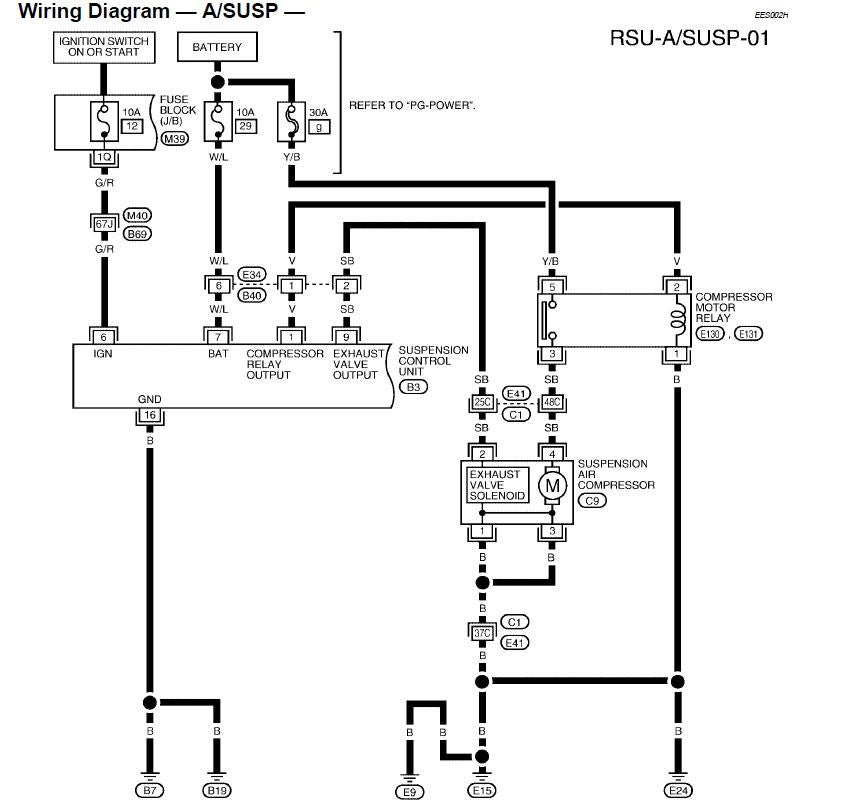
The Nissan Armada, a full-size SUV known for its ruggedness and comfort, sometimes incorporates an air suspension system to provide a smoother ride and enhanced load-leveling capabilities. A critical, yet often overlooked, component of this system is the fuse. While seemingly simple, the fuse acts as a protective barrier, preventing catastrophic failures within the air suspension by interrupting the electrical circuit when an overload occurs. Understanding the location and function of this fuse is crucial for both troubleshooting and preventative maintenance. This guide dives deep into the Nissan Armada air suspension fuse, providing a comprehensive look at its location, function, and related circuits.
Understanding the Air Suspension System
Before pinpointing the fuse location, it's essential to understand the basic components of the air suspension system itself. Typically, an air suspension system on a vehicle like the Armada consists of the following:
- Air Compressor: This electric pump is the heart of the system, responsible for generating the compressed air that fills the air springs.
- Air Springs (or Air Struts): These replace traditional coil springs, providing cushioning and allowing for ride height adjustments. They are essentially inflatable bladders made of durable rubber.
- Height Sensors: Strategically located at each wheel, these sensors monitor the vehicle's ride height and relay this information to the control module.
- Control Module (ECU): This "brain" of the system receives data from the height sensors, calculates the necessary adjustments, and commands the compressor and valves.
- Valve Block: A manifold containing solenoid-controlled valves that regulate the flow of compressed air to each air spring, allowing for individual adjustment.
- Air Lines: Tubing that carries the compressed air between the compressor, valve block, and air springs.
- Air Reservoir (Optional): Some systems include a reservoir to store compressed air, allowing for quicker adjustments and reducing the compressor's workload.
The air suspension system uses a closed-loop feedback system. The height sensors continuously monitor the ride height. If the vehicle is carrying a heavy load or encounters uneven terrain, the sensors detect the change and signal the control module. The control module then activates the compressor and opens the appropriate valves to inflate the air springs, raising the vehicle back to the desired ride height. Conversely, if the vehicle is too high, the control module releases air from the springs to lower it. This constant adjustment ensures a level and comfortable ride, regardless of the load or road conditions.
Locating the Air Suspension Fuse
The location of the air suspension fuse in a Nissan Armada can vary slightly depending on the model year and trim level. However, it is typically found in one of two fuse boxes:
- Engine Compartment Fuse Box: This is the primary fuse box, usually located near the battery under the hood. It houses fuses for various high-current systems, including the air suspension compressor.
- Interior Fuse Box: This fuse box is typically located inside the cabin, often under the dashboard on the driver's side or in the glove compartment. It may contain fuses for the air suspension control module or other related components.
Crucially, always consult your vehicle's owner's manual for the precise location of the air suspension fuse. The manual will provide a fuse box diagram that clearly identifies each fuse and its corresponding circuit. Looking for a diagram online is often a good second choice if the manual is missing. Searching for "Nissan Armada [Year] fuse box diagram" will generally yield results. Different model years may have slightly different arrangements.
Why the Owner's Manual is Key: Variations in model years and trim levels can lead to differences in fuse assignments. Relying solely on online forums or generic information can be misleading and potentially damage your vehicle. The owner's manual provides the most accurate and reliable information specific to your Armada.
Procedure for Locating the Fuse:
- Consult the Owner's Manual: Locate the fuse box diagram for your specific model year.
- Identify the Air Suspension Fuse: Look for a fuse labeled "Air Suspension," "Air Compressor," "EAS (Electronic Air Suspension)," or a similar designation. The amperage rating will also be listed (e.g., 30A, 40A).
- Locate the Fuse Box: Find the fuse box (either under the hood or inside the cabin) based on the manual's instructions.
- Visually Inspect the Fuse: Once you've located the correct fuse, visually inspect it. A blown fuse will typically have a broken filament or a blackened appearance inside the glass or plastic housing.
Understanding the Fuse's Function and Associated Circuits
The air suspension fuse primarily protects the air suspension compressor circuit. This is because the compressor draws a significant amount of current, particularly during startup. If the compressor malfunctions, becomes overloaded, or encounters a short circuit, the fuse will blow, interrupting the power supply and preventing further damage to the compressor and the electrical system.
However, the air suspension system is complex, and other fuses might be related to its operation. These could include fuses for:
- Air Suspension Control Module (ECU): This fuse protects the control module from voltage spikes or short circuits.
- Height Sensors: Although they draw relatively little current, a dedicated fuse might protect the height sensor circuit.
- Valve Block: The solenoid valves within the valve block are also electrically operated and may be protected by a fuse.
- Relays: The air suspension system often uses relays to control high-current components like the compressor. A fuse may protect the relay circuit.
Why Multiple Fuses? The use of multiple fuses in the air suspension system ensures that a fault in one component doesn't cascade and damage other parts of the system. It also allows for more precise troubleshooting.
Troubleshooting Air Suspension Issues and the Fuse's Role
If you're experiencing problems with your Nissan Armada's air suspension, such as:
- The vehicle is sagging or leaning to one side.
- The air compressor is not running.
- The "Service Air Suspension" warning light is illuminated.
Checking the air suspension fuse should be one of the first steps in your troubleshooting process. A blown fuse is a simple and relatively inexpensive fix. However, it's crucial to determine the underlying cause of the blown fuse before simply replacing it.
Replacing the Fuse Without Investigating: Repeatedly blowing the air suspension fuse is a sign of a more serious problem, such as:
- A failing air compressor: As the compressor ages, it may draw excessive current, causing the fuse to blow.
- A short circuit in the wiring: Damaged or frayed wires can create a short circuit, leading to a blown fuse.
- A faulty height sensor: A malfunctioning height sensor can send incorrect signals to the control module, causing the compressor to run excessively.
- Air leak in the system: A leak forces the compressor to work harder, potentially leading to overload.
Troubleshooting Steps After a Blown Fuse:
- Replace the Fuse with the Correct Amperage: Use a fuse with the exact same amperage rating as the original. Using a higher amperage fuse can overload the circuit and cause significant damage.
- Monitor the System: After replacing the fuse, observe the air suspension system carefully. Listen for unusual noises from the compressor, and check for any signs of sagging or uneven ride height.
- If the Fuse Blows Again: If the fuse blows again shortly after being replaced, it indicates a persistent problem that needs further investigation. Consider taking your Armada to a qualified mechanic who specializes in air suspension systems.
Preventative Maintenance and Fuse Protection
While fuses are designed to protect the air suspension system, preventative maintenance can help extend the life of the system and reduce the likelihood of fuse failures. Consider the following:
- Inspect Air Lines: Regularly inspect the air lines for leaks, cracks, or damage.
- Check Compressor Function: Pay attention to the compressor's operation. If it runs excessively or makes unusual noises, it may be a sign of a problem.
- Address Leaks Promptly: Repair any air leaks as soon as they are detected.
- Consider a Compressor Dryer Replacement: The air compressor typically has a dryer that removes moisture from the compressed air. Over time, this dryer can become saturated, reducing its effectiveness and potentially damaging the system. Replacing the dryer periodically can help prolong the life of the compressor.
Conclusion
The air suspension fuse is a small but vital component in the Nissan Armada's air suspension system. Understanding its location, function, and associated circuits is essential for troubleshooting and maintaining this sophisticated system. While replacing a blown fuse may seem like a simple fix, it's crucial to identify the underlying cause to prevent further damage and ensure the long-term reliability of your Armada's air suspension.