
Nissan Cvt Fluid Ns-3 Equivalent
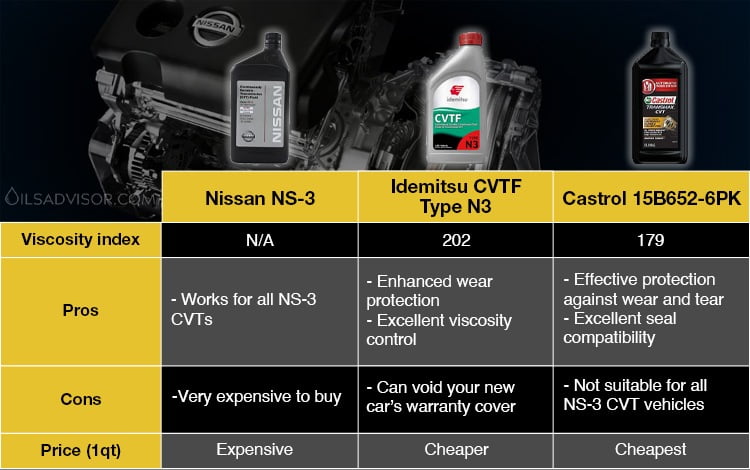
Continuously Variable Transmissions (CVTs) have become increasingly popular in modern vehicles, offering improved fuel efficiency and a smoother driving experience. Nissan, a prominent manufacturer, frequently utilizes CVTs in their vehicles. These transmissions rely on specialized fluids to function correctly, and the specified fluid for many Nissan models is Nissan CVT Fluid NS-3. However, NS-3 fluid can sometimes be expensive or difficult to source. This article explores what Nissan CVT Fluid NS-3 is, why it's important, and potential equivalent options, ensuring you can make informed decisions about your vehicle's maintenance.
Understanding Nissan CVT Fluid NS-3
Nissan CVT Fluid NS-3 is a specially formulated transmission fluid designed for specific Nissan vehicles equipped with Jatco CVT8 transmissions. This fluid is engineered to provide optimal lubrication, cooling, and friction characteristics within the transmission. It plays a crucial role in maintaining the CVT's performance and longevity. Using the correct fluid is paramount, as substituting with a non-compatible fluid can lead to serious transmission damage.
Why is NS-3 Fluid Important?
The CVT is a complex system relying on precise friction coefficients between the belt and pulleys. NS-3 fluid is specifically formulated to provide these precise characteristics. Here's why using the correct fluid, like NS-3, is essential:
- Optimized Friction Performance: NS-3 fluid contains additives that ensure the correct level of friction between the CVT belt and pulleys. This prevents slippage and ensures efficient power transfer.
- Cooling and Heat Dissipation: CVTs generate a significant amount of heat. NS-3 fluid effectively dissipates this heat, preventing overheating and potential damage to transmission components.
- Lubrication and Wear Protection: The fluid lubricates all moving parts within the CVT, reducing friction and wear. This extends the lifespan of the transmission.
- Corrosion Protection: NS-3 fluid protects the internal components of the CVT from corrosion, preventing rust and other forms of damage.
- Seal Compatibility: It's formulated to be compatible with the specific seals and materials used in Nissan CVT8 transmissions, preventing leaks and maintaining fluid pressure.
Using a fluid that is not designed for your CVT can lead to:
- Slipping or Jerking: Incorrect friction characteristics can cause the transmission to slip or jerk during acceleration.
- Overheating: Insufficient cooling can lead to overheating and premature wear of transmission components.
- Increased Wear: Inadequate lubrication can accelerate wear and tear on the belt, pulleys, and other moving parts.
- Shuddering: Issues with fluid friction can cause unpleasant shuddering sensations, especially during acceleration.
- Premature Transmission Failure: In the long run, using the wrong fluid can lead to catastrophic transmission failure, requiring expensive repairs or replacement.
Searching for a Nissan CVT Fluid NS-3 Equivalent
While using genuine Nissan CVT Fluid NS-3 is generally recommended, several aftermarket fluids claim to be compatible or equivalent. It's crucial to approach these alternatives with caution and do thorough research before making a decision. Look for fluids that explicitly state they meet or exceed Nissan's NS-3 specifications. Here's what to consider:
- Manufacturer Claims: Look for reputable brands that clearly state their fluid is formulated for Nissan CVT8 transmissions and meets or exceeds NS-3 specifications. Read the product description and technical data sheet carefully.
- Third-Party Certifications: Check for certifications from independent testing organizations or automotive industry standards bodies. These certifications can provide assurance that the fluid meets certain performance criteria. However, specific third-party certifications directly mirroring Nissan NS-3 are uncommon; focus on formulations explicitly designed for Nissan CVT8 applications.
- Customer Reviews: Read reviews from other Nissan owners who have used the fluid in their vehicles. Pay attention to any reports of slipping, jerking, or other transmission problems. However, remember that online reviews can be subjective and may not always be reliable.
- Professional Advice: Consult with a qualified mechanic or transmission specialist. They can provide expert advice based on their experience and knowledge of Nissan CVTs and fluid alternatives.
Important Considerations:
- "Universal" CVT Fluids: Be wary of "universal" CVT fluids that claim to be compatible with a wide range of transmissions. These fluids may not provide the specific friction characteristics required for Nissan CVTs.
- Mixing Fluids: It is generally not recommended to mix different types of CVT fluids, even if they are both claimed to be compatible with NS-3. Mixing fluids can alter their properties and potentially damage the transmission.
- Warranty Implications: Using a non-Nissan fluid may void your vehicle's warranty, particularly if the transmission fails as a result. Check your warranty terms and conditions carefully before using an alternative fluid.
Potential Aftermarket Alternatives
Several brands offer fluids marketed as suitable alternatives to Nissan CVT Fluid NS-3. Always verify the specifications and compatibility information provided by the manufacturer before using any alternative. Here are a few examples; this is not an exhaustive list, and product availability and formulations can change:
- Valvoline CVT Fluid: Valvoline offers a CVT fluid that they claim is suitable for use in many Nissan vehicles that require NS-3 fluid. Check the product specifications to ensure compatibility with your specific vehicle.
- Amsoil Synthetic CVT Fluid: Amsoil produces a synthetic CVT fluid that is often recommended as a high-performance alternative. Verify compatibility information with your vehicle's requirements before use.
- Castrol Transmax CVT Fluid: Castrol's Transmax CVT fluid is another option that may be compatible with Nissan vehicles requiring NS-3. Always confirm vehicle-specific compatibility.
Remember: The term "equivalent" is often used loosely. While these fluids may be *compatible*, they may not be *identical* to NS-3 in terms of their exact chemical composition and performance characteristics. It is essential to perform your due diligence before selecting an alternative.
Changing Your Nissan CVT Fluid
Changing your CVT fluid at the recommended intervals is crucial for maintaining the health and longevity of your transmission. The recommended interval varies depending on the vehicle and driving conditions, so consult your owner's manual for specific recommendations. Here's a general overview of the fluid change process:
- Gather Supplies: You will need the appropriate amount of CVT fluid (either Nissan NS-3 or a verified equivalent), a new drain plug washer, a socket wrench, a torque wrench, a funnel, and a drain pan.
- Warm Up the Engine (Slightly): Run the engine for a few minutes to warm up the transmission fluid. This will help it flow more easily.
- Locate the Drain Plug: Identify the CVT drain plug on the bottom of the transmission. Consult your vehicle's repair manual for its exact location.
- Drain the Fluid: Place the drain pan under the drain plug and carefully remove the plug. Allow the old fluid to drain completely.
- Replace the Washer and Reinstall the Plug: Install a new drain plug washer and reinstall the drain plug. Tighten it to the manufacturer's specified torque using a torque wrench.
- Locate the Fill Plug: Find the CVT fill plug. Again, consult your vehicle's repair manual.
- Add New Fluid: Use a funnel to add the correct amount of new CVT fluid through the fill plug. Check your owner's manual for the correct fluid capacity.
- Check the Fluid Level: Most Nissan CVTs have a dipstick or overflow plug to check the fluid level. Follow the manufacturer's instructions for checking the fluid level and adjust as needed.
- Test Drive and Recheck: Take the vehicle for a short test drive and recheck the fluid level.
Note: Some Nissan CVT fluid changes require a specific procedure involving monitoring the fluid temperature. Refer to your vehicle's service manual for the exact procedure applicable to your model.
When to Seek Professional Help
While some vehicle owners may be comfortable changing their CVT fluid themselves, it's essential to know when to seek professional help. Consider taking your vehicle to a qualified mechanic or transmission specialist if:
- You are not comfortable performing the fluid change yourself.
- You are unsure about the correct type of fluid to use.
- You have any concerns about the condition of your transmission.
- Your vehicle is experiencing transmission problems, such as slipping or jerking.
Conclusion
Maintaining your Nissan CVT with the correct fluid is critical for its performance and longevity. While Nissan CVT Fluid NS-3 is the recommended fluid, several alternatives claim to be compatible. Always do your research, read reviews, and consult with a professional before using an alternative fluid. Prioritize using a fluid explicitly designed for Nissan CVT8 transmissions to minimize the risk of damage. By understanding the importance of the correct fluid and following proper maintenance procedures, you can help ensure that your Nissan CVT performs reliably for years to come. Remember that the best approach is always to adhere to Nissan's recommendations whenever possible. Choosing a less expensive alternative may cost more in the long run if it damages your transmission.