
Nissan Kicks Air Conditioning Problems
The Nissan Kicks, while a fuel-efficient and stylish subcompact SUV, isn't immune to the common gremlins that plague automotive air conditioning systems. Diagnosing and addressing AC issues in your Kicks can save you significant money compared to dealership repairs, especially if you're comfortable tackling intermediate-level tasks. This article will delve into the common air conditioning problems faced by Kicks owners, providing troubleshooting steps and potential solutions.
Understanding Your Kicks AC System
Before diving into specific problems, let's quickly review the fundamental components of your Kicks' air conditioning system. This knowledge will be crucial for effective troubleshooting:
- Compressor: The heart of the system, the compressor circulates the refrigerant. Driven by the engine via a belt, it compresses the low-pressure, low-temperature refrigerant vapor into a high-pressure, high-temperature vapor. A faulty compressor is a common culprit behind AC failure.
- Condenser: Located in front of the radiator, the condenser cools the high-pressure, high-temperature refrigerant vapor, converting it into a high-pressure liquid. Proper airflow through the condenser is critical.
- Expansion Valve (or Orifice Tube): This component meters the flow of high-pressure liquid refrigerant into the evaporator. It causes a pressure drop, which allows the refrigerant to expand and cool significantly. Some Kicks models might use an orifice tube instead of an expansion valve.
- Evaporator: Located inside the dashboard, the evaporator is where the cold air is produced. The low-pressure liquid refrigerant absorbs heat from the air passing over it, cooling the air that's then blown into the cabin.
- Refrigerant: The lifeblood of the system, refrigerant (typically R-134a or newer R-1234yf depending on the model year) absorbs and releases heat as it cycles through the system. Low refrigerant is a very common cause of AC issues.
- Receiver Drier (or Accumulator): This component filters debris and absorbs moisture from the refrigerant. It's usually located in the high-pressure side of the system, near the condenser.
- Pressure Switches: These switches monitor the refrigerant pressure. If the pressure is too high or too low, the switches will prevent the compressor from engaging to protect the system from damage.
- Blower Motor: The blower motor forces air across the evaporator and into the cabin. A failing blower motor will prevent any air, cold or warm, from circulating.
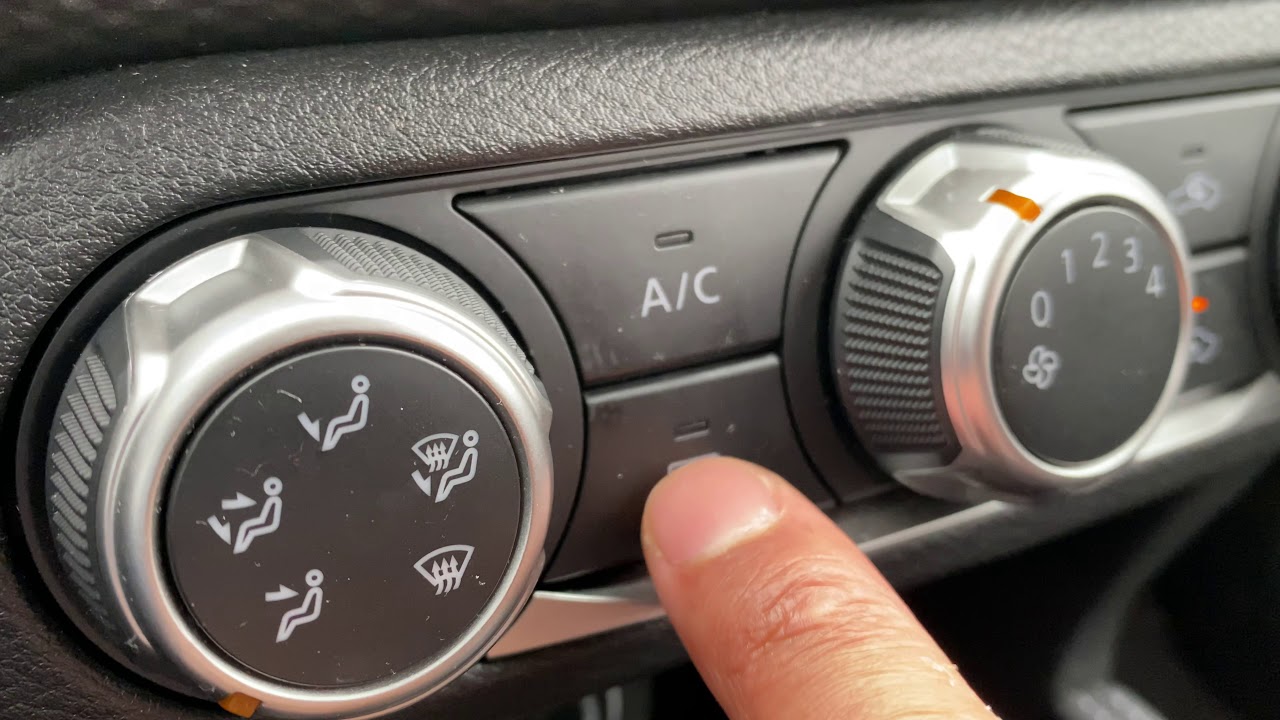
- Control Panel & Blend Doors: The control panel allows you to select the desired temperature and fan speed. Blend doors within the HVAC (Heating, Ventilation, and Air Conditioning) system direct airflow over the heater core or evaporator to control the temperature of the air entering the cabin.
Common Nissan Kicks AC Problems & Solutions
Let's explore some of the most frequent AC problems reported by Nissan Kicks owners:
1. Weak or No Cold Air
This is the most common complaint. Several factors can contribute:
- Low Refrigerant: A slow leak is the most likely cause of low refrigerant. Never simply add refrigerant without investigating for leaks. Use a refrigerant leak detector to check around all connections, the compressor, condenser, evaporator (look for oily residue), and hoses. A UV dye kit can also help pinpoint elusive leaks. Before recharging, evacuate the system with a vacuum pump to remove any air and moisture.
- Faulty Compressor: If the compressor clutch isn't engaging, the compressor won't pump refrigerant. Check the compressor clutch relay and fuse. If they are good, use a multimeter to check for voltage at the compressor clutch connector when the AC is turned on. If there's no voltage, the problem lies further upstream (pressure switches, control panel, wiring). If there is voltage, the compressor clutch itself may be faulty. A worn-out or seized compressor will require replacement.
- Clogged Condenser: Debris (leaves, bugs) can block airflow through the condenser, reducing its cooling efficiency. Clean the condenser fins carefully with a soft brush and compressed air. Avoid using high-pressure washers, as they can damage the fins.
- Faulty Expansion Valve/Orifice Tube: A clogged expansion valve or orifice tube can restrict refrigerant flow, leading to poor cooling. Symptoms include ice forming on the evaporator core. Replacement is usually the only solution.
- Blend Door Issues: If the blend door is stuck in the "heat" position, it will mix hot air with the cooled air, resulting in lukewarm air. Check the blend door actuator (a small electric motor) for proper operation. Sometimes the plastic blend doors themselves can break, requiring replacement of the entire HVAC unit.
- Moisture in the System: Moisture reacts with the refrigerant and can form acids that corrode the system components. Always evacuate the system thoroughly with a vacuum pump before recharging after opening the system. Replacing the receiver drier is crucial whenever the system is opened, as it absorbs moisture.
Warning: Refrigerant is harmful. Wear appropriate safety gear, including gloves and eye protection, when working with it. Improper handling can result in serious injury.
2. AC Only Works Intermittently
This can be a frustrating problem to diagnose. Here are some common culprits:
- Loose Electrical Connections: Vibrations can loosen connectors over time. Inspect all electrical connections related to the AC system, including the compressor clutch connector, pressure switch connectors, and the control panel connector. Clean and tighten any loose connections.
- Faulty Pressure Switches: A failing high-pressure or low-pressure switch can intermittently cut off the compressor. Use a multimeter to test the switches for continuity. If a switch is faulty, replace it.
- Compressor Clutch Issues: The compressor clutch may be intermittently slipping, causing the compressor to stop and start. This can be due to a worn clutch or an incorrect air gap between the clutch plate and the pulley. The air gap can sometimes be adjusted with shims, but a worn clutch will eventually require compressor replacement.
- Overheating Engine: The AC system is often disabled when the engine overheats to reduce the load on the engine. Check the engine coolant level and cooling system components (radiator, thermostat, water pump) if the AC cuts out when the engine temperature rises.
3. No Airflow from Vents
If you hear the blower motor running but no air is coming out of the vents, the problem likely lies with the blower motor or the vent doors:
- Faulty Blower Motor: Test the blower motor by directly connecting it to a 12V power source. If it doesn't run, the motor is bad. Check the blower motor resistor, which controls the fan speed. A faulty resistor can cause the blower motor to only work on certain speeds or not at all.
- Clogged Cabin Air Filter: A severely clogged cabin air filter can restrict airflow. Replace the filter regularly (typically every 12,000-15,000 miles).
- Damaged Ductwork: In rare cases, ductwork can become disconnected or damaged, causing air to leak into the dashboard instead of flowing out of the vents.
4. Unusual Noises
Strange noises coming from the AC system can indicate a variety of problems:
- Squealing Noise: Usually indicates a slipping compressor belt. Check the belt tension and condition. Replace the belt if it's worn or cracked.
- Rattling Noise: Can be caused by loose components, such as the compressor mounting bolts or the condenser. Also, internal compressor damage can create rattling.
- Hissing Noise: A hissing noise could indicate a refrigerant leak. Use a leak detector to pinpoint the source of the leak.
- Clicking Noise: If the clicking noise occurs when the AC is turned on and off, it could be the compressor clutch engaging and disengaging. However, excessive clicking could indicate a problem with the clutch.
Troubleshooting Tips & Tools
Here are some general tips and tools that will aid you in diagnosing AC problems in your Nissan Kicks:
- Multimeter: Essential for testing electrical components like fuses, relays, pressure switches, and the compressor clutch.
- Refrigerant Leak Detector: Necessary for locating refrigerant leaks. Electronic leak detectors are more sensitive than soap-bubble methods.
- Vacuum Pump: Used to evacuate the AC system before recharging with refrigerant.
- Manifold Gauge Set: Allows you to monitor the refrigerant pressure in the high and low sides of the system. This is crucial for diagnosing compressor and expansion valve problems.
- Refrigerant Charging Station: If you plan on recharging the system yourself, you'll need a refrigerant charging station. However, it is highly recommended to have a professional with the appropriate certification handle refrigerant charging.
- Wiring Diagrams: A wiring diagram for your specific Kicks model is invaluable for tracing electrical circuits and identifying potential faults. You can usually find these diagrams in a service manual or online.
- OBD-II Scanner: While not directly related to the AC system, an OBD-II scanner can help identify other engine-related problems that may be affecting the AC performance.
- Visual Inspection: Always start with a thorough visual inspection of all AC components, looking for leaks, damage, and loose connections.
When to Seek Professional Help
While many AC problems can be resolved with DIY repairs, some issues are best left to professionals:
- Complex Electrical Problems: Tracing electrical faults in the AC system can be challenging. If you're not comfortable working with electrical circuits, seek professional help.
- Internal Compressor Damage: Replacing a compressor requires specialized tools and knowledge.
- Evaporator Replacement: Replacing the evaporator requires removing the entire dashboard, which is a labor-intensive and complex task.
- Refrigerant Handling: Improper handling of refrigerant can be dangerous and illegal. If you're not properly trained and certified, it's best to leave refrigerant charging and recovery to a qualified technician.
By understanding the basics of your Nissan Kicks' AC system and following these troubleshooting steps, you can confidently diagnose and address many common AC problems. Remember to prioritize safety and consult a professional when necessary. Good luck!