
Nissan Leaf Dashboard Symbols And Meanings
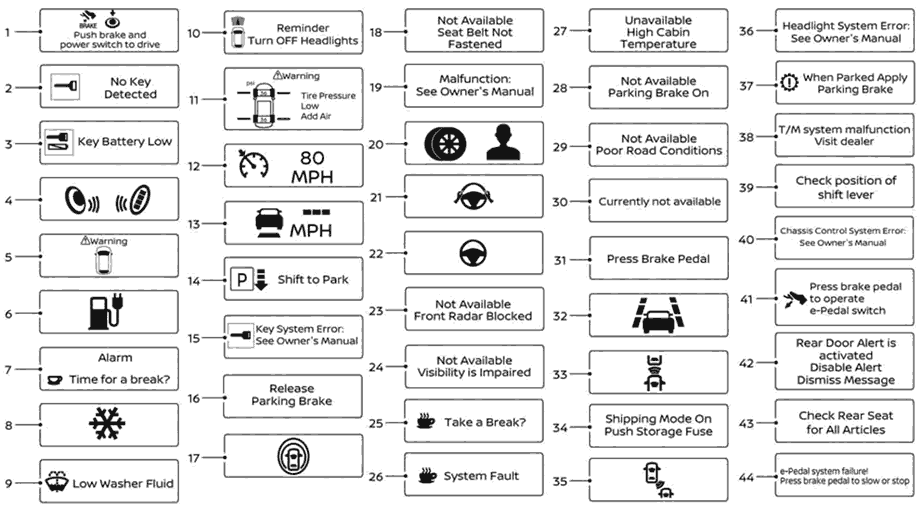
Hello there, Nissan Leaf owner! Seeing an unfamiliar symbol light up on your dashboard can be a bit unnerving, especially with an electric vehicle. Don't worry, you're not alone. This article is designed to help you understand those cryptic icons and, more importantly, what to do about them. Think of me as your friendly, neighborhood service advisor guiding you through the process.
Understanding Your Nissan Leaf Dashboard
The Nissan Leaf's dashboard uses a combination of warning lights, indicator lights, and information displays. Warning lights (typically red or amber) signal a potentially serious issue that requires immediate attention. Indicator lights (usually green or blue) simply inform you that a system is active. And the information display provides data about your car's performance, charging status, and other useful metrics.
Let's break down some of the most common and concerning symbols you might encounter.
Common Warning Lights and Solutions
Brake System Warning Light
Symbol: A circle with an exclamation point inside, often enclosed in parentheses.
Meaning: This could indicate several issues, from low brake fluid to a malfunctioning component in the braking system. Ignoring this light can be dangerous!
Possible Solutions:
- Check Brake Fluid Level: This is the easiest first step. Locate the brake fluid reservoir (usually under the hood) and ensure the fluid level is between the "MIN" and "MAX" lines. If it's low, top it off with the correct type of brake fluid (check your owner's manual).
- Emergency Brake: Make sure your parking brake is fully disengaged. Even a slight engagement can trigger the light.
- Faulty ABS System: If the brake fluid level is fine and the emergency brake is off, the problem may lie within the Anti-lock Braking System (ABS). This requires professional diagnosis and repair.
Tools Needed: Brake fluid (if topping off).
Approximate Repair Cost: Checking and topping off fluid is inexpensive (under $20 for the fluid). ABS system repairs can range from $200 to $1000+, depending on the faulty component.
Electric Power Steering (EPS) Warning Light
Symbol: A steering wheel with an exclamation point next to it.
Meaning: Indicates a problem with the power steering system. You might notice the steering wheel becoming harder to turn.
Possible Solutions:
- Restart the Car: Sometimes, a simple restart can resolve a temporary glitch in the EPS system.
- Check EPS Fluid (if applicable): Some older Leaf models may have a hydraulic power steering system with fluid. Check the reservoir level. However, newer models typically use electric power steering without fluid.
- Professional Diagnosis: If the light persists, a diagnostic scan is necessary to pinpoint the issue. It could be a sensor, motor, or control module problem.
Tools Needed: None (initially).
Approximate Repair Cost: Could range from a simple sensor replacement ($100-$300) to a more complex EPS motor replacement ($500-$1500+).
Master Warning Light
Symbol: A triangle with an exclamation point inside.
Meaning: This is a general warning light that can indicate a variety of issues. It's often accompanied by another warning light or a message on the information display.
Possible Solutions:
- Check the Information Display: The information display should provide more details about the specific problem. This is crucial for understanding what's triggering the light.
- Consult Your Owner's Manual: The owner's manual will list all possible reasons for the master warning light.
- Professional Diagnosis: If you can't determine the cause, it's best to have a mechanic scan the car's computer for error codes.
Tools Needed: None (initially).
Approximate Repair Cost: Varies widely depending on the underlying issue. A diagnostic scan typically costs between $80-$150.
Malfunction Indicator Lamp (MIL) - "Check Engine" Light
Symbol: An engine-shaped icon.
Meaning: Indicates a problem with the engine management system, which controls various aspects of the powertrain. Even in an EV, this light can illuminate due to issues with the battery management system, motor control, or other related components.
Possible Solutions:
- Check the Gas Cap (If Applicable): Although the Leaf is electric, if there are any sensors related to fuel vapor (from previous gasoline car components), a loose gas cap could trigger this light. This is rare, but worth a quick check.
- Loose Connection: Inspect the charging port and associated connections for any visible damage or looseness.
- Professional Diagnosis: The best course of action is to have a mechanic scan the car's computer for diagnostic trouble codes (DTCs). These codes will provide valuable clues about the source of the problem.
Tools Needed: OBD-II scanner (optional, for reading codes yourself).
Approximate Repair Cost: Varies greatly depending on the cause. A simple sensor replacement might cost $100-$300, while a more complex issue could run into the thousands.
Tire Pressure Monitoring System (TPMS) Warning Light
Symbol: A horseshoe-shaped icon with an exclamation point inside.
Meaning: Indicates that one or more of your tires has significantly low pressure.
Possible Solutions:
- Check Tire Pressure: Use a tire pressure gauge to check the pressure in all four tires and inflate them to the recommended level (found on the sticker inside the driver's side doorjamb).
- TPMS Sensor Issue: If the light remains on after inflating the tires, one or more of the TPMS sensors may be faulty or have a dead battery. These sensors typically last 5-7 years.
Tools Needed: Tire pressure gauge, air compressor.
Approximate Repair Cost: Inflating tires is free. Replacing a TPMS sensor typically costs between $50-$150 per sensor (including labor).
Charging Related Warning Lights
These warning lights are specific to electric vehicles and relate to the charging system.
Charging System Warning Light
Symbol: A battery icon with an exclamation point inside (or similar depiction).
Meaning: Indicates a problem with the charging system. This could be related to the charging port, the onboard charger, or the battery itself.
Possible Solutions:
- Try a Different Charging Station: Rule out a problem with the charging station by trying a different one.
- Inspect the Charging Port: Look for any visible damage or debris in the charging port.
- Check the Charging Cable: Ensure the charging cable is properly connected and not damaged.
- Professional Diagnosis: If the problem persists, have a mechanic inspect the charging system.
Tools Needed: None (initially).
Approximate Repair Cost: Can range from a simple charging port cleaning (under $50) to a costly onboard charger replacement ($1000+).
High Voltage Battery Warning Light
Symbol: A stylized depiction of a battery with a lightning bolt.
Meaning: Indicates a problem with the high-voltage battery pack. This is a serious warning!
Possible Solutions:
- Stop Driving Immediately: If possible, pull over to a safe location and turn off the car.
- Contact a Qualified EV Technician: This issue requires specialized knowledge and equipment. Do not attempt to diagnose or repair the high-voltage battery yourself!
Tools Needed: None.
Approximate Repair Cost: Varies greatly depending on the issue. Battery repairs or replacements can be very expensive, potentially costing several thousand dollars.
Other Important Considerations
- Owner's Manual is Your Friend: Always refer to your owner's manual for detailed information about all warning lights and indicators.
- Regular Maintenance: Following the recommended maintenance schedule can help prevent many warning lights from appearing in the first place.
- Don't Ignore Warning Lights: Addressing warning lights promptly can prevent minor issues from escalating into major (and more expensive) repairs.
- Trusted Mechanic: Find a qualified mechanic who is experienced in working with electric vehicles. EVs require specialized knowledge and equipment.
Disclaimer: This article provides general information and should not be considered a substitute for professional automotive advice. Always consult with a qualified mechanic for diagnosis and repair of your vehicle. Prices mentioned are estimates and can vary depending on location and the specific repair needed.
I hope this helps you understand those pesky dashboard symbols on your Nissan Leaf! Safe driving!