
Nissan Murano Ac Compressor Not Turning On
Okay, so your Nissan Murano's AC compressor isn't kicking on? That's a common complaint, especially as these vehicles age. Don't sweat it; we'll walk through some troubleshooting steps to help you diagnose the problem and hopefully get that cool air flowing again. Think of me as your friendly neighborhood service advisor, here to guide you through the process.
Understanding the Problem: Why Isn't My AC Compressor Engaging?
First, let's understand why the AC compressor is so important. The compressor is the heart of your AC system. It pressurizes the refrigerant, which is then circulated through the system to cool the air entering your cabin. If the compressor isn't running, you're basically just blowing unconditioned air.
Several things can prevent the compressor from engaging. It's not always a faulty compressor itself. Often, the issue lies elsewhere in the system. We need to rule out the simple things before jumping to the conclusion that you need a costly compressor replacement.
Troubleshooting Steps: A Systematic Approach
Here's a step-by-step approach to diagnose why your Murano's AC compressor isn't working. I recommend tackling these in order, as they progress from the easiest and cheapest checks to the more involved ones.
Step 1: Check the Obvious – Fuses and Relays
This is always the first place to start. Fuses and relays are designed to protect components, and a blown fuse is a far simpler fix than replacing a compressor.
What you'll need:
- Your Nissan Murano's owner's manual (to locate the fuse box and identify the AC fuse and relay)
- A test light or multimeter
- A fuse puller (optional, but helpful)
Procedure:
- Locate the Fuse Box(es): Your Murano likely has fuse boxes both under the hood and inside the cabin (usually near the driver's side). Consult your owner's manual to find their exact locations.
- Identify the AC Fuse and Relay: The owner's manual will have a diagram showing which fuse and relay are for the AC system (often labeled "AC Compressor," "A/C," or something similar).
- Check the Fuse: Visually inspect the fuse. If the wire inside is broken, the fuse is blown. You can also use a test light or multimeter to check for continuity (power flowing through the fuse).
- Check the Relay: Relays are a little trickier. You can try swapping the AC relay with an identical relay from another system (like the horn or headlights – check your manual for compatibility). If the AC now works (even briefly), the relay is the problem. You can also test the relay with a multimeter, but that requires a bit more electrical knowledge.
Important Note: If a fuse blows immediately after you replace it, there's a short circuit somewhere in the system. You'll need to investigate further or consult a professional.
Step 2: Check the Refrigerant Level
Your AC system has a low-pressure cutoff switch. If the refrigerant level is too low, the switch prevents the compressor from engaging to protect it from damage.
What you'll need:
- AC manifold gauge set (ideally, but a simple refrigerant recharge kit with a gauge can suffice for a basic check)
- Safety glasses and gloves
Procedure:
- Locate the Low-Pressure Port: This is typically on the accumulator or drier, a cylindrical component in the engine compartment. Look for a port with a cap labeled "L" or "Low."
- Connect the Gauge: Connect the low-pressure gauge hose to the low-pressure port.
- Read the Pressure: With the engine off, the gauge should read within a certain range (depending on ambient temperature). A very low reading indicates a leak. Consult a pressure/temperature chart for R-134a refrigerant to interpret the reading accurately.
Caution: Refrigerant can cause frostbite. Wear safety glasses and gloves when working with it. If you're not comfortable working with refrigerants, take your Murano to a qualified AC technician.
If the pressure is low: You'll need to find and repair the leak before recharging the system. A leak can be anywhere – hoses, connections, the condenser, the evaporator, or even the compressor itself. Adding refrigerant without fixing the leak is a temporary solution at best, and can lead to further damage.
Step 3: Check the AC Compressor Clutch
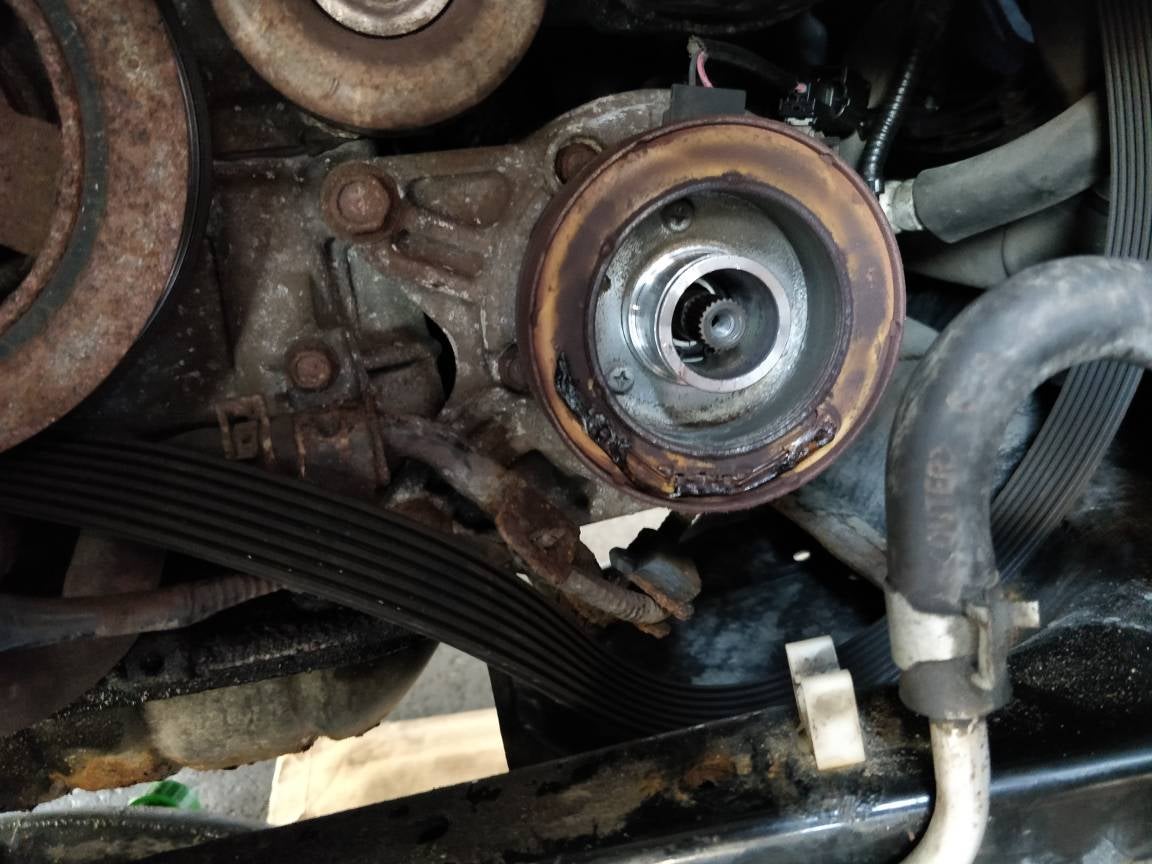
The AC compressor clutch is an electromagnetic device that engages and disengages the compressor pulley from the compressor shaft. When the clutch engages, the compressor starts pumping refrigerant. If the clutch isn't engaging, the compressor won't run.
What you'll need:
- Multimeter
- Jumper wire
- Safety glasses
Procedure:
- Locate the Compressor Clutch: It's on the front of the AC compressor pulley. You'll see a round plate (the clutch face) that should spin when the AC is turned on.
- Visual Inspection: Check the clutch for any obvious damage, like broken wires or excessive rust.
- Check for Voltage: With the engine running and the AC turned on (maximum cold, blower on high), use a multimeter to check for voltage at the clutch connector. You should see around 12 volts. If there's no voltage, the problem lies upstream (wiring, pressure switch, etc.).
- Bypass the Clutch: Use extreme caution! Carefully use a jumper wire to connect the positive terminal of the battery directly to the positive terminal of the clutch connector (disconnect the original connector first). Do this briefly. If the clutch engages (you'll hear a click and the clutch face will spin), the clutch itself is likely okay, but the problem is in the wiring or control circuit. If the clutch doesn't engage, the clutch itself is likely faulty.
Important Safety Warning: When bypassing the clutch, be extremely careful not to touch any moving parts. Only apply power to the clutch briefly. If you're not comfortable with this test, it's best left to a professional.
Step 4: Check the AC Pressure Switch(es)
Most modern vehicles have high-pressure and/or low-pressure switches to protect the AC system. These switches will prevent the compressor from engaging if the pressure is too high or too low.
What you'll need:
- Multimeter
- Wiring diagram (optional, but helpful)
Procedure:
- Locate the Pressure Switch(es): These are typically located on the refrigerant lines, often near the condenser or accumulator.
- Identify the Wiring: Use a wiring diagram (if available) to identify the input and output wires of the switch.
- Check for Continuity: With the AC system off, use a multimeter to check for continuity across the switch terminals. The switch should be closed (have continuity) if the refrigerant pressure is within the normal range. If the switch is open (no continuity), it could be faulty, or the refrigerant pressure is outside the acceptable range.
- Jump the Switch: With extreme caution, you can briefly jump the switch terminals with a jumper wire. If the compressor engages, the switch is likely faulty. However, be aware that jumping the switch bypasses the safety function, so only do this for a very brief test.
Step 5: Consider the Electronic Control System
Modern vehicles use the engine control module (ECM) to control the AC system. If there's a problem with the ECM or its inputs (like temperature sensors), it could prevent the compressor from engaging.
What you'll need:
- OBD-II scanner that can read AC system codes
Procedure:
- Scan for Codes: Use an OBD-II scanner to check for any diagnostic trouble codes (DTCs) related to the AC system. Common codes include low refrigerant pressure, high refrigerant pressure, faulty pressure switches, and problems with the ECM.
- Research the Codes: Once you have the codes, research what they mean and what components they relate to. This can help you narrow down the problem.
Important Note: Diagnosing issues with the electronic control system often requires specialized equipment and knowledge. If you're not comfortable with this, it's best to consult a professional.
Potential Repair Costs: A Rough Estimate
Here's a very rough estimate of potential repair costs. Keep in mind that these are just estimates, and the actual cost can vary depending on your location, the specific shop, and the extent of the damage.
- Fuse or Relay Replacement: $5 - $20 (DIY or very inexpensive at a shop)
- Refrigerant Recharge: $50 - $150 (depending on the amount of refrigerant needed and whether a leak test is performed)
- AC Compressor Clutch Replacement: $200 - $500 (includes labor)
- AC Compressor Replacement: $500 - $1200 (includes labor, refrigerant, and potentially other components like the drier)
- Pressure Switch Replacement: $80 - $200 (includes labor)
- Leak Repair: $100 - $500+ (depending on the location and severity of the leak)
- ECM Diagnosis and Repair: $100 - $500+ (can be very expensive if the ECM needs to be replaced)
When to Seek Professional Help
While many of these troubleshooting steps can be done yourself, there are times when it's best to consult a professional:
- You're not comfortable working with electrical or refrigerant systems.
- You've tried the basic troubleshooting steps and haven't found the problem.
- You suspect a leak in the system.
- You have diagnostic trouble codes that you can't interpret or fix.
- You suspect a problem with the ECM.
Finding a reputable AC repair shop is crucial. Look for shops with experienced technicians, good reviews, and a warranty on their work.
By following these troubleshooting steps, you should be able to diagnose why your Nissan Murano's AC compressor isn't turning on. Remember to be careful, take your time, and don't hesitate to seek professional help if you need it. Good luck, and I hope you get that cool air blowing soon!