
Nissan Titan Pro 4x Wheels
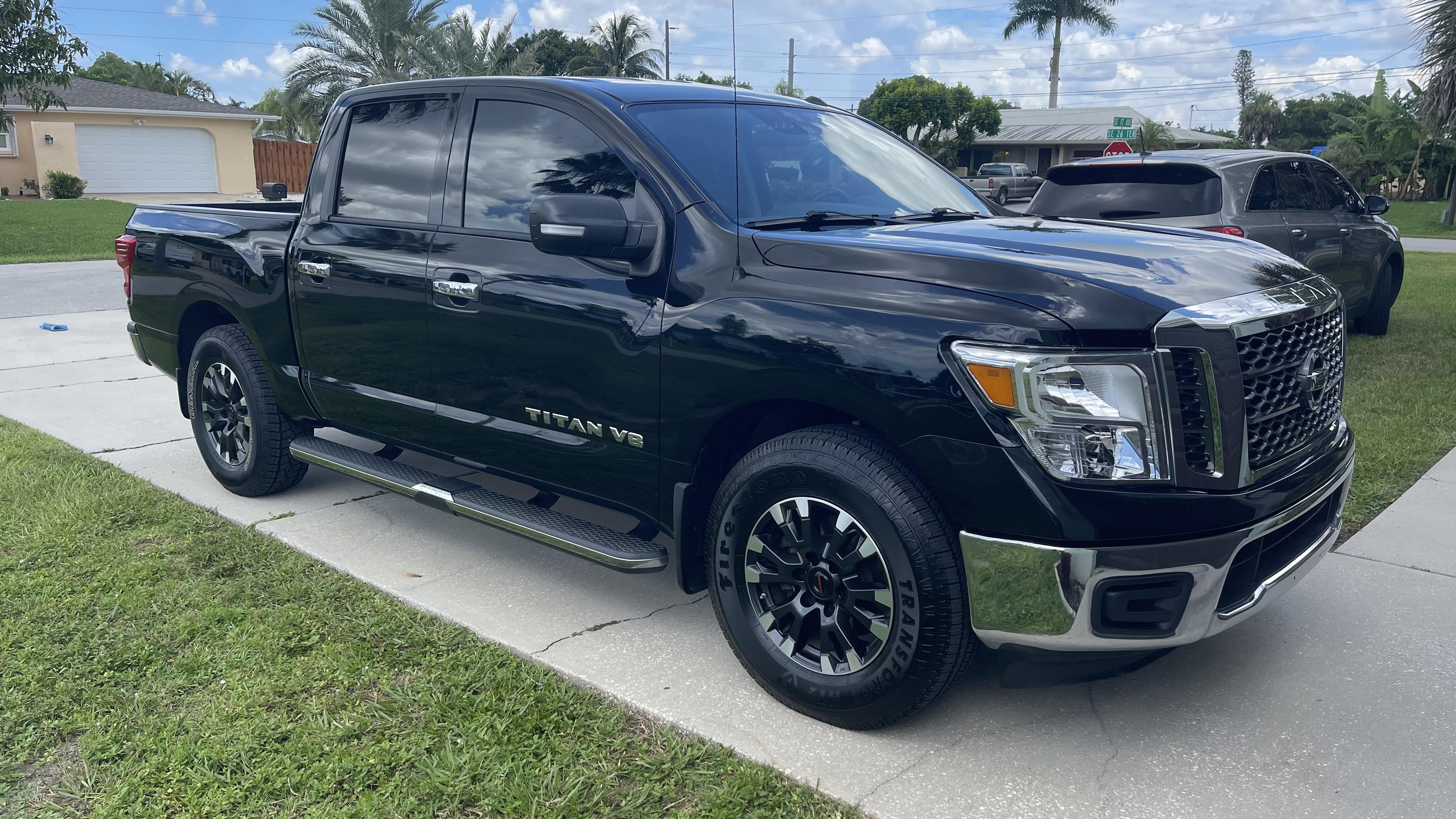
Let's dive into the wheels on the Nissan Titan Pro-4X. These aren't your standard, run-of-the-mill factory wheels; they're specifically designed to enhance the truck's off-road capabilities and give it a distinctive, rugged look. We'll cover the technical specifications, construction, and some potential upgrade options.
Wheel Size and Offset
The Pro-4X Titan typically comes equipped with 18-inch wheels. While the exact style may vary slightly depending on the model year, the critical dimensions remain relatively consistent. Understanding these dimensions is crucial if you're considering replacing or upgrading your wheels.
The wheel size is often denoted as 18 x 8.0J. Let's break that down:
- 18: This refers to the wheel's diameter in inches. In this case, it's an 18-inch wheel.
- 8.0: This indicates the wheel's width in inches. So, the wheel is 8 inches wide.
- J: This refers to the flange profile, which is the shape of the wheel where the tire sits. The "J" is a common profile.
Now, let's talk about offset. This is where things can get a little tricky. The offset is the distance (in millimeters) from the wheel's mounting surface to its centerline. A positive offset means the mounting surface is closer to the outside of the wheel, while a negative offset means it's closer to the inside. A zero offset means the mounting surface is exactly at the centerline.
The Titan Pro-4X typically has a positive offset. The specific offset can vary, but it's often around +25 to +30mm. Why is offset important? Because it affects how the wheel sits in the wheel well and how the tires track. Changing the offset too much can lead to rubbing issues, altered suspension geometry, and even changes in handling.
Important Note: Always consult your vehicle's owner's manual or a trusted tire and wheel professional before making any changes to wheel size or offset. Incorrect fitment can be dangerous.
Wheel Material and Construction
The factory Pro-4X wheels are typically made from aluminum alloy. Aluminum offers a good balance of strength and weight. They are usually cast aluminum wheels.
Casting vs. Forging
It's worth understanding the difference between casting and forging. Casting involves pouring molten aluminum into a mold and letting it cool. This is a relatively inexpensive process, but it can result in wheels that are slightly weaker and more prone to cracking under extreme stress. Most OEM wheels, including those on the Pro-4X, are cast.
Forging, on the other hand, involves pressing solid aluminum billets under immense pressure to shape the wheel. This process aligns the grain structure of the metal, making it significantly stronger and more resistant to damage. Forged wheels are typically lighter and more expensive than cast wheels.
While the Pro-4X wheels are cast, they are still designed to withstand the rigors of off-road use. They're typically powder-coated for added durability and corrosion resistance.
Bolt Pattern and Center Bore
The bolt pattern is another crucial specification. It refers to the number and spacing of the lug nuts that secure the wheel to the hub. The Titan Pro-4X uses a 6x139.7mm bolt pattern. This means there are 6 lug nuts, and they are spaced 139.7 millimeters apart on a circle. It's absolutely critical that any replacement wheels have the correct bolt pattern; otherwise, they won't fit properly and could be extremely dangerous.
The center bore is the diameter of the hole in the center of the wheel that fits over the hub. This is also a critical measurement. The Titan Pro-4X usually has a center bore around 77.8mm. If the center bore of a replacement wheel is smaller than this, it won't fit. If it's larger, you may need to use hub-centric rings to ensure proper centering and prevent vibration.
Hub-centric rings are small, inexpensive rings made of plastic or aluminum that fill the gap between the hub and the wheel's center bore. They help to distribute the weight of the vehicle evenly and prevent the lug nuts from bearing all the load.
Tire Size and Compatibility
The Pro-4X package often includes upgraded off-road tires. While the wheels themselves are 18 inches, the overall tire diameter is larger than what you'd find on a standard Titan. This increased diameter provides more ground clearance and improves the truck's ability to navigate rough terrain.
A common tire size on the Pro-4X is 275/70R18. Let's break that down too:
- 275: This is the tire's width in millimeters.
- 70: This is the aspect ratio, which is the height of the tire's sidewall as a percentage of its width. In this case, the sidewall is 70% of 275mm.
- R: This indicates that the tire is a radial tire.
- 18: This is the wheel diameter in inches (same as the wheel size).
When considering tire upgrades, it's essential to ensure that the new tires are compatible with the wheels and that they won't cause any rubbing issues. A larger tire may require some minor modifications, such as trimming the fender liners or installing a leveling kit.
Potential Upgrades and Considerations
If you're looking to upgrade your Pro-4X wheels, here are a few things to consider:
- Style: There are countless wheel styles available, from classic designs to more modern and aggressive looks. Choose a style that complements the truck's overall aesthetic.
- Material: As mentioned earlier, forged wheels offer superior strength and weight savings compared to cast wheels. If you're serious about off-roading, forged wheels may be a worthwhile investment.
- Size: While sticking with the factory 18-inch size is often the easiest option, you could also consider going up or down in size. Smaller wheels (e.g., 17-inch) can allow for a larger tire sidewall, which can improve ride quality and off-road performance. Larger wheels (e.g., 20-inch) can improve on-road handling and appearance, but they may sacrifice some off-road capability.
- Weight: Lighter wheels can improve acceleration, braking, and fuel economy. Pay attention to the weight of the wheels you're considering.
- Load Rating: Make sure that any replacement wheels have a load rating that meets or exceeds the Titan's requirements. This is especially important if you frequently tow or haul heavy loads.
When selecting new wheels, be sure to factor in the cost of new tires as well. If you're changing the wheel size, you'll likely need to purchase new tires to match.
Furthermore, consider the backspacing of the wheel. Backspacing is the distance from the wheel's mounting surface to the innermost edge of the wheel. Adjusting backspacing can affect tire clearance and potentially change the scrub radius (the distance between the steering axis and the tire's contact patch). Significant changes to scrub radius can alter the steering feel and handling characteristics of the truck.
Before making any modifications, it's always a good idea to consult with a trusted mechanic or off-road specialist. They can provide valuable advice and ensure that you're making informed decisions.
Finally, remember to properly torque your lug nuts after installing new wheels. Use a torque wrench and follow the manufacturer's specifications. Re-torque the lug nuts after driving a short distance (e.g., 50-100 miles) to ensure they remain properly tightened.