
Recommended Tire Pressure For Nissan Rogue
Understanding and maintaining the correct tire pressure in your Nissan Rogue is absolutely crucial for safety, fuel efficiency, and overall vehicle performance. While it might seem like a minor detail, the pressure inside your tires significantly impacts handling, braking, and even tire wear. This article will delve into the recommended tire pressures for various Nissan Rogue models and explain the technical reasons behind these recommendations.
Where to Find the Recommended Tire Pressure
Before grabbing your tire pressure gauge, you need to know the manufacturer's recommended pressure. Don't just assume all tires should be inflated to the same PSI (pounds per square inch). The correct inflation pressure is specific to your vehicle model, tire size, and load conditions.
Here are the primary places to find this information:
- Driver's Side Door Jamb: This is the most common and reliable location. You'll find a sticker, often referred to as the Tire and Loading Information placard, affixed to the doorjamb. It lists the recommended cold tire pressure for both the front and rear tires under normal driving conditions.
- Owner's Manual: The owner's manual contains comprehensive information about your vehicle, including the recommended tire pressure. It may also include different pressure recommendations for specific driving conditions, such as towing or carrying heavy loads.
- Sometimes on the Glove Box Door: Although less common than the door jamb, some Nissan Rogue models might have the tire pressure information on a sticker inside the glove box door.
Pay close attention to the pressure units. They are typically displayed in PSI, but some sources might also list them in kPa (kilopascals). 1 PSI is equal to approximately 6.895 kPa. Make sure you're comparing apples to apples.
Understanding "Cold" Tire Pressure
The recommended tire pressure is always specified as cold tire pressure. This means the pressure should be checked and adjusted before you've driven the vehicle or after it has been parked for at least three hours. Driving generates heat, which increases the air pressure inside the tires. Checking the pressure after driving will give you an inaccurate reading, and adjusting based on that reading will result in underinflation when the tires cool down.
Recommended Tire Pressure Ranges for Nissan Rogue Models
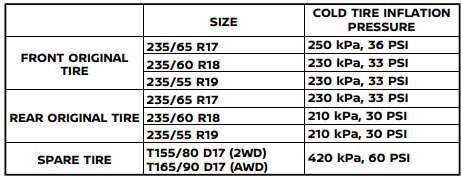
While you should always refer to the sticker on your specific vehicle, here's a general guideline for recommended tire pressures for various Nissan Rogue model years. Remember that these are starting points, and variations may exist based on tire size and trim level.
- 2008-2013 Nissan Rogue: Generally, the recommended tire pressure is around 33 PSI for both front and rear tires.
- 2014-2020 Nissan Rogue: The recommended tire pressure typically remains around 33 PSI for both front and rear tires. Some models may specify 35 PSI for the front tires.
- 2021-Present Nissan Rogue: The recommended tire pressure can vary slightly, but it's usually around 33-35 PSI for both front and rear tires. Always check the specific placard.
It is very important to emphasize: These are just guidelines. Always refer to the sticker on your vehicle for the definitive answer.
The Impact of Incorrect Tire Pressure
Running your tires with incorrect pressure, whether overinflated or underinflated, can have a significant impact on various aspects of your Nissan Rogue's performance and safety.
Underinflation
Underinflation is arguably the more dangerous of the two. When a tire is underinflated, the following problems can arise:
- Reduced Fuel Efficiency: Underinflated tires have a larger contact patch with the road, increasing rolling resistance. This forces the engine to work harder, resulting in lower gas mileage.
- Premature Tire Wear: Underinflation causes the outer edges of the tire to wear down more quickly than the center. This is because the weight of the vehicle is concentrated on the edges.
- Poor Handling: Underinflated tires make the vehicle feel sluggish and less responsive. Cornering and braking performance are also compromised.
- Increased Risk of Tire Failure: Underinflation generates excessive heat within the tire. This heat can weaken the tire's structure, increasing the risk of a blowout, especially at high speeds. This is due to the tire flexing too much.
Overinflation
Overinflation can also be detrimental, although the risks are generally less severe than underinflation.
- Reduced Ride Comfort: Overinflated tires make the ride harsher and bumpier. The tires are less able to absorb road imperfections, transmitting more vibration to the vehicle's occupants.
- Premature Tire Wear: Overinflation causes the center of the tire to wear down more quickly than the edges. The contact patch is reduced, concentrating the weight in the center.
- Reduced Traction: Overinflated tires have a smaller contact patch with the road, which can reduce traction, particularly in wet or slippery conditions. This can increase the risk of skidding or hydroplaning.
Checking and Adjusting Tire Pressure
Checking and adjusting your tire pressure is a simple process that you can easily do at home or at a gas station.
- Gather Your Tools: You'll need a reliable tire pressure gauge and an air compressor (if you need to add air).
- Check Tire Pressure: Remove the valve cap from the tire valve stem. Press the tire pressure gauge firmly onto the valve stem until you get a reading. Note the PSI.
- Adjust Tire Pressure (if needed):
- If the pressure is too low: Attach the air compressor hose to the valve stem and inflate the tire to the recommended pressure. Check the pressure again with the gauge to ensure you've reached the correct level.
- If the pressure is too high: Press the center pin of the valve stem to release air until you reach the recommended pressure. Check the pressure again with the gauge.
- Replace Valve Cap: Once you've adjusted the pressure, replace the valve cap to prevent dirt and moisture from entering the valve stem.
- Repeat for All Tires: Repeat this process for all four tires (and the spare tire, if applicable).
Tools of the Trade: Selecting a Good Tire Pressure Gauge
A good tire pressure gauge is an essential tool for any car owner. There are two main types:
- Digital Tire Pressure Gauges: These gauges provide a digital readout of the tire pressure, making them easy to read. They are generally more accurate than stick-type gauges.
- Stick-Type Tire Pressure Gauges: These gauges have a graduated stick that pops out when you press the gauge onto the valve stem. They are less expensive than digital gauges but can be more difficult to read accurately.
When selecting a tire pressure gauge, look for one that is accurate, easy to read, and durable. Consider one with a bleed valve which makes it easy to release small amounts of air.
Special Considerations: Tire Size and Load
The recommended tire pressure is based on the standard tire size that came with your Nissan Rogue. If you've changed your tire size, you may need to adjust the tire pressure accordingly. Consult a tire specialist for guidance on determining the appropriate pressure for your specific tire size and load conditions.
Also, if you frequently carry heavy loads in your Rogue, you may need to increase the tire pressure slightly to compensate for the extra weight. Again, refer to your owner's manual for recommendations or consult a tire specialist.
Tire pressure monitoring systems (TPMS) are standard on most modern vehicles, including the Nissan Rogue. However, TPMS only alerts you when the pressure drops significantly below the recommended level. It's still essential to manually check your tire pressure regularly to ensure optimal performance and safety. TPMS is a warning system, not a replacement for regular maintenance.
Conclusion
Maintaining the correct tire pressure in your Nissan Rogue is a simple but vital task that can significantly impact your vehicle's performance, safety, and fuel efficiency. By understanding the recommended tire pressure for your specific model, checking and adjusting the pressure regularly, and considering factors such as tire size and load, you can ensure that your tires are properly inflated and that your Nissan Rogue is performing at its best.