
What Cars Use 5x115 Bolt Pattern
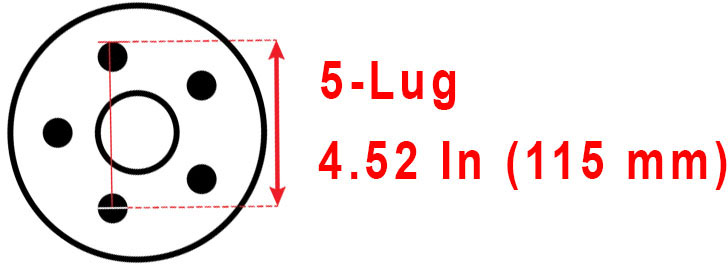
Alright, let's dive into the world of 5x115 bolt patterns on cars. This is essential knowledge for anyone involved in wheel upgrades, repairs, or even just understanding the underlying mechanics of their vehicle. Knowing the bolt pattern ensures proper wheel fitment, preventing dangerous situations and maximizing performance.
Why Understanding Bolt Patterns Matters
Think of bolt patterns as the key to unlocking proper wheel installation. Mismatched bolt patterns are a recipe for disaster. They can lead to:
- Vibration and instability: Wheels that aren't properly centered will cause uncomfortable vibrations, especially at higher speeds.
- Damaged wheel studs: Forcing a wheel onto the wrong bolt pattern can strip or break the wheel studs, the threaded fasteners that hold the wheel in place.
- Wheel detachment: The worst-case scenario – a wheel coming completely off while driving, resulting in loss of control and potential accidents.
Understanding bolt patterns is crucial for safe and effective wheel replacement, whether you're upgrading for aesthetics, performance, or simply replacing a damaged wheel. It also becomes important when swapping wheels between vehicles, especially if you're dealing with different makes and models. Knowledge of the 5x115 pattern specifically will allow you to quickly narrow down what wheels are compatible with your vehicle when doing research.
Key Specs and Main Parts: Deciphering the 5x115 Code
The term "5x115" is shorthand that tells us two crucial things about the wheel mounting configuration:
- 5: This indicates the number of lugs or studs on the hub. These are the threaded bolts that protrude from the wheel hub and through the wheel itself.
- 115: This represents the bolt circle diameter (BCD), measured in millimeters (mm). The BCD is the diameter of an imaginary circle that passes through the center of each of the five lug holes.
In simpler terms, imagine drawing a circle that perfectly connects the center of each lug hole on your wheel or hub. The diameter of that circle is 115mm for a 5x115 bolt pattern. You'll often see the BCD referenced alongside the lug count. Getting this measurement right is paramount for safe wheel installation.
Key Components Involved:
- Wheel Hub: This is the rotating assembly connected to the axle that provides the mounting surface for the wheel. It contains the wheel studs.
- Wheel Studs: These threaded bolts are pressed into the wheel hub and extend outward, allowing the wheel to be mounted and secured.
- Wheel: The circular component that houses the tire and is bolted to the wheel hub.
- Lug Nuts: These are the nuts that are tightened onto the wheel studs, clamping the wheel securely against the wheel hub.
How It Works: The Mechanics of Wheel Mounting
The 5x115 bolt pattern ensures that the wheel is centered correctly on the wheel hub. When the lug nuts are tightened, they exert a clamping force, compressing the wheel against the hub's mounting surface. This friction creates a strong and secure connection that transmits driving forces from the hub to the wheel and vice versa.
The precise alignment dictated by the bolt pattern is critical for even load distribution. If the wheel isn't properly centered, the lug nuts will be subjected to uneven stress, increasing the risk of failure.
Real-World Use: Troubleshooting and Compatibility
Let's say you're looking to upgrade the wheels on your 2010 Chrysler 300. How do you confirm it uses a 5x115 bolt pattern? Here's a basic troubleshooting approach:
- Consult your owner's manual: This is the best starting point. The manual should list the factory-specified wheel and tire specifications, including the bolt pattern.
- Check online resources: Several websites dedicated to wheel and tire information allow you to search by vehicle make, model, and year to determine the correct bolt pattern.
- Measure the bolt pattern: If you're unsure, you can manually measure the bolt pattern. The easiest way is to use a bolt pattern gauge, a tool specifically designed for this purpose. Alternatively, you can measure the distance between the studs and calculate the BCD using online calculators. Note: measuring a 5-lug pattern accurately can be tricky without specialized tools.
- Verify Before Installation: Even if you have the correct specifications, always test fit the wheel before fully tightening the lug nuts. This allows you to confirm that the wheel sits flush against the hub and that the lug nuts engage properly.
Troubleshooting Common Issues:
- Vibrations after wheel installation: This is a sign that the wheel may not be properly centered. Double-check the bolt pattern and ensure that the lug nuts are tightened to the correct torque specification. Also, inspect the wheel for damage or defects. Sometimes hub-centric rings are needed to help center the wheel properly. These are inexpensive and helpful when aftermarket wheels are used.
- Stripped lug nuts: Overtightening lug nuts can damage the threads. Always use a torque wrench to tighten the lug nuts to the manufacturer's recommended torque specification.
- Difficulty removing lug nuts: This could indicate corroded or damaged threads. Use penetrating oil to help loosen the lug nuts. If they are severely corroded, you may need to replace them.
Safety: Risks and Precautions
Working with wheels and tires involves inherent risks. Always prioritize safety:
- Use a torque wrench: Overtightening lug nuts can damage the wheel studs and potentially lead to wheel failure. Undertightening can cause the wheel to come loose.
- Wear safety glasses: Protect your eyes from debris when working with tools and components.
- Use jack stands: Never work under a vehicle supported only by a jack. Use jack stands to provide a stable and secure support.
- Inspect wheels and tires regularly: Check for signs of damage, such as cracks, bulges, or excessive wear.
- Consult a professional: If you're unsure about any aspect of wheel installation or repair, seek the assistance of a qualified mechanic.
Risky Components: The wheel studs themselves are critical. If they show signs of damage (stripped threads, corrosion, bending) they *must* be replaced. Damaged wheel studs can shear under stress, leading to catastrophic wheel failure.
Cars known to utilize the 5x115 bolt pattern (although this list is *not* exhaustive and may vary depending on the specific year and trim):
- Chrysler 300 (some models)
- Dodge Charger (some models)
- Dodge Challenger (some models)
- Buick Lacrosse (some models)
- Pontiac Grand Prix (some models)
- Cadillac DTS/DeVille (some models)
Important Note: 5x4.5" (5x114.3mm) is VERY close to 5x115mm. Some people mistakenly use them interchangeably, but they are NOT the same. While you might get away with forcing a wheel with a slightly incorrect bolt pattern on, doing so is extremely dangerous and not advised. Always use the correct bolt pattern.
We have a detailed diagram illustrating the 5x115 bolt pattern, showing the lug nut placement, BCD measurement, and key dimensions. You can download it for a clearer visual representation to aid in your wheel selection and maintenance projects. This diagram will help you better understand the measurements and specifications required when working with 5x115 wheels. We recommend referring to this guide frequently when installing your tires.