
02 Ford Taurus Serpentine Belt Diagram
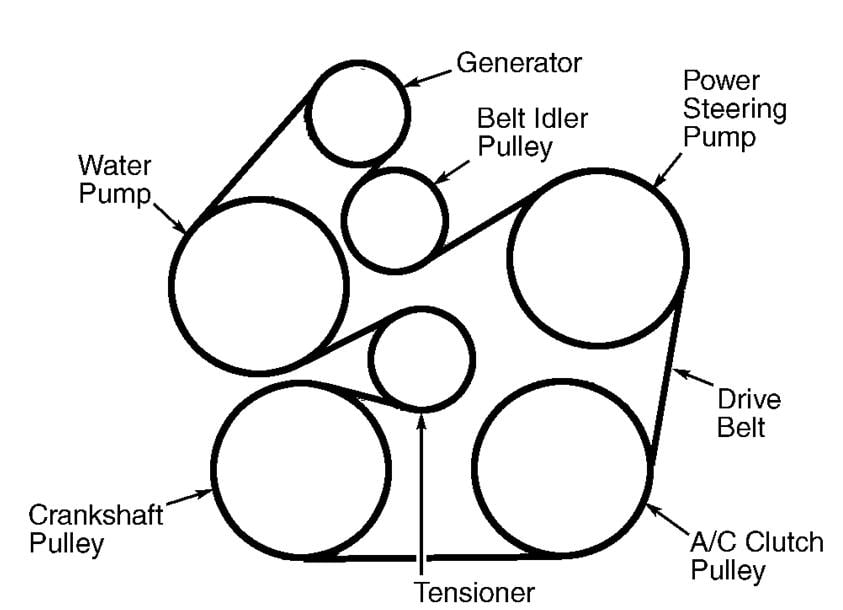
The 2002 Ford Taurus is a common vehicle, and like all cars, its serpentine belt is a critical component for proper operation. Understanding its routing and function is essential for maintenance, troubleshooting, and repair. This article provides a detailed breakdown of the 2002 Ford Taurus serpentine belt diagram, arming you with the knowledge needed for successful DIY projects.
Purpose of the Serpentine Belt Diagram
The serpentine belt diagram is your roadmap for understanding how the serpentine belt is routed around various engine components. Its purpose is multifaceted:
- Repair and Replacement: The primary reason for consulting the diagram is during serpentine belt replacement. It visually guides you on how to install the new belt correctly. An incorrectly routed belt can lead to component failure and vehicle breakdown.
- Troubleshooting: A slipping, squealing, or broken serpentine belt can indicate problems with other components. The diagram helps you identify which accessory (alternator, power steering pump, etc.) might be causing the issue.
- Learning and Understanding: Even if you're not currently experiencing problems, studying the diagram provides a fundamental understanding of how these crucial engine accessories are driven. This is beneficial for general automotive knowledge and future maintenance.
- Preventative Maintenance: Using the diagram to inspect the belt’s routing and condition regularly as a part of your preventative maintenance schedule.
Key Specs and Main Parts Involved
Before diving into the diagram itself, let's identify the key components that the serpentine belt interacts with on a 2002 Ford Taurus. Note that the exact configuration can vary slightly based on engine option (e.g., 3.0L OHV or 3.0L DOHC).
- Crankshaft Pulley (Harmonic Balancer): This is the driving force behind the entire system. Bolted to the crankshaft, it rotates at engine speed and transfers power to the belt.
- Alternator: The alternator generates electrical power for the vehicle's systems and recharges the battery. The serpentine belt spins the alternator pulley.
- Power Steering Pump: The power steering pump provides hydraulic pressure to assist steering. It is driven by the serpentine belt.
- Air Conditioning Compressor: The A/C compressor circulates refrigerant in the air conditioning system. Again, driven by the belt.
- Idler Pulley(s): These pulleys provide tension and guide the belt along the correct path. They are smooth and free-spinning.
- Tensioner Pulley: This is a spring-loaded pulley that maintains the proper tension on the belt. Its movement allows for belt wear and slight misalignments. This component is especially crucial.
Key Specs: While a diagram won't list belt length, knowing it's crucial for purchasing a replacement. Consult your owner's manual or a parts catalog for the correct belt length for your specific 2002 Taurus engine. Also, note the type of grooves (V-ribbed) and width when buying the belt. Using an incorrect belt will result in poor performance and potential damage.
Understanding the Symbols and Notations in the Diagram
Serpentine belt diagrams use a standard set of symbols and conventions to represent the various components and belt routing. Here's a breakdown:
- Solid Lines: Typically, a solid line represents the serpentine belt itself. Its thickness might vary slightly depending on the diagram.
- Pulleys: Pulleys are depicted as circles. The diameter of the circle doesn't necessarily represent the actual pulley size.
- Arrows: Arrows indicate the direction of belt travel around each pulley. This is crucial for ensuring correct routing.
- Component Labels: Each pulley is labeled with the corresponding component (e.g., "ALT" for alternator, "P/S" for power steering pump, "A/C" for air conditioning compressor).
- Tensioner Indicator: The tensioner pulley is often represented with a spring symbol or an arrow showing its range of motion. This visually confirms its location and function.
- Ribbed vs. Smooth: Some diagrams may subtly indicate whether a pulley engages the ribbed side of the belt (driven pulley) or the smooth back side of the belt (idler or tensioner).
Colors aren't usually standard, but they can be used to differentiate sections of the belt path or highlight specific components in some diagrams. However, the black and white diagram works just fine.
How the Serpentine Belt System Works
The serpentine belt system is a brilliant piece of engineering. The crankshaft pulley, driven by the engine, provides the rotational force. This force is transferred to the other pulleys via the serpentine belt. Because all the accessories are driven by a single belt, it's a space-saving and efficient design. Here's a more detailed breakdown:
- The crankshaft turns the crankshaft pulley.
- The serpentine belt wraps around the crankshaft pulley.
- As the crankshaft pulley rotates, it pulls the serpentine belt.
- The serpentine belt, in turn, spins the pulleys of the alternator, power steering pump, and A/C compressor.
- The tensioner pulley applies constant pressure to the belt, preventing it from slipping.
- Idler pulleys provide the necessary wrap angle on certain pulleys to maximize grip and prevent slippage.
The tensioner pulley is especially important. As the belt stretches with age and use, the tensioner compensates by automatically adjusting its position. Without the tensioner, the belt would quickly become loose and start to slip, leading to reduced performance of the driven accessories. A worn tensioner can cause a squealing belt noise and accelerate belt wear.
Real-World Use and Basic Troubleshooting
Here's how to use the diagram for common issues:
- Belt Squeal: A squealing belt is often caused by a loose belt. Inspect the tensioner. If it's bouncing excessively, it may be failing. Also, check the belt for glazing or cracking.
- Accessory Malfunction: If your alternator isn't charging, your power steering is stiff, or your A/C isn't cold, first check the serpentine belt. A broken or severely worn belt will prevent these components from functioning correctly. Use the diagram to verify the belt is correctly routed and making contact with the appropriate pulleys.
- Belt Replacement: Always refer to the diagram when replacing the serpentine belt. Sketch the belt path on a piece of paper before removing the old belt, just as a double check. Use the tensioner release tool (or the appropriate wrench) to relieve the tension on the belt, allowing you to remove and install it easily.
A common mistake is incorrectly routing the belt after replacement. This can lead to immediate squealing, overheating, and potential damage to the engine or accessories. Double-check your work against the diagram *before* starting the engine.
Safety Considerations
Working on the serpentine belt system involves inherent risks:
- Moving Parts: The engine must be *off* and the key removed from the ignition before working on the serpentine belt. Accidental engine start-up can cause serious injury.
- Hot Components: The engine and exhaust components can be very hot, even after the engine has been off for a short period. Allow the engine to cool completely before working around it.
- Tensioner Spring: The tensioner pulley spring is under significant tension. Use the correct tool (tensioner release tool or appropriate wrench) to safely relieve the tension when removing or installing the belt. Never attempt to force the tensioner without the correct tool.
- Eye Protection: Wear safety glasses to protect your eyes from debris.
The alternator, in particular, carries a risk of electrical shock even with the engine off if the battery is connected. Disconnecting the negative battery terminal is always a good practice before working on any electrical component of the vehicle.
Get Your Diagram Now!
Understanding and properly using the 2002 Ford Taurus serpentine belt diagram is essential for successful DIY maintenance and repair. Armed with this knowledge, you can confidently tackle belt replacement, troubleshoot problems, and keep your Taurus running smoothly. This article provides a good overview of the diagrams, and we have the file you can download! Download the detailed 2002 Ford Taurus serpentine belt diagram now and keep it handy for future reference.