
1992 Chevy 1500 Throttle Body Diagram Explained
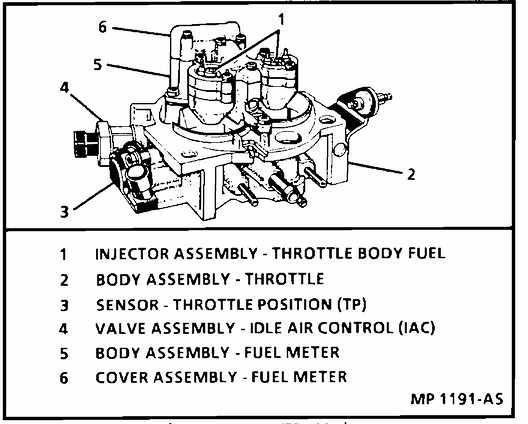
Alright, let's dive into the heart of the 1992 Chevy 1500's fuel delivery system: the throttle body. Understanding its diagram is crucial for diagnosing issues, performing maintenance, and even considering performance upgrades. This isn't just about spinning wrenches; it's about understanding the system and making informed decisions.
Why Bother with the Diagram?
Simply put, the throttle body is a critical component. A detailed diagram empowers you to:
- Accurately diagnose problems: From rough idling to poor acceleration, a faulty throttle body can manifest in many ways. The diagram helps you pinpoint the source of the problem.
- Perform precise repairs: Knowing the location and function of each component allows you to replace parts correctly and avoid further damage.
- Understand the system's operation: A clear understanding is vital for effective troubleshooting and maintenance. You'll be able to think critically about what's happening and why.
- Plan modifications: If you're considering performance upgrades, knowing the limitations and capabilities of the stock throttle body is essential.
Key Specs and Main Parts
The 1992 Chevy 1500 typically came equipped with a throttle body injection (TBI) system. This is a relatively simple fuel injection system compared to multi-port injection. Here are the key components to be aware of:
- Throttle Body Housing: The main body of the unit, containing the throttle bore and mounting points for other components.
- Throttle Plate: A butterfly valve controlled by the accelerator pedal, regulating airflow into the engine. The throttle plate is connected to the throttle cable.
- Throttle Position Sensor (TPS): A potentiometer that provides the engine control module (ECM) with information about the throttle plate's position. This is critical for proper fuel delivery and ignition timing.
- Idle Air Control (IAC) Valve: Controls the amount of air bypassing the throttle plate when the engine is idling. This maintains a stable idle speed. Sometimes called an Idle Speed Control (ISC).
- Fuel Injectors: Located within the throttle body, these spray fuel into the airstream.
- Fuel Pressure Regulator: Maintains a constant fuel pressure to the injectors.
- Coolant Passages: Some throttle bodies have coolant passages to prevent icing in cold weather.
Decoding the Diagram: Symbols and Conventions
A good throttle body diagram will use standardized symbols and conventions. Understanding these is crucial for accurate interpretation:
- Lines: Different types of lines indicate different things:
- Solid lines: Typically represent fuel lines or vacuum lines.
- Dashed lines: Often represent electrical wiring or coolant passages.
- Thick lines: Can indicate main fuel lines or high-pressure lines.
- Colors: Some diagrams use colors to further differentiate lines:
- Red: Usually represents fuel lines.
- Blue: Often represents coolant lines.
- Black/Gray: Commonly represents vacuum lines or electrical grounds.
- Icons: Standardized symbols represent various components:
- Resistors: A zigzag line.
- Capacitors: Two parallel lines.
- Ground: A series of descending horizontal lines.
- Sensors: Often represented by a square or rectangle with the sensor type labeled inside (e.g., "TPS" for Throttle Position Sensor).
Always refer to the diagram's legend or key to understand the specific conventions used.
How It Works: A Functional Overview
The 1992 Chevy 1500's TBI system works by injecting fuel directly into the throttle body, upstream of the intake manifold. Here's a simplified breakdown:
- Airflow: When you press the accelerator pedal, the throttle plate opens, allowing air to enter the engine.
- Fuel Injection: The ECM, based on inputs from various sensors (TPS, coolant temperature sensor, etc.), determines the amount of fuel to inject. The fuel injectors then spray fuel into the airstream.
- Mixing: The fuel and air mix within the throttle body and intake manifold.
- Combustion: The air/fuel mixture enters the cylinders, where it's compressed and ignited.
- Feedback: The oxygen sensor in the exhaust provides feedback to the ECM, allowing it to adjust the air/fuel mixture for optimal combustion.
The IAC valve plays a critical role in maintaining a stable idle. The ECM adjusts the IAC valve's position to allow more or less air to bypass the throttle plate, compensating for variations in engine load and temperature.
Real-World Use: Basic Troubleshooting
Here are some common issues you might encounter and how the diagram can help:
- Rough Idle: Could be caused by a faulty IAC valve, vacuum leak, or a dirty throttle body. Use the diagram to locate the IAC valve and check its connections. Inspect vacuum lines for cracks or leaks.
- Poor Acceleration: Could be a sign of a malfunctioning TPS or fuel injector. Use the diagram to locate the TPS and check its voltage output. If a fuel injector is suspected, you can use the diagram to identify its location and test its resistance.
- Check Engine Light: A check engine light can indicate a problem with any component in the system. Use an OBD1 scanner to retrieve the diagnostic trouble code (DTC). The diagram can then help you pinpoint the circuit or component associated with that code.
For example, let's say you get a DTC indicating a TPS issue. The diagram will show you the TPS's location, wiring, and connector. You can then use a multimeter to check the sensor's voltage output and verify that it's within the specified range.
Safety First! Highlighting Risky Components
Working on the fuel system always carries risks. Here are some key safety considerations:
- Fuel Lines: Fuel is flammable. Disconnect the negative battery cable before working on any fuel system components. Use proper fuel line disconnect tools to avoid damaging the lines. Have a fire extinguisher nearby.
- Electrical Components: Be careful when working with electrical components. Disconnect the battery to prevent shorts and potential damage to the ECM.
- Hot Components: The engine and exhaust system can get extremely hot. Allow the engine to cool down completely before working on the throttle body or any nearby components.
- Fuel Pressure: Be aware that the fuel system can remain pressurized even after the engine is turned off. Always relieve fuel pressure before disconnecting any fuel lines. Refer to your vehicle's service manual for the proper procedure.
Important: Never smoke or work near open flames when working on the fuel system.
Wrapping Up
Understanding the 1992 Chevy 1500's throttle body diagram is a valuable skill for any DIY mechanic or car enthusiast. By understanding the system's components and how they interact, you can diagnose problems, perform repairs, and even explore performance upgrades with confidence.
We have a detailed, printable diagram available for download. It includes all the key components, wiring diagrams, and vacuum line routing. This diagram will be an invaluable tool for your troubleshooting and repair efforts.