
2000 Ford Expedition Fuse Box Diagram
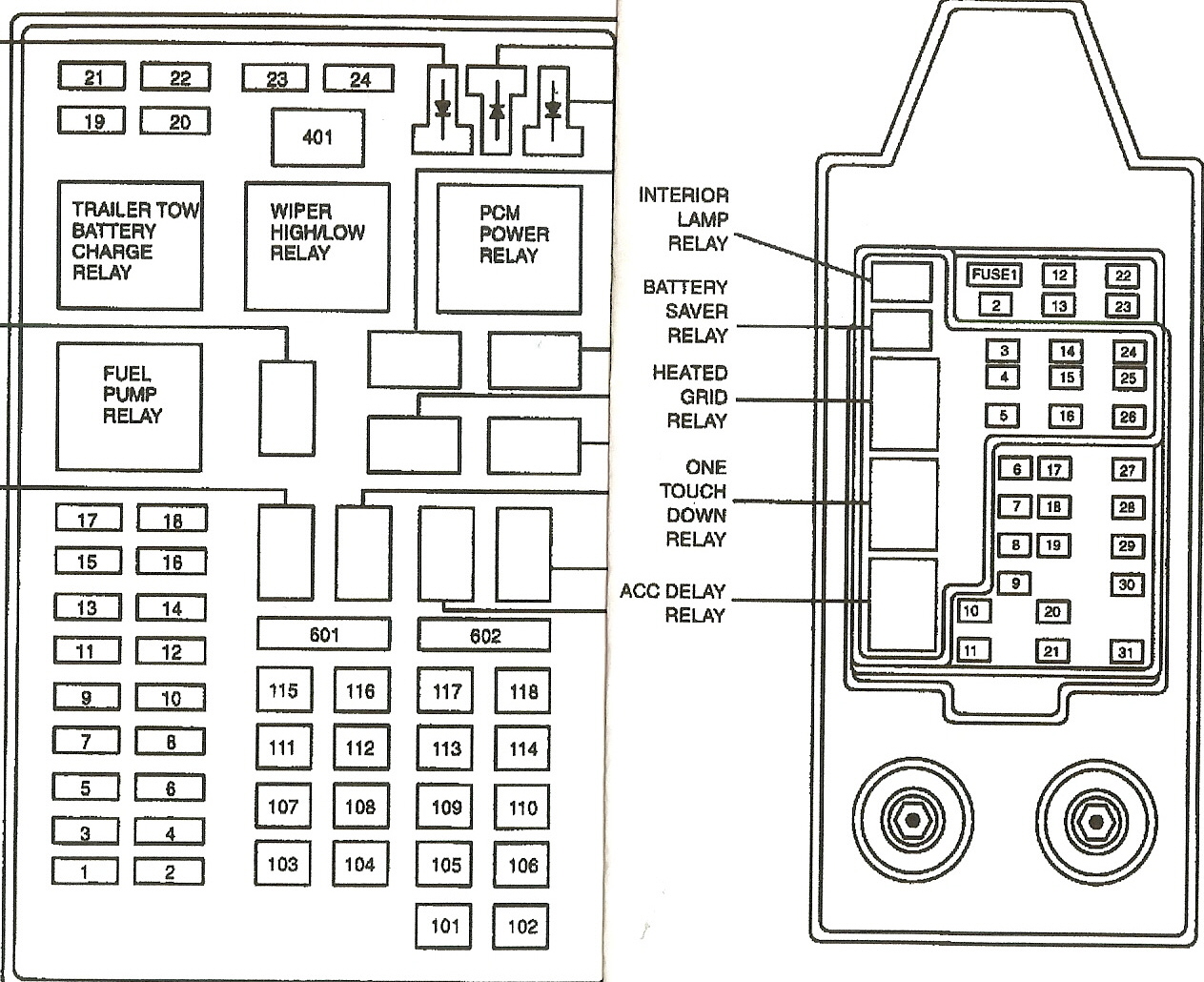
The 2000 Ford Expedition, like any modern vehicle, relies on a complex network of electrical circuits to control everything from the headlights to the engine management system. At the heart of this network lies the fuse box, or more accurately, fuse boxes. Understanding the fuse box diagram is absolutely crucial for diagnosing electrical problems, performing modifications, and maintaining your Expedition. This guide will provide a comprehensive overview of the 2000 Ford Expedition fuse box diagram, enabling you to confidently tackle electrical repairs and upgrades.
Purpose of the Fuse Box Diagram
The fuse box diagram is your roadmap to the Expedition's electrical system. It provides a visual representation of each fuse and relay, indicating its location, amperage rating, and the specific circuit it protects. Why is this important?
- Troubleshooting Electrical Issues: When an electrical component fails (e.g., a taillight doesn't work), the first step is to check the corresponding fuse. The diagram tells you exactly which fuse to examine.
- Preventing Further Damage: Replacing a blown fuse with one of the correct amperage is critical. Using a fuse with a higher amperage can overload the circuit and potentially cause a fire or damage to the component being protected.
- Performing Modifications and Add-ons: If you're adding accessories like a trailer brake controller, aftermarket lights, or a new stereo system, you'll need to tap into the existing electrical system. The fuse box diagram helps you identify suitable circuits and ensures you're properly protecting your new components.
- Understanding the Vehicle's Electrical System: Studying the diagram provides valuable insight into how the Expedition's electrical system is organized and how different components are interconnected.
Key Specs and Main Parts
The 2000 Ford Expedition typically has two fuse boxes:
- The Interior Fuse Box (also known as the Central Junction Box or CJB): Located under the dashboard, usually on the driver's side, this fuse box houses fuses and relays for interior components such as lights, wipers, radio, and power windows.
- The Engine Compartment Fuse Box (also known as the Power Distribution Box or PDB): Situated under the hood, typically near the battery, this fuse box contains fuses and relays for engine-related components like the fuel pump, ignition system, and cooling fan.
Key specs you need to pay attention to when dealing with the fuse box include:
- Fuse Amperage Rating (in Amps): This number, usually printed on the fuse itself, indicates the maximum current the fuse can handle before blowing. Using the correct amperage is vital. Never replace a fuse with one of a higher amperage unless specifically instructed by a qualified technician or service manual.
- Fuse Type: Different fuse types exist, such as blade fuses (ATO/ATC), mini-blade fuses, and cartridge fuses. The 2000 Expedition primarily uses blade fuses.
- Relay Type: Relays are electromechanical switches that control high-current circuits. They come in various types, such as single-pole single-throw (SPST) and single-pole double-throw (SPDT). The fuse box diagram will indicate which relay controls which circuit.
- Circuit Number: Many diagrams will label the individual circuits with a number. This can be helpful for tracing wires and diagnosing problems if you have a wiring diagram as well.
Symbols: Understanding the Diagram
Fuse box diagrams use standardized symbols to represent different components and connections. Common symbols include:
- Fuses: Usually depicted as a small rectangle with a wavy line inside. The amperage rating is often printed next to the symbol.
- Relays: Represented by a square or rectangle with internal symbols showing the coil and contacts.
- Circuit Breakers: Similar to fuses but are resettable.
- Ground Connections: Represented by a series of decreasing horizontal lines, indicating a connection to the vehicle's chassis ground.
- Wires: Solid lines represent electrical wires connecting components. Different colors might be used to differentiate between circuits, although this is more common on full wiring diagrams than simplified fuse box diagrams.
Colors on a diagram are typically used to indicate the wire's color within the harness. Knowing the wire color can be crucial when trying to locate a specific wire within the vehicle's wiring harness. It's important to understand that wire colors can sometimes vary slightly depending on the specific vehicle configuration and year of manufacture. Always double-check the wiring diagram to confirm the correct wire color.
How It Works: The Electrical Flow
The basic principle is simple: the battery provides the electrical power, and the fuse acts as a safety device. When the current in a circuit exceeds the fuse's amperage rating, the fuse's internal element melts, breaking the circuit and preventing damage to the connected component. The relay acts as an electrically controlled switch, allowing a low-current circuit to control a high-current circuit. For instance, the headlight switch uses a low-current circuit to activate a relay, which then switches on the high-current circuit that powers the headlights.
Think of the electrical system as a series of interconnected paths. The fuse box is a central hub where these paths converge and are protected by individual fuses and managed by relays. When tracing a problem, you follow the path from the power source (battery) through the fuse box to the component in question. If the component isn't working, you check the fuse first. If the fuse is blown, you replace it. If the fuse continues to blow, it indicates a short circuit or an overload in the circuit, requiring further investigation.
Real-World Use: Basic Troubleshooting Tips
Here's a step-by-step guide to using the fuse box diagram for troubleshooting:
- Identify the Problem: Determine which component is malfunctioning.
- Consult the Diagram: Locate the fuse box diagram for your 2000 Ford Expedition. We have a downloadable version available for you.
- Locate the Fuse: Find the fuse associated with the malfunctioning component on the diagram. Note its amperage rating.
- Inspect the Fuse: Physically check the fuse in the fuse box. A blown fuse will have a broken filament inside. Use a fuse puller to remove the fuse without damaging it.
- Replace the Fuse: If the fuse is blown, replace it with a new fuse of the same amperage rating.
- Test the Component: Turn on the component and see if it now works.
- If the Fuse Blows Again: This indicates a short circuit or overload. Do not continue replacing fuses. Investigate the wiring and the component itself for damage. Consult a qualified technician if you are unable to locate the source of the problem.
Safety: Highlight Risky Components
Working with electrical systems can be dangerous. Here are some key safety precautions:
- Disconnect the Battery: Before working on any electrical components, disconnect the negative battery cable to prevent accidental short circuits.
- Use Proper Tools: Use insulated tools designed for electrical work.
- Never Bypass Fuses: Never replace a fuse with a wire or other conductive material. This bypasses the safety mechanism and can lead to serious damage or fire.
- Be Cautious Around High-Current Circuits: Circuits like the starter motor and alternator carry high current and can be dangerous. Avoid touching these components while the engine is running or the battery is connected.
- Understand Relay Function: Relays control high-current circuits and can deliver a powerful electrical shock if mishandled.
Certain circuits are inherently more risky to work with. Airbag systems, for example, should only be handled by trained professionals. Incorrectly handling airbag circuits can lead to accidental deployment, causing serious injury. Similarly, working on the ABS (Anti-lock Braking System) requires specialized knowledge and tools. If you're not comfortable working on these systems, it's best to leave them to a qualified mechanic.
Remember to always refer to the service manual for your 2000 Ford Expedition for detailed instructions and safety precautions. Understanding the fuse box diagram is a crucial skill for any DIY mechanic or car enthusiast, but safety should always be your top priority.
As mentioned earlier, we have the 2000 Ford Expedition fuse box diagram readily available for you to download. It contains the information you need to get started with your electrical repairs and modifications.