
2001 Dodge Ram 1500 5.9 Spark Plug Wire Diagram
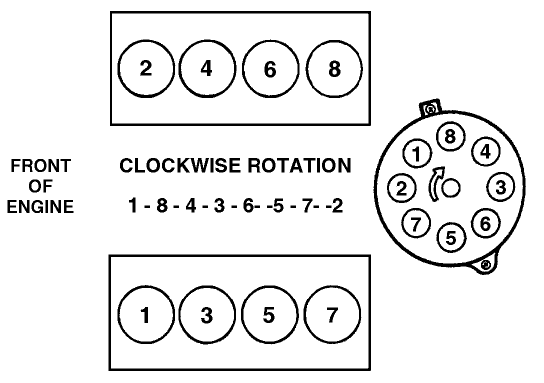
Let's dive into the spark plug wire diagram for your 2001 Dodge Ram 1500 with the 5.9L (360 cubic inch) engine. Understanding this diagram is crucial for anything from basic tune-ups to diagnosing misfires and ensuring optimal engine performance. This isn't just about replacing wires; it's about understanding the entire ignition system and its proper operation.
Purpose of the Spark Plug Wire Diagram
Why bother with a diagram? Well, several reasons. First, it’s essential for correct spark plug wire routing. Improper routing can lead to cross-firing (where the wrong cylinder fires, causing severe engine issues) due to inductive coupling between wires. It's also invaluable when troubleshooting misfires. If you're getting a P0300 series code (random/multiple cylinder misfire), a visual check based on the diagram is a great starting point. Furthermore, if you're doing any engine work that involves disconnecting the wires, you'll need the diagram to reconnect them correctly. Finally, studying the diagram can help you understand the basic layout of the engine.
Key Specs and Main Parts
Before we look at the diagram itself, let's define the key components:
- Distributor: The heart of the ignition system. The distributor rotor spins inside the distributor cap, delivering high-voltage pulses to the correct spark plug wire.
- Distributor Cap: A plastic cap with terminals that connect to each spark plug wire. It receives the high-voltage current from the ignition coil and distributes it to the appropriate spark plug.
- Spark Plug Wires: High-voltage cables that carry the electrical charge from the distributor to the spark plugs. These are typically carbon core or spiral wound wires to minimize radio frequency interference (RFI).
- Spark Plugs: Located in the cylinder head, they ignite the air-fuel mixture in each cylinder, creating combustion.
- Ignition Coil: Steps up the 12V from the battery to the high voltage required to jump the spark plug gap.
The 2001 Dodge Ram 1500 5.9L uses a conventional distributor-based ignition system. The firing order for this engine is 1-8-4-3-6-5-7-2. This is critical to understanding the diagram, as it dictates the sequence the spark plugs fire in.
Diagram Symbols and Their Meanings
A typical spark plug wire diagram will use a few standard symbols:
- Solid Lines: Represent the spark plug wires themselves. The lines indicate the path each wire takes from the distributor cap to the spark plug.
- Numbers: Indicate the cylinder number each wire connects to. The cylinder numbers are usually stamped on the intake manifold.
- Distributor Cap Terminal Labels: These correspond to the firing order. For example, the terminal labeled "1" on the distributor cap connects to the spark plug in cylinder number 1.
- Colors: Rarely standardized on older diagrams, but might differentiate different circuits or wire types in more detailed schematics. In most cases, color isn't a factor in this diagram.
- Ground Symbols: The diagram might show ground connections, especially if discussing the distributor itself.
The diagram won't show the physical routing of the wires in detail, but rather the electrical connection between the distributor and the spark plugs. It's more a map of the connections than a representation of the actual wire path.
How the Ignition System Works
The ignition system's primary goal is to ignite the air-fuel mixture at the precise moment needed for optimal combustion. Here’s a simplified breakdown:
- The battery supplies 12 volts to the ignition coil.
- The ignition coil steps up the voltage to tens of thousands of volts.
- This high-voltage current is sent to the distributor cap.
- The distributor rotor, spinning in sync with the engine's crankshaft, directs the high-voltage current to the correct terminal in the distributor cap, corresponding to the firing order.
- The high-voltage current travels through the spark plug wire to the spark plug.
- The high voltage overcomes the resistance in the spark plug gap, creating a spark that ignites the air-fuel mixture in the cylinder.
Real-World Use and Basic Troubleshooting
The most common use is for replacing spark plug wires. When doing this, replace one wire at a time, using the diagram as your guide. This minimizes the chance of mixing up the firing order. If you suspect a misfire, a visual inspection is the first step. Look for:
- Cracked or damaged spark plug wires: Arcing (where the high voltage jumps to ground) can occur through cracks.
- Loose connections: Ensure the wires are securely connected to both the distributor cap and the spark plugs.
- Improper routing: Make sure the wires are routed correctly to prevent cross-firing. Use wire separators to keep them apart.
- Oil or dirt contamination: Clean the wires and terminals to ensure good electrical contact.
If a visual inspection doesn't reveal the problem, you can use a multimeter to check the resistance of the spark plug wires. Excessive resistance indicates a faulty wire. You could also use an inductive timing light to check for spark at each plug while the engine is running. A weak or intermittent spark indicates a problem.
Troubleshooting Example
Let's say your OBD-II scanner shows a P0301 code (misfire in cylinder 1). Consult the diagram. Identify the spark plug wire connected to cylinder 1 on the distributor cap. Inspect that wire thoroughly for damage. If the wire looks good, swap it with the wire from a known good cylinder (e.g., cylinder 2). If the misfire moves to cylinder 2 (now P0302), you know the wire is the culprit. If the misfire remains on cylinder 1, the problem lies elsewhere (spark plug, fuel injector, etc.).
Safety Precautions
Working with the ignition system involves high voltage. Always disconnect the negative battery cable before working on any electrical components. Never touch spark plug wires or the distributor while the engine is running – this can result in a severe electric shock. The ignition coil and distributor cap can store a charge even after the engine is turned off, so be cautious when handling these components. Wear insulated gloves if possible.
Specifically, the ignition coil is a risky component. It's designed to produce tens of thousands of volts, and that voltage can easily jump to ground (i.e., you) if you're not careful. Treat it with respect and always disconnect the battery first!
Final Thoughts
The spark plug wire diagram for your 2001 Dodge Ram 1500 5.9L is a valuable tool for maintaining and troubleshooting your engine. By understanding the diagram and the components it represents, you can confidently tackle a wide range of ignition-related issues. Remember to always prioritize safety when working with electrical components, and consult a qualified mechanic if you're unsure about any aspect of the repair.
We have a high-resolution version of the spark plug wire diagram for your 2001 Dodge Ram 1500 5.9L engine available for download. It will be a helpful resource in your future maintenance and repair endeavors. Contact us if you would like to have access to the download.