
2002 Dodge Ram 1500 4.7 Serpentine Belt Diagram
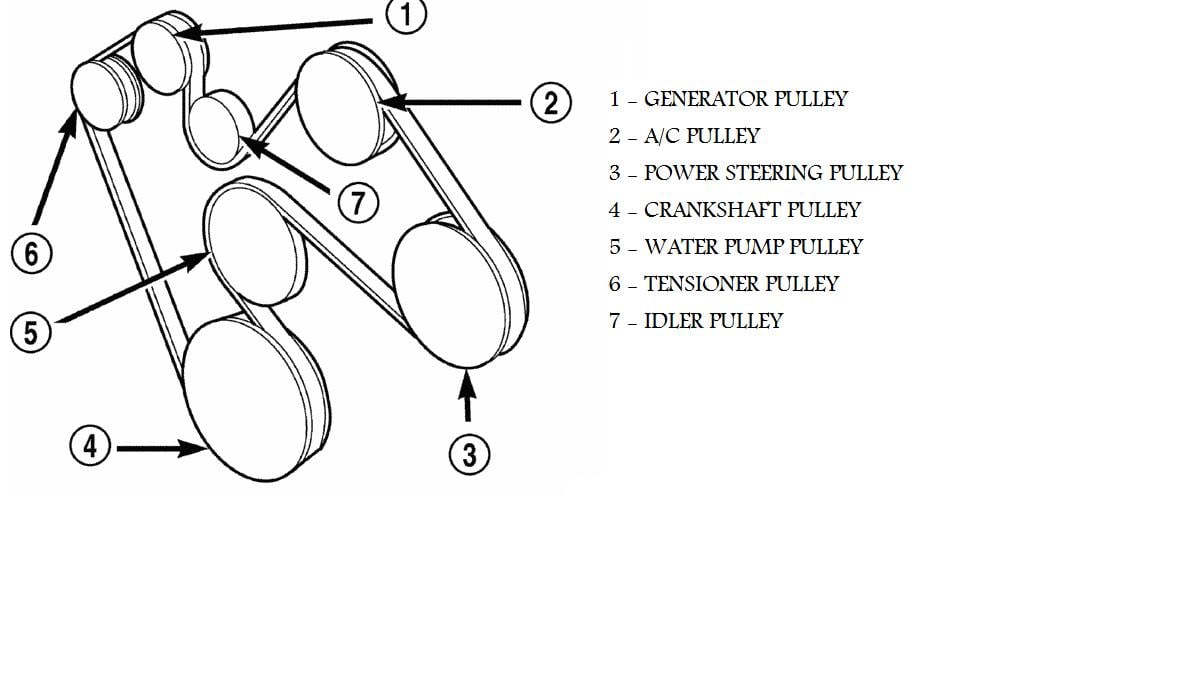
So, you're tackling a serpentine belt replacement on your 2002 Dodge Ram 1500 with the 4.7L engine? Excellent! Having a clear understanding of the serpentine belt diagram is absolutely crucial. It's not just about slapping a new belt on; it's about ensuring proper routing, tension, and ultimately, the reliable operation of all your engine's accessories. This guide will arm you with the knowledge to confidently tackle this job.
Purpose: Why a Serpentine Belt Diagram Matters
Let's face it, serpentine belts can be a real pain without the proper information. A diagram serves several critical purposes:
- Proper Belt Routing: The most obvious, but most important. The belt needs to follow a specific path to power all the accessories correctly. An incorrect route can lead to belt slippage, premature wear, and accessory failure.
- Accurate Tensioning: Knowing where the tensioner pulley is located is vital for achieving the correct belt tension. Too loose, and you'll experience squealing and poor accessory performance. Too tight, and you risk damaging bearings in the accessories and the tensioner itself.
- Troubleshooting: When diagnosing issues like squealing belts or non-functioning accessories, the diagram helps you trace the belt path to identify potential problems like misaligned pulleys or failing components.
- Maintenance and Repair: Whether you're replacing the belt, the tensioner, or an accessory, the diagram provides a visual reference for proper reassembly.
Key Specs and Main Parts (2002 Dodge Ram 1500 4.7L)
Before diving into the diagram, let's familiarize ourselves with the main components involved. Keep in mind that slight variations might exist depending on specific vehicle options (e.g., with or without A/C), but the general layout remains consistent.
- Crankshaft Pulley (Harmonic Balancer): Located at the bottom of the engine, this is the primary drive pulley. It's connected directly to the engine's crankshaft and powers all the other accessories through the serpentine belt.
- Alternator Pulley: Powers the electrical system. A failing alternator can sometimes cause belt squealing or even belt damage if the pulley seizes.
- Power Steering Pump Pulley: Provides hydraulic pressure for power steering. A failing power steering pump can also cause belt squealing and increased load on the engine.
- Air Conditioning Compressor Pulley (if equipped): Drives the A/C compressor. Seized compressors are a common cause of serpentine belt failure.
- Water Pump Pulley: Circulates coolant throughout the engine. Overheating can result from a failing water pump or slippage at the water pump pulley.
- Idler Pulley(s): Smooth, non-driven pulleys used to guide the belt around the engine and provide the correct wrap angle on other pulleys.
- Tensioner Pulley: This is spring-loaded and automatically maintains the correct tension on the serpentine belt. A worn-out tensioner can be a major culprit behind belt squealing and premature belt wear. Pay close attention to its condition.
- Serpentine Belt: The belt itself, typically made of reinforced rubber.
Symbols: Understanding the Diagram
Serpentine belt diagrams typically use a few standard symbols to represent the components and belt routing. Here's a breakdown:
- Solid Line: Represents the face of the serpentine belt in contact with a pulley. Follow this line carefully to understand the belt's path.
- Dotted Line: Often indicates the back of the belt, or the side that is not in contact with the pulley. This is used to show how the belt loops around the engine components.
- Arrows: Indicate the direction of belt travel and pulley rotation. Make sure the rotation directions make sense. For example, the water pump and alternator will have to be rotated correctly.
- Component Icons: Simplified drawings of each pulley. These are usually labeled with abbreviations like "ALT" for alternator, "P/S" for power steering, "A/C" for air conditioning, and "CRANK" or "DAMPER" for the crankshaft pulley (harmonic balancer).
- Tensioner Symbol: The tensioner pulley is often represented with a spring symbol, indicating its spring-loaded operation.
How It Works: The Serpentine Belt System
The serpentine belt system is a relatively simple but effective design. The crankshaft pulley, driven directly by the engine, acts as the central power source. The serpentine belt wraps around this pulley and then snakes its way around all the other accessory pulleys. As the crankshaft turns, it drives the belt, which in turn drives the alternator, power steering pump, A/C compressor (if equipped), water pump, and any other accessories. The tensioner pulley plays a crucial role in maintaining the correct belt tension, ensuring that the belt doesn't slip and that all the accessories operate efficiently.
The name “serpentine” comes from the way the belt snakes around all the pulleys in a single, continuous loop. This design is more efficient than older systems that used multiple belts for different accessories.
Real-World Use: Basic Troubleshooting Tips
Here are some common issues and how the diagram can help you diagnose them:
- Squealing Belt: Usually caused by belt slippage. The diagram can help you identify if the belt is routed correctly and if the tensioner is functioning properly. Check the condition of the belt itself for cracks, wear, or glazing. A stretched or worn belt will always cause a squeal.
- Accessory Failure: If an accessory stops working (e.g., A/C, power steering), use the diagram to trace the belt path and confirm that the belt is properly engaged with the accessory's pulley. Also, make sure the pulley is not seized.
- Belt Jumping Off: This is often caused by a misaligned pulley. Visually inspect all the pulleys to ensure they are properly aligned. The diagram can help you identify the correct position of each pulley. Replace worn tensioner.
- Premature Belt Wear: Can be caused by misaligned pulleys, a worn tensioner, or a failing accessory. Again, use the diagram as a visual aid during your inspection.
Safety: Highlighting Risky Components
Working on the serpentine belt system involves some inherent risks. Here's what to be aware of:
- Rotating Components: Never work on the serpentine belt system with the engine running. The belt and pulleys can cause serious injury. Always disconnect the negative battery cable before starting any work.
- Hot Engine: The engine can get extremely hot, especially after running. Allow the engine to cool down completely before working on the serpentine belt.
- Spring-Loaded Tensioner: The tensioner is spring-loaded and can snap back with considerable force if not handled properly. Use the correct tools and techniques to relieve the tension on the belt safely.
Important Note: Some pulleys, like the crankshaft pulley (harmonic balancer), can be difficult to remove or install without specialized tools. If you're not comfortable with these procedures, it's best to consult a qualified mechanic.
I hope this detailed explanation has empowered you to confidently work on your 2002 Dodge Ram 1500's serpentine belt system! Remember, taking your time and double-checking your work is always a good practice.
We have a printable PDF file of the serpentine belt diagram for the 2002 Dodge Ram 1500 4.7L engine that you can download and keep handy while you work.