
2002 Dodge Ram 1500 Evap System Diagram
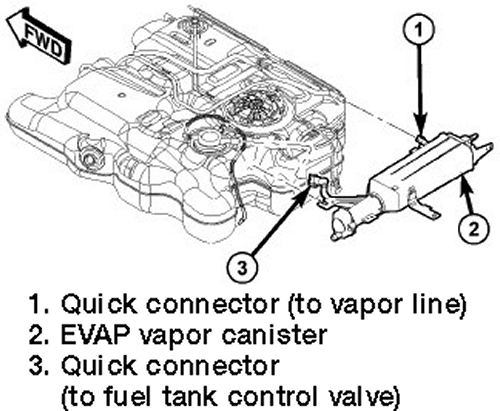
Alright, let's dive into the EVAP (Evaporative Emission Control) system diagram for a 2002 Dodge Ram 1500. Understanding this system is crucial for a few reasons. First, it's directly related to your truck's emissions, so issues can lead to failing an emissions test. Second, problems in the EVAP system often manifest as a pesky "check engine" light, accompanied by codes like P0440, P0442, P0455, and others. Finally, tackling EVAP repairs yourself can save you a significant chunk of change compared to taking it to a shop.
Why This Diagram Matters
This diagram is your roadmap to understanding and troubleshooting the EVAP system. Without it, you're essentially guessing when trying to diagnose a leak, a faulty sensor, or a malfunctioning valve. With the diagram, you can:
- Pinpoint the location of specific components.
- Trace vacuum lines and electrical wiring.
- Understand the flow of fuel vapor.
- Accurately diagnose the root cause of EVAP-related issues.
- Plan your repairs efficiently.
Key Specs and Main Parts
The 2002 Dodge Ram 1500 EVAP system is fairly standard for its era. Here's a breakdown of the key components and some general specs. Keep in mind that exact specifications can vary slightly depending on engine size and specific trim level, so always double-check with a repair manual for *your* particular truck.
- Fuel Tank: The foundation of the system. This is where fuel evaporates, creating the vapors the system controls.
- Fuel Cap: A seemingly simple part, but a loose or damaged fuel cap is one of the most common causes of EVAP leaks. It's crucial that it seals tightly.
- Fuel Tank Pressure Sensor (FTP): This sensor monitors the pressure inside the fuel tank. It sends a voltage signal to the PCM (Powertrain Control Module) reflecting the pressure. A common failure point.
- Charcoal Canister: This is the workhorse of the system. It's filled with activated charcoal that absorbs and stores fuel vapors. It prevents those vapors from venting directly into the atmosphere.
- Purge Valve (Canister Purge Solenoid): This valve, typically located near the engine, controls the flow of fuel vapors from the charcoal canister into the engine's intake manifold. The PCM controls it based on engine operating conditions.
- Vent Valve (Canister Vent Solenoid): Usually located near the charcoal canister, this valve controls the flow of fresh air into the canister. It's open when the system isn't purging, allowing the canister to breathe and prevent excessive vacuum.
- Leak Detection Pump (LDP) (Some Models): Some 2002 Ram 1500s use an LDP system to actively test for leaks. The LDP creates a vacuum in the system and monitors for pressure changes to detect leaks. If your truck doesn't have an LDP, it relies on natural vacuum during engine operation for leak detection.
- Vacuum Lines and Hoses: A network of hoses connect all the components. These lines are prone to cracking, drying out, and leaking over time.
- One-Way Check Valves: These valves ensure that vapor flows in the correct direction, preventing backflow.
- PCM (Powertrain Control Module): The "brain" of the system. It controls the purge valve, vent valve, and monitors signals from the FTP sensor to manage the EVAP system's operation.
Symbols – Understanding the Diagram
EVAP system diagrams use specific symbols to represent different components and lines. Here's a general guide:
- Solid Lines: Generally represent vacuum lines or hoses carrying fuel vapors or air.
- Dotted Lines: Typically indicate electrical wiring or communication lines connecting sensors and valves to the PCM.
- Arrows: Show the direction of flow for fuel vapors or air within the system.
- Boxes/Rectangles: Often represent electronic components like the PCM, sensors, or solenoids.
- Circles: May represent the charcoal canister or other cylindrical components.
- Specific Colors (if present): Color-coding can sometimes be used to differentiate between different types of lines (e.g., a different color for vacuum lines versus fuel lines). *However, color coding can vary depending on the diagram.*
- Component Labels: The diagram will label each component with abbreviations (e.g., FTP for Fuel Tank Pressure Sensor, CVS for Canister Vent Solenoid). Refer to a key on the diagram or a repair manual to decipher these abbreviations.
Pay close attention to the labeling conventions used in *your* specific diagram. The goal is to clearly show the relationship between components and the flow of vapor through the system.
How It Works
The EVAP system's primary function is to prevent fuel vapors from escaping into the atmosphere. Here's a simplified explanation of how it works:
- Vapor Generation: Fuel in the tank naturally evaporates, creating fuel vapors.
- Vapor Storage: These vapors are routed to the charcoal canister, where they are absorbed and stored by the activated charcoal.
- Purging: When the engine is running and operating conditions are right (e.g., engine is warm, not at idle), the PCM activates the purge valve.
- Vapor Consumption: The purge valve opens, allowing engine vacuum to draw the stored fuel vapors from the charcoal canister into the intake manifold. The vapors are then burned along with the regular air/fuel mixture.
- Venting: During purging, the vent valve is usually closed or partially closed. When the system is *not* purging, the vent valve opens to allow fresh air to enter the canister, preventing a vacuum from building up.
- Leak Detection: The PCM monitors the FTP sensor and, if equipped, the LDP to detect leaks in the system. If a leak is detected (e.g., the fuel tank pressure is not changing as expected during a purge cycle), the PCM will set a diagnostic trouble code (DTC) and illuminate the "check engine" light.
The timing and duration of the purge cycle are carefully controlled by the PCM to optimize emissions and fuel economy. The system is a closed loop; if the system is not working right, there will be error code(s) that show up.
Real-World Use – Basic Troubleshooting Tips
Here are some basic troubleshooting steps you can take using the EVAP system diagram:
- Inspect the Fuel Cap: Always the first step! Make sure it's tight and in good condition. A cracked or loose cap is a very common problem.
- Visual Inspection of Hoses: Carefully examine all vacuum lines and hoses for cracks, tears, or disconnections. Pay close attention to hoses near the engine, as they are exposed to heat and are more prone to degradation.
- Check the Purge Valve: You can often test the purge valve by disconnecting it and applying voltage (check the diagram for the correct voltage). It should click open and closed. You can also try blowing through it – it should be closed when de-energized.
- Check the Vent Valve: Similar to the purge valve, you can test the vent valve by applying voltage. It should open and close.
- Smoke Test: A smoke test is a highly effective way to find leaks. A smoke machine injects smoke into the EVAP system, and you can visually identify where the smoke is escaping. This is a great way to find small leaks that are difficult to detect otherwise.
- Monitor the FTP Sensor: Use a scan tool to monitor the FTP sensor readings. The pressure should change as expected during purge cycles.
- Listen for Hissing: A hissing sound can indicate a vacuum leak. Use a stethoscope or a length of hose to carefully listen for hissing near EVAP components and lines.
Safety – Highlight Risky Components
Working on the EVAP system involves dealing with fuel vapors, so safety is paramount. Here are a few important precautions:
- Work in a Well-Ventilated Area: Fuel vapors are flammable and can be harmful to breathe.
- Disconnect the Battery: Disconnecting the negative battery terminal can help prevent accidental shorts while working on electrical components.
- Avoid Open Flames or Sparks: Never smoke or use open flames near the fuel tank or EVAP system components.
- Depressurize the System (If Necessary): If you need to disconnect fuel lines, depressurize the system first to minimize fuel spillage. Refer to a repair manual for the proper procedure.
- Handle Fuel Carefully: Wear gloves to protect your skin from contact with fuel. Clean up any spills immediately.
- Be Cautious with Electrical Testing: When testing solenoids with applied voltage, check your service manual for the correct range to not damage the solenoid.
Remember, if you're not comfortable working on the EVAP system, it's always best to consult a qualified mechanic. Fuel systems can be dangerous if not handled properly. Don't hesitate to ask questions or seek professional help when needed.
Now that you have a better understanding of your 2002 Dodge Ram 1500's EVAP system, we have the detailed EVAP diagram available for you to download. This diagram will be essential for troubleshooting and repairing any issues you may encounter. Good luck!