
2002 Dodge Ram 1500 Serpentine Belt Diagram
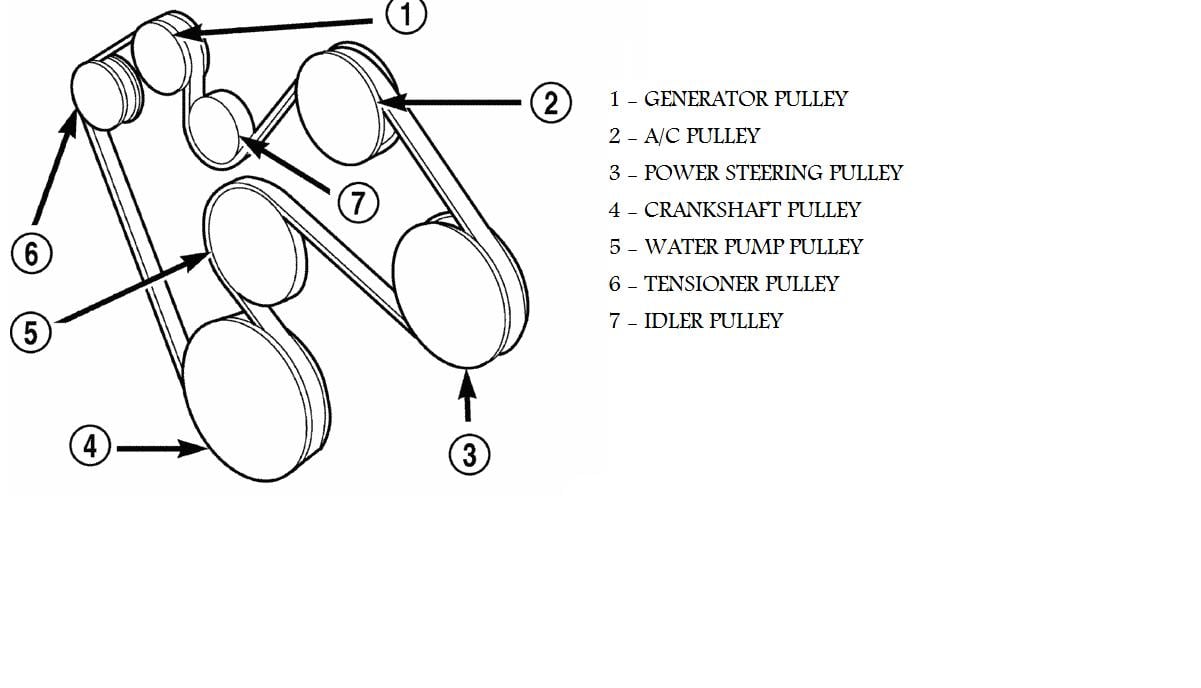
The serpentine belt in your 2002 Dodge Ram 1500 is a critical component responsible for powering several essential systems. Understanding its routing and function, as illustrated by the serpentine belt diagram, is invaluable for performing routine maintenance, troubleshooting problems, and even upgrading your truck. This article will provide a detailed breakdown of the 2002 Dodge Ram 1500 serpentine belt diagram, equipping you with the knowledge to confidently tackle related tasks.
Purpose of the Serpentine Belt Diagram
The serpentine belt diagram serves as a visual roadmap for the correct routing of the serpentine belt around various engine accessories. It's crucial for several reasons:
- Replacement: When replacing a worn or damaged belt, the diagram ensures you install the new belt correctly. Incorrect routing can lead to belt slippage, reduced accessory performance, and potential damage to the belt or pulleys.
- Troubleshooting: Diagnosing squealing or other belt-related noises becomes easier with the diagram. You can verify that the belt is properly tensioned and correctly aligned with all pulleys.
- Maintenance: Regular inspection of the belt, using the diagram as a reference, allows you to identify potential issues like cracks, fraying, or glazing before they lead to complete failure.
- Learning and Understanding: Even if you don't plan on working on your truck immediately, understanding the serpentine belt system helps you appreciate the complex interaction of components within your engine bay.
Key Specs and Main Parts
Before diving into the diagram itself, let's review the key components involved in the serpentine belt system of a 2002 Dodge Ram 1500. Note that there can be variations depending on the engine (3.7L V6, 4.7L V8, or 5.9L V8), so consulting the *specific* diagram for your engine is essential.
- Serpentine Belt: A long, continuous belt made of reinforced rubber that transmits power from the crankshaft pulley to the other accessories.
- Crankshaft Pulley: Driven directly by the engine's crankshaft, this pulley is the source of power for the entire serpentine belt system.
- Alternator Pulley: The alternator generates electricity to charge the battery and power the vehicle's electrical system. The serpentine belt drives its pulley.
- Power Steering Pump Pulley: This pulley drives the power steering pump, which provides hydraulic assistance for steering.
- Air Conditioning Compressor Pulley: The A/C compressor circulates refrigerant, enabling the air conditioning system to cool the cabin. The serpentine belt drives this pulley.
- Water Pump Pulley: The water pump circulates coolant throughout the engine, preventing overheating. Its pulley is driven by the serpentine belt.
- Idler Pulley(s): Smooth, non-driven pulleys that guide the belt and maintain proper tension. They are crucial for optimal belt routing and performance.
- Tensioner Pulley: This pulley applies tension to the serpentine belt, ensuring it maintains a firm grip on all other pulleys. The tensioner typically includes a spring-loaded arm and a pulley. Understanding the tensioner is *vital* for proper belt installation.
Symbols on the Diagram
The serpentine belt diagram uses a specific set of symbols to represent the components and belt routing. Understanding these symbols is essential for interpreting the diagram correctly.
- Solid Lines: Indicate the path of the serpentine belt. The direction of the line (clockwise or counter-clockwise around a pulley) indicates the direction of rotation.
- Pulleys: Typically represented as circles. Some diagrams may label the pulley with its function (e.g., ALT for alternator, P/S for power steering).
- Arrows: Indicate the direction of belt travel around a pulley.
- Tensioner: Often depicted with a spring symbol, illustrating its spring-loaded mechanism. May also include an arrow indicating the direction to relieve tension for belt removal and installation.
- Labels: Abbreviations or acronyms are used to identify each pulley, as mentioned above (ALT, P/S, A/C, WP).
- Routing: The diagram will show the specific path the belt takes around each pulley. Note how the belt wraps around the pulleys to provide the necessary grip for efficient power transfer.
How It Works
The serpentine belt system functions by transferring rotational force from the crankshaft to the various engine accessories. The crankshaft pulley, driven directly by the engine, turns the serpentine belt. The belt, in turn, wraps around and drives the pulleys of the alternator, power steering pump, air conditioning compressor, water pump, and any idler pulleys. The tensioner pulley maintains consistent tension on the belt, preventing slippage and ensuring efficient power transfer. The amount of wrap (the arc of contact) around each pulley is critical for transmitting sufficient torque. The diagram accurately displays the correct belt path and wrap to ensure all components function as designed.
Real-World Use: Basic Troubleshooting Tips
Here are a few common issues you might encounter and how the serpentine belt diagram can help:
- Squealing Noise: A squealing belt often indicates slippage. Check the belt tension using the tensioner. Refer to the diagram to ensure the belt is routed correctly and not rubbing against anything. Inspect the belt for signs of wear, such as cracks or glazing.
- Accessory Malfunction: If the alternator, power steering, or A/C isn't working properly, a broken or slipped serpentine belt could be the cause. Use the diagram to verify the belt's integrity and routing.
- Belt Wear: Regularly inspect the belt for signs of wear and tear. Cracks, fraying, or missing chunks indicate the need for replacement. The diagram helps you identify potential points of contact or misalignment that could be contributing to premature wear.
- Incorrect Installation: If you've recently replaced the belt and are experiencing problems, double-check the routing against the diagram. Even a slight deviation can lead to significant performance issues.
Safety Considerations
Working with the serpentine belt system involves certain risks. Exercise caution and follow these safety guidelines:
- Disconnect the Battery: Before working on any electrical components, disconnect the negative battery terminal to prevent accidental shocks or short circuits.
- Hot Engine: Allow the engine to cool completely before working on the serpentine belt system. The engine and exhaust components can be extremely hot and cause burns.
- Moving Parts: Never work on the serpentine belt system with the engine running. The belt and pulleys are rapidly rotating and can cause serious injury.
- Tensioner Tool: Use the appropriate tool to relieve tension on the serpentine belt tensioner. Attempting to release the tensioner without the proper tool can be dangerous and may damage the tensioner.
- Eye Protection: Wear safety glasses to protect your eyes from debris.
- Proper Tools: Use the correct tools for the job. Improper tools can damage the belt, pulleys, or other components.
The serpentine belt system is a critical part of your 2002 Dodge Ram 1500. Understanding the components, the routing, and potential problems will help you maintain your truck and keep it running smoothly.
We have the 2002 Dodge Ram 1500 Serpentine Belt Diagram file available for download. Please contact us to get the file.