
2002 Dodge Ram 1500 Serpentine Belt Diagram 5.9
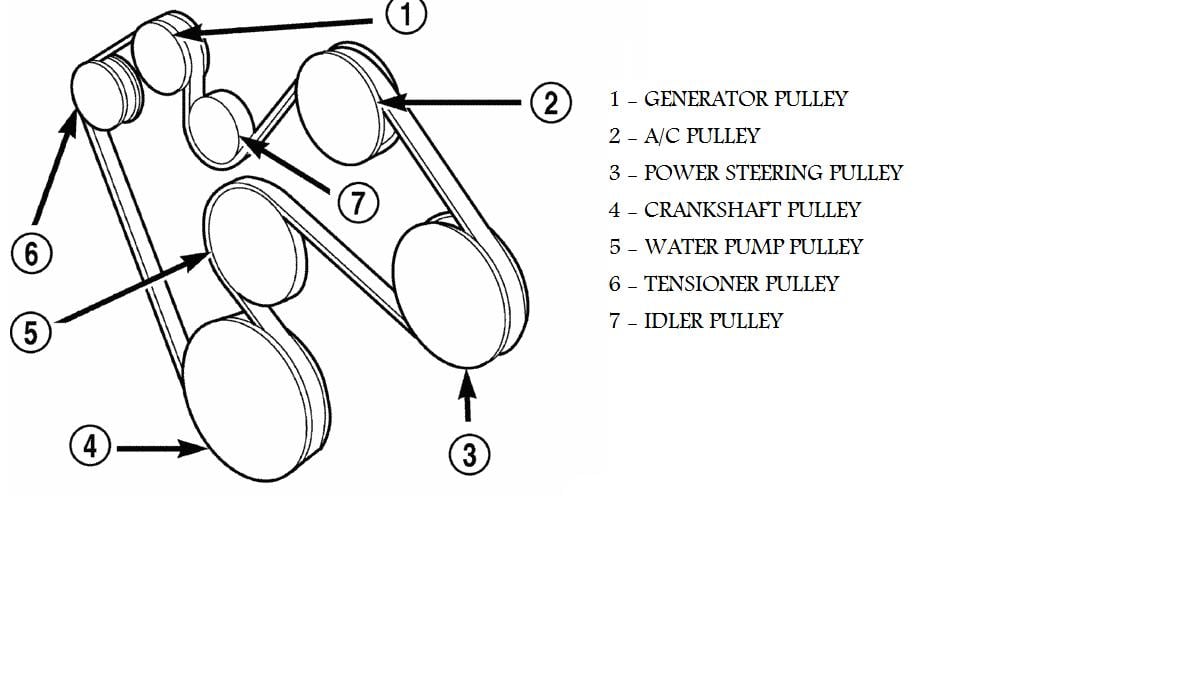
Alright, let's dive into the serpentine belt diagram for your 2002 Dodge Ram 1500 with the 5.9L engine. This guide is designed to help you, the experienced DIYer, understand the routing, function, and troubleshooting aspects of this vital component. We'll break down the diagram piece by piece, ensuring you have the knowledge needed to tackle repairs or maintenance with confidence.
Why This Diagram Matters
The serpentine belt diagram is absolutely crucial for several reasons:
- Belt Replacement: The most obvious reason. Without the correct diagram, installing a new belt becomes a guessing game, leading to improper routing and potential damage.
- Troubleshooting: Squealing belts, lack of power steering, or a non-charging battery can often be traced back to a damaged or improperly routed belt. The diagram allows you to quickly inspect the system for issues.
- Component Replacement: When replacing components like the alternator, power steering pump, or AC compressor, you'll need to remove the belt. Knowing the correct routing is essential for reinstallation.
- General Understanding: Even if you don't plan on doing immediate repairs, understanding how the serpentine belt system works enhances your overall automotive knowledge.
Key Specs and Main Parts
The 2002 Dodge Ram 1500 with the 5.9L engine utilizes a single serpentine belt to drive multiple accessories. Let's identify the main players:
- Crankshaft Pulley (Damper): This is the driving force behind the entire system. Connected directly to the engine's crankshaft, it provides the rotational power to the belt.
- Alternator: Generates electricity to power the vehicle's electrical system and charge the battery.
- Power Steering Pump: Provides hydraulic assistance for steering. A failing belt can lead to hard steering.
- Air Conditioning Compressor: Compresses refrigerant for the AC system. Belt failure results in no cold air.
- Water Pump: Circulates coolant throughout the engine to prevent overheating. While some models may use a separate belt, on many 5.9L Rams the serpentine belt drives the water pump.
- Idler Pulley(s): These smooth, non-driven pulleys guide the belt and maintain proper tension.
- Tensioner Pulley: This spring-loaded pulley automatically adjusts belt tension to compensate for wear and temperature changes. The tensioner is critical for proper belt function; a weak tensioner can lead to belt slippage and premature wear.
Knowing the location of each of these components is crucial for correctly interpreting the diagram and diagnosing potential problems.
Decoding the Diagram: Symbols and Markings
Serpentine belt diagrams use standard symbols to represent different parts of the system. Understanding these symbols is key to interpreting the diagram effectively:
- Solid Lines: Represent the belt itself. The thickness of the line doesn't necessarily indicate belt thickness.
- Arrows: Indicate the direction of belt travel. Follow the arrows carefully to ensure proper routing.
- Pulleys: Usually depicted as circles. Some diagrams may shade the pulleys that are driven (e.g., alternator, AC compressor) differently from the idler and tensioner pulleys.
- Icons: Small icons might represent each component (e.g., a battery icon for the alternator, a steering wheel icon for the power steering pump).
- Labels: Abbreviations are used to identify each component (e.g., ALT for alternator, P/S for power steering).
- Routing Path: Some diagrams visually demonstrate how the belt "wraps" around each pulley. This can be shown with an offset view.
Pay close attention to the routing path, especially the direction the belt travels around each pulley. Remember, the grooved side of the belt must contact grooved pulleys (like the crankshaft, alternator, AC compressor, and power steering pump), while the smooth side of the belt contacts smooth pulleys (like the idler and tensioner pulleys).
How It Works
The serpentine belt system is a cleverly designed setup that maximizes efficiency. The crankshaft provides the rotational force, which is then transferred to the belt. As the belt travels around each pulley, it drives the corresponding accessory. The tensioner pulley maintains constant tension on the belt, preventing slippage and ensuring all accessories are driven at the correct speed.
Think of it like a chain driving multiple gears on a bicycle. Each "gear" (pulley) performs a specific function, and the "chain" (belt) transmits the power from the pedals (crankshaft) to each gear.
Real-World Use: Basic Troubleshooting Tips
Here's where your understanding of the diagram comes in handy:
- Squealing Belt: A common issue. Could be caused by a worn belt, loose tension, misaligned pulleys, or a failing accessory (e.g., a bad alternator bearing causing increased resistance). Check the belt for cracks, glazing, or fraying. Inspect the tensioner for proper movement and spring tension. Using the diagram, ensure the belt is properly routed.
- Loss of Power Steering: If your steering suddenly becomes difficult, the power steering pump may not be receiving power. Check the belt routing to the power steering pump pulley. A broken or slipping belt is the most likely culprit.
- No Cold Air: Similar to power steering, if the AC compressor isn't turning, you won't get cold air. Inspect the belt's contact with the AC compressor pulley.
- Battery Not Charging: A faulty alternator or a belt not driving it correctly can lead to a dead battery. Verify the belt routing to the alternator pulley.
When troubleshooting, always start with a visual inspection of the belt, pulleys, and tensioner. Compare the actual belt routing to the diagram to identify any discrepancies.
Safety First!
Working on the serpentine belt system involves rotating machinery, so safety is paramount. Here are some crucial precautions:
- Disconnect the Battery: Always disconnect the negative battery cable before working on any electrical components or near the engine. This prevents accidental shorts or electrical shocks.
- Never Work on a Running Engine: Attempting to inspect or replace the belt while the engine is running is extremely dangerous. Rotating pulleys and a moving belt can cause serious injury.
- Be Mindful of Hot Components: The engine and exhaust system can remain hot for a significant time after the engine is turned off. Allow sufficient time for cooling before working near these components.
- Use the Correct Tools: Use the proper tools for releasing the belt tensioner. Incorrect tools can damage the tensioner or cause injury. A specialized serpentine belt tool makes tensioner release much easier and safer.
The tensioner pulley stores significant spring force. Always use caution when releasing the tension and ensure your hands and fingers are clear of moving parts.
Final Thoughts
Understanding the serpentine belt diagram for your 2002 Dodge Ram 1500 with the 5.9L engine empowers you to perform essential maintenance and repairs. By familiarizing yourself with the components, symbols, and routing, you'll be well-equipped to diagnose problems and keep your Ram running smoothly. Remember safety first and always consult the service manual when in doubt.
And to help even more, we have the complete, high-resolution diagram available for download. This will allow you to zoom in and see even the smallest details. Good luck, and happy wrenching!