
2003 Chevy Avalanche Spark Plug Sequence Diagram
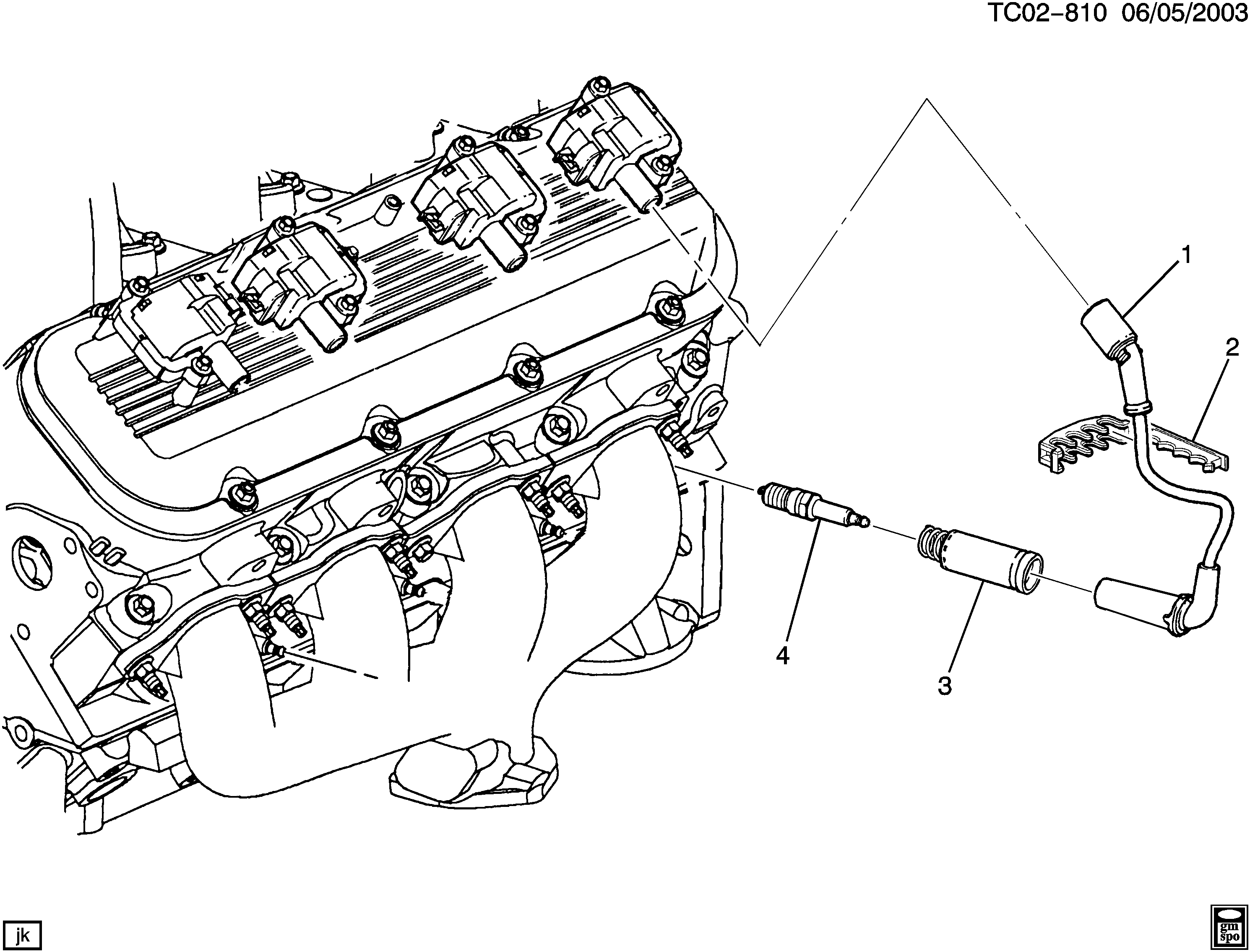
Alright, let's dive into the spark plug sequence diagram for the 2003 Chevy Avalanche. Understanding this diagram is crucial for anyone tackling engine maintenance, performance upgrades, or troubleshooting ignition issues on this truck. Think of it as a roadmap to your engine's combustion process, allowing you to properly diagnose misfires, replace spark plugs correctly, and generally keep your Avalanche running smoothly. Whether you're a seasoned DIYer or just starting to wrench on your own vehicles, grasping this diagram will save you time, money, and potential headaches.
Purpose of the Spark Plug Sequence Diagram
The spark plug sequence diagram serves several essential purposes:
- Correct Firing Order: Most importantly, it shows the firing order, which is the sequence in which the cylinders ignite. Getting this wrong can lead to severe engine damage. The 2003 Avalanche, typically equipped with a 5.3L V8, has a specific firing order that must be followed.
- Cylinder Identification: The diagram clearly identifies each cylinder by number. This is vital for diagnosing misfires and determining which spark plug or ignition coil is causing the problem.
- Coil Pack/Distributor Wiring: If your Avalanche has individual coil packs (most likely), the diagram clarifies which coil pack corresponds to each cylinder. For older distributor-based systems (not common on the '03 Avalanche, but good to know in general), it shows the correct routing of the spark plug wires from the distributor cap to the plugs.
- Troubleshooting Aid: When troubleshooting engine problems like misfires or poor performance, the diagram provides a reference point for checking spark plug condition, ignition coil function, and wiring integrity.
- Maintenance Reference: It’s a handy resource during routine maintenance like spark plug replacement. This ensures you install the new plugs in the correct order and torque them to the proper specification.
Key Specs and Main Parts of the Ignition System
Before dissecting the diagram, let's review some key specs and components:
- Engine Configuration: The 2003 Chevy Avalanche primarily came with a 5.3L V8 engine. This is crucial because the firing order and spark plug layout are specific to this engine type.
- Firing Order: The 5.3L V8 firing order is typically 1-8-7-2-6-5-4-3. This is the sequence in which the cylinders ignite.
- Spark Plugs: These are the devices that create the spark to ignite the air-fuel mixture in each cylinder. They have a specific gap (distance between the electrode and the ground strap) that must be maintained for optimal performance. Consult your owner's manual or a repair database for the correct gap specification, usually around 0.060 inches.
- Ignition Coils: Each cylinder has its own ignition coil (coil-on-plug) that steps up the voltage from the battery to thousands of volts, enough to create a spark.
- Cylinder Numbers: On a V8 engine, the cylinders are numbered sequentially, typically starting with #1 on the front passenger side and alternating sides down the engine. (Refer to the diagram for exact locations).
- PCM (Powertrain Control Module): The PCM controls the timing and duration of the spark, based on various engine parameters.
- Crankshaft Position Sensor (CKP): Provides the PCM with information about the crankshaft position, critical for timing the ignition.
Understanding the Symbols in the Diagram
Spark plug sequence diagrams often use simplified symbols to represent components and connections. Here's a breakdown of what you might encounter:
- Lines: Solid lines typically represent wiring connections. Dashed lines might indicate a ground connection or a shielded wire.
- Numbers: Numbers identify the cylinders (1 through 8 for a V8).
- Coil Symbols: A coil symbol (often a series of looped lines) indicates an ignition coil. The diagram will show which coil is connected to each cylinder.
- Ground Symbols: A ground symbol (often looking like a downward-pointing tree or a series of stacked lines) indicates a connection to the vehicle's chassis ground.
- Arrows: Arrows may indicate the direction of current flow or the orientation of a component.
- Colors: While color-coded diagrams aren't always available, if yours has color, it will typically indicate the wire color coding (e.g., red for positive, black for ground).
How the Ignition System Works
The ignition system's function is to provide a precisely timed spark to ignite the air-fuel mixture in each cylinder. Here's a simplified explanation:
- The PCM receives signals from various sensors, including the CKP sensor, which tells it the crankshaft position and engine speed (RPM).
- Based on this information, the PCM determines the optimal time to fire each spark plug.
- The PCM sends a signal to the appropriate ignition coil.
- The ignition coil receives a low-voltage signal from the PCM and transforms it into a high-voltage pulse (thousands of volts).
- This high-voltage pulse travels to the spark plug.
- The high voltage jumps the gap between the spark plug's electrode and ground strap, creating a spark.
- The spark ignites the air-fuel mixture, forcing the piston down and generating power.
- This process repeats for each cylinder in the firing order.
Real-World Use and Basic Troubleshooting
Here are some practical applications of the spark plug sequence diagram in troubleshooting:
- Misfire Diagnosis: If your Avalanche has a misfire, the diagram helps you pinpoint the affected cylinder. Use a scan tool to read the diagnostic trouble codes (DTCs). If the code indicates a misfire in cylinder #3, for example, you can use the diagram to locate cylinder #3 and inspect its spark plug, ignition coil, and wiring.
- Spark Plug Replacement: When replacing spark plugs, the diagram ensures you install them in the correct order. Also, remember to apply anti-seize compound to the spark plug threads (sparingly!) and torque them to the manufacturer's specification.
- Coil Pack Swapping: To diagnose a faulty ignition coil, you can swap coils between cylinders. For instance, if you suspect the coil on cylinder #1 is bad, swap it with the coil on cylinder #2. Clear the DTCs and see if the misfire follows the coil to cylinder #2. If it does, you've confirmed that the coil is the problem. Again, the diagram is essential for correctly identifying the cylinder locations.
- Wiring Inspection: Use the diagram to trace the wiring from the PCM to the ignition coils. Look for damaged wires, loose connections, or corroded terminals.
Safety Precautions
Working on the ignition system involves high voltages, so safety is paramount:
- Disconnect the Battery: Always disconnect the negative battery cable before working on the ignition system. This prevents accidental shocks and damage to the electrical components.
- Avoid Touching Live Wires: Never touch any wires or components while the engine is running or the ignition is turned on. The voltage can be lethal.
- Use Insulated Tools: Use insulated tools when working near electrical components.
- Work in a Well-Ventilated Area: When working with flammable liquids like gasoline, work in a well-ventilated area to avoid the risk of fire or explosion.
- Be Mindful of Hot Surfaces: The engine components can get very hot. Allow the engine to cool down before working on the ignition system. Especially the exhaust manifold.
The ignition system on your 2003 Chevy Avalanche is a critical component for proper engine operation. By understanding the spark plug sequence diagram and following safe work practices, you can effectively diagnose and repair ignition-related issues and keep your truck running smoothly. Remember to consult your vehicle's service manual for specific instructions and torque specifications.
To help you out, we've got a downloadable version of the 2003 Chevy Avalanche Spark Plug Sequence Diagram readily available. Just let us know and we'll provide the link!