
2003 Ford Focus Coolant Hose Diagram
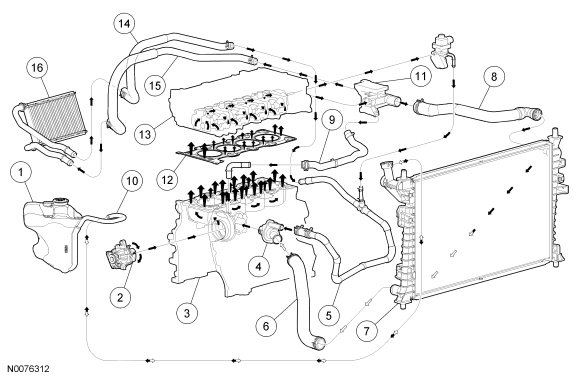
Alright, let's dive into the coolant hose diagram for a 2003 Ford Focus. Understanding this layout is crucial whether you're tackling a leaky hose, diagnosing overheating issues, or just trying to get a better handle on your car's cooling system. Consider this your go-to guide for navigating the coolant pathways in your trusty Focus.
Purpose of the Coolant Hose Diagram
Why bother with a diagram? Simple. It's your roadmap to the cooling system. It helps you:
- Identify coolant hoses: Know exactly which hose connects to which component.
- Troubleshoot leaks: Pinpoint the source of a coolant leak with confidence.
- Replace hoses correctly: Ensure you're routing the new hose the right way to avoid kinks and restrictions.
- Understand the cooling system's flow: Gain a deeper understanding of how coolant circulates and regulates engine temperature.
- Plan repairs and modifications: Get a visual overview before you start any work, especially when doing modifications.
A good diagram prevents costly mistakes and wasted time. It's an invaluable tool for any DIY mechanic.
Key Specs and Main Parts
The 2003 Ford Focus (specifically we're focusing on the Zetec 2.0L engine, though many principles apply to other engines) has a pretty standard cooling system layout. Key components and hoses include:
- Radiator: The heart of the cooling system, responsible for dissipating heat from the coolant.
- Radiator Hoses (Upper and Lower): Thick, durable hoses that connect the radiator to the engine. The upper hose carries hot coolant from the engine to the radiator, while the lower hose carries cooled coolant from the radiator to the engine.
- Heater Hoses: Smaller hoses that supply hot coolant to the heater core inside the cabin, providing heat to the occupants.
- Heater Core: A small radiator-like component located under the dashboard that radiates heat into the cabin.
- Bypass Hose: A short hose that allows coolant to circulate within the engine when the thermostat is closed (engine is cold).
- Coolant Reservoir (Expansion Tank): A plastic container that stores excess coolant and accommodates changes in volume due to temperature fluctuations.
- Thermostat: A temperature-sensitive valve that regulates coolant flow to the radiator. It remains closed when the engine is cold, allowing it to warm up quickly, and opens when the engine reaches operating temperature.
- Water Pump: A mechanically driven pump (usually belt-driven) that circulates coolant throughout the engine and cooling system.
- Engine Block Coolant Passages: Internal channels within the engine block and cylinder head that allow coolant to flow around the cylinders and other hot components.
- Hose Clamps: Metal clamps that secure the hoses to the various components, preventing leaks.
Important Specs: While a specific diameter for each hose varies, radiator hoses are typically around 1.25 - 1.5 inches in inner diameter, while heater hoses are smaller, around 0.625 - 0.75 inches. The key is to get the correct replacement hose designed for the application, rather than focusing on precise measurements in the diagram.
Symbols, Lines, and Colors in the Diagram
A coolant hose diagram uses symbols to represent different components and lines to indicate coolant flow. Here's a breakdown:
- Solid Lines: Typically represent coolant hoses. Their thickness might indicate hose diameter (thicker lines = larger hoses), but this isn't always consistent.
- Dotted Lines: Might represent vacuum lines or other related systems, but within the cooling system itself, rarely used. Pay attention to the Legend or Key in diagram.
- Arrows: Indicate the direction of coolant flow. Critical for understanding the circuit.
- Component Symbols: Radiators are often represented as a rectangle with cooling fins. Water pumps are often shown as a circle with a pump symbol. Thermostats are typically a valve symbol. Coolant reservoirs are usually represented by a container-like shape.
- Colors: While not always used, some diagrams use colors to differentiate between hot and cold coolant lines (e.g., red for hot, blue for cold). The original Ford service diagrams usually don't rely heavily on colors.
Always refer to the diagram's legend or key for specific symbol definitions. Every diagram can have slight variations.
How It Works: The Coolant Flow
The cooling system is a closed-loop system designed to regulate engine temperature. Here's a simplified breakdown of how coolant flows:
- The water pump circulates coolant throughout the engine block, absorbing heat from the cylinders.
- Hot coolant exits the engine and flows through the upper radiator hose to the radiator.
- As coolant passes through the radiator, it dissipates heat to the atmosphere via the radiator fins.
- Cooled coolant exits the radiator through the lower radiator hose.
- The cooled coolant returns to the engine, entering near the water pump to restart the cycle.
- When the engine is cold, the thermostat remains closed, preventing coolant from flowing to the radiator. Instead, coolant circulates through the bypass hose, allowing the engine to warm up more quickly.
- Once the engine reaches operating temperature, the thermostat opens, allowing coolant to flow to the radiator.
- Heater hoses tap off the main coolant circuit to supply hot coolant to the heater core inside the cabin, providing heat to the occupants.
- The coolant reservoir accommodates changes in coolant volume due to temperature fluctuations and provides a place to add coolant when needed.
Real-World Use: Basic Troubleshooting Tips
Here's how you can use the coolant hose diagram for troubleshooting:
- Leak Detection: If you see coolant leaking, use the diagram to trace the hose back to its source. Inspect the hose itself, the connection points (hose clamps), and the components it connects to (e.g., radiator, water pump).
- Overheating: If your engine is overheating, the diagram can help you identify potential causes, such as a clogged radiator hose, a faulty thermostat, or a failing water pump.
- Hose Replacement: When replacing a hose, use the diagram to ensure you route the new hose correctly and connect it to the proper components. This is especially important for complex hose configurations.
- Air Bleeding: If you've recently refilled the cooling system, use the diagram to identify any air bleed valves or procedures to remove trapped air. Air pockets can prevent proper cooling.
Example: You notice coolant dripping from the front of the engine. Consulting the diagram, you identify the lower radiator hose and its connection to the water pump. You inspect the hose and find a small crack near the clamp. Now you know exactly which hose to replace.
Safety Precautions
Working on the cooling system can be dangerous if you're not careful:
- Hot Coolant: Never open the radiator cap or any coolant system component while the engine is hot. Coolant is under pressure and can erupt, causing severe burns. Let the engine cool down completely before working on the system.
- Electrical Components: Be mindful of electrical components near the cooling system, such as the cooling fan motor and sensors. Disconnect the battery before working on any electrical components.
- Fan Blades: Be careful around the cooling fan blades. They can start spinning unexpectedly, even with the engine off (especially if the car has automatic fan control).
- Chemicals: Coolant is toxic. Avoid contact with skin and eyes. If you spill coolant, clean it up immediately. Dispose of used coolant properly at a recycling center.
Always wear safety glasses and gloves when working on the cooling system.
With this knowledge, you are in a better position to keep your 2003 Ford Focus running cool! We have the PDF document available for you to download. Now you have a digital copy for your reference.