
2003 Ford Taurus Spark Plug Wire Diagram
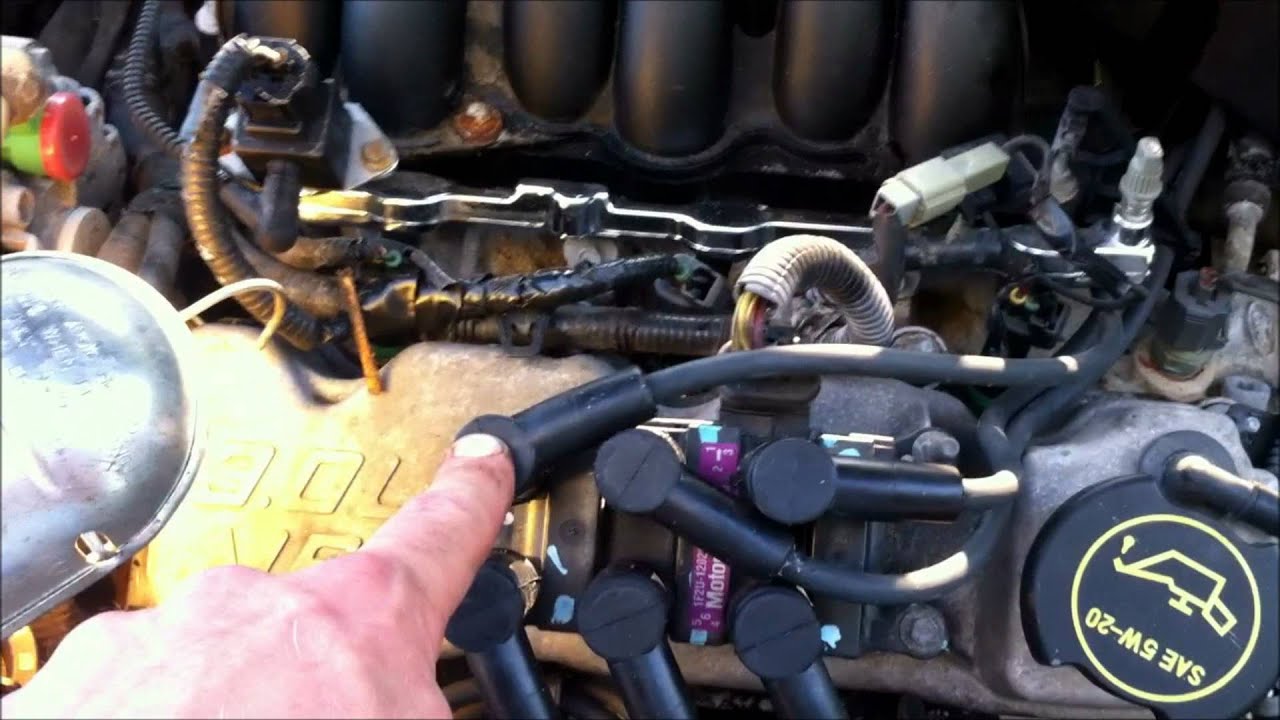
Alright, let's dive into the spark plug wire diagram for your 2003 Ford Taurus. This is a critical component of the ignition system, and understanding its layout is essential for diagnosing misfires, performing tune-ups, or even just gaining a deeper understanding of how your engine works. Whether you're tackling a specific repair or simply expanding your automotive knowledge, this guide will walk you through everything you need to know.
Purpose of the Spark Plug Wire Diagram
The spark plug wire diagram, at its core, is a map. It shows you exactly which spark plug wire connects to which cylinder on your engine. Why is this important? Because the firing order – the sequence in which each cylinder fires – is meticulously designed for optimal engine performance. If the wires are crossed, you'll experience serious engine misfires, poor performance, and potentially even engine damage. Therefore, the diagram is invaluable for:
- Diagnostics: Identifying misfires and tracing them back to a specific cylinder and potentially a faulty wire or plug.
- Tune-ups: Ensuring correct spark plug wire placement after replacing spark plugs or wires.
- Engine Swaps/Repairs: Double-checking wire connections after any work involving the engine.
- Learning: Understanding the layout and functioning of your 2003 Ford Taurus's ignition system.
Key Specs and Main Parts (2003 Ford Taurus)
The 2003 Ford Taurus came with a few different engine options, but we'll focus on the most common ones and how they affect the spark plug wire diagram. Notably, this explanation applies to both the 3.0L OHV (Overhead Valve) Vulcan engine and the 3.0L DOHC (Dual Overhead Camshaft) Duratec engine, though their physical layouts differ significantly.
- Engine Type: 3.0L Vulcan OHV or 3.0L Duratec DOHC V6
- Number of Cylinders: 6 (arranged in a V configuration)
- Number of Spark Plugs: 6 (one per cylinder)
- Firing Order: This is *critical*. For the 2003 Taurus, the firing order is 1-4-2-5-3-6. This means cylinder 1 fires first, then cylinder 4, then cylinder 2, and so on.
- Distributorless Ignition System (DIS): The 2003 Taurus uses a distributorless ignition system. This means there's no traditional distributor with a rotating arm. Instead, the ignition is controlled electronically by the Powertrain Control Module (PCM). The PCM sends signals to the coil pack, which then delivers the spark to the appropriate spark plugs.
- Coil Pack: This contains multiple ignition coils. Each coil is responsible for firing two spark plugs simultaneously in a waste spark system.
- Spark Plug Wires: These are the high-voltage cables that connect the coil pack to the spark plugs.
Symbols and Diagram Interpretation
Spark plug wire diagrams are typically quite straightforward. Here’s what you can expect to see:
- Cylinder Numbers: The diagram will clearly indicate the cylinder number (1 through 6) for each spark plug. These are usually arranged in a V formation to represent the engine's layout. Finding cylinder one is usually front-most, passenger side.
- Coil Pack Terminals: The diagram will show the coil pack and label each terminal. Each terminal corresponds to a specific pair of cylinders.
- Lines: Solid lines represent the spark plug wires connecting the coil pack terminals to the spark plugs. These lines may be curved to indicate the physical routing of the wires.
- Color Coding: While not always present, some diagrams use color coding to help you trace the wires. For example, a wire connected to cylinder 1 might be red. However, *do not rely solely on color*. Colors can fade or wires can be replaced with non-original parts. Always verify with cylinder numbers.
- Engine Orientation: The diagram will generally indicate the front of the engine. This is crucial for orienting yourself when working on the car.
Example Diagram Snippet (Conceptual)
Coil Pack:
Terminal A: Cylinders 1 & 6
Terminal B: Cylinders 2 & 5
Terminal C: Cylinders 3 & 4
Cylinder Layout (Looking from front of engine):
   3     6
  /       \
 1         4
  \       /
   2     5
Important Note: While this is a simplified example, it demonstrates the key elements you'll find in a real diagram. Always consult the actual diagram specific to your 2003 Ford Taurus's engine to ensure accuracy.
How It Works: The Ignition System
The spark plug wire diagram is integral to the ignition system. Here's a simplified overview of how it works:
- PCM Control: The Powertrain Control Module (PCM) monitors engine sensors and determines the optimal timing for ignition.
- Coil Activation: The PCM sends a signal to the appropriate ignition coil within the coil pack.
- Voltage Step-Up: The ignition coil transforms the relatively low voltage from the car's electrical system (12V) into a very high voltage (typically 20,000-30,000 volts).
- Spark Delivery: This high voltage travels through the spark plug wire to the spark plug.
- Spark Discharge: The high voltage overcomes the resistance in the spark plug gap, creating a spark.
- Combustion: The spark ignites the air-fuel mixture in the cylinder, initiating combustion and driving the piston.
Because the 2003 Taurus utilizes a waste spark system, each coil fires two spark plugs simultaneously – one in the cylinder that's on its compression stroke (ready to fire) and one in the cylinder that's on its exhaust stroke (wasting the spark). This simplifies the system and reduces the number of coils required.
Real-World Use: Basic Troubleshooting Tips
Here are a few troubleshooting scenarios where the spark plug wire diagram is your best friend:
- Misfire Diagnosis: If your engine is misfiring, use an OBD-II scanner to identify the specific cylinder(s) that are misfiring. Then, use the spark plug wire diagram to verify that the wires are connected correctly to that cylinder and its paired cylinder.
- Wire Replacement: When replacing spark plug wires, replace them one at a time. This minimizes the risk of accidentally swapping wires. Consult the diagram to ensure each new wire is connected correctly.
- Visual Inspection: Regularly inspect the spark plug wires for signs of damage, such as cracks, burns, or corrosion. A damaged wire can cause misfires and poor performance. Pay special attention to the boots (the rubber covers at each end of the wire), as these are prone to deterioration.
- Resistance Test: Use a multimeter to measure the resistance of each spark plug wire. Excessive resistance indicates a damaged wire that needs to be replaced. Consult your vehicle's repair manual for the acceptable resistance range.
Safety Precautions
High voltage is dangerous! The ignition system generates very high voltage, which can deliver a painful – and potentially lethal – shock. Follow these safety precautions:
- Never work on the ignition system with the engine running.
- Disconnect the negative battery cable before working on the ignition system. This will disable the system and prevent accidental shocks.
- Use insulated tools when working near ignition components.
- Wear rubber gloves for added protection.
- Be especially careful in wet or damp conditions, as water can increase the risk of electric shock.
- If you are not comfortable working with high voltage, consult a qualified mechanic.
Conclusion
Understanding the spark plug wire diagram for your 2003 Ford Taurus is crucial for diagnosing ignition problems and maintaining your engine's performance. By following the instructions and safety precautions outlined in this guide, you can confidently tackle basic ignition repairs and gain a deeper understanding of your vehicle's inner workings. With careful attention to detail and a solid understanding of the diagram, you'll be well-equipped to keep your Taurus running smoothly.
We have a downloadable version of the 2003 Ford Taurus Spark Plug Wire Diagram available for your convenience. You can access it for more detailed information and visual aid.