
2003 Lincoln Navigator Serpentine Belt Diagram
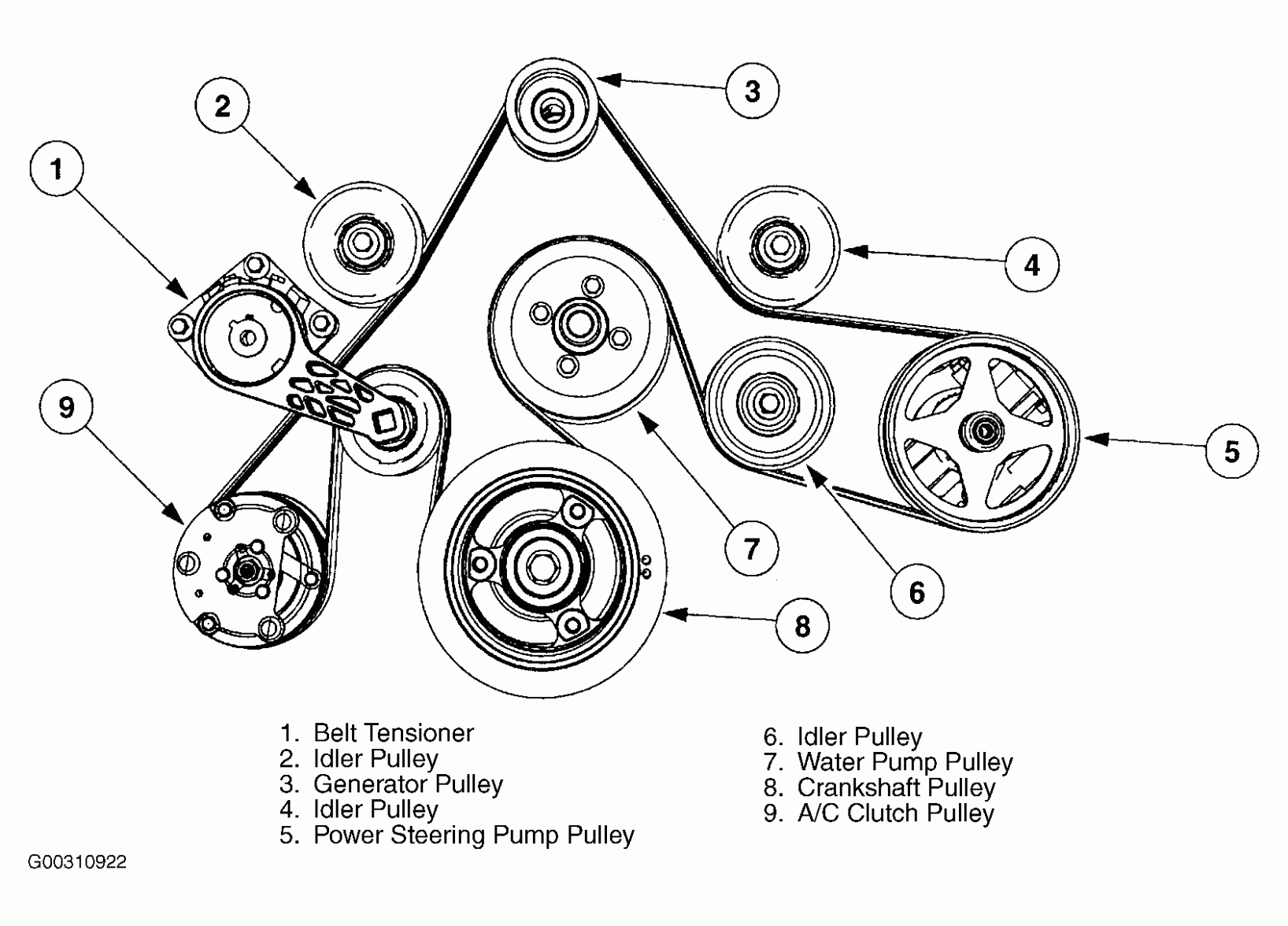
The serpentine belt, a seemingly simple rubber component, plays a crucial role in keeping your 2003 Lincoln Navigator running smoothly. It's the workhorse that drives many essential engine accessories. This article will provide a detailed breakdown of the 2003 Lincoln Navigator serpentine belt diagram, covering its purpose, components, operation, and troubleshooting, equipping you with the knowledge to tackle repairs and maintenance with confidence.
Purpose of the Serpentine Belt Diagram
A serpentine belt diagram isn't just a pretty picture; it's an essential tool for any DIY mechanic or car owner. It serves several critical purposes:
- Repair and Replacement: The diagram provides the correct belt routing. Installing the belt incorrectly can lead to accessory failure, engine damage, and even safety hazards.
- Troubleshooting: Visualizing the belt's path helps identify potential issues, like misaligned pulleys or worn-out components.
- Maintenance: Understanding the system allows for proactive maintenance, such as inspecting the belt for wear and tear before it fails.
- Learning: Even if you're not planning a repair, understanding the serpentine belt system provides valuable insight into your vehicle's operation.
Consider this diagram a roadmap for your engine's accessory drive system. Without it, you're essentially working blind.
Key Specs and Main Parts of the 2003 Lincoln Navigator Serpentine Belt System
The 2003 Lincoln Navigator, typically equipped with a 5.4L V8 engine, utilizes a specific serpentine belt configuration. Understanding the components involved is critical.
- Serpentine Belt: The main component, a long, continuous belt made of reinforced rubber. The ribbed side contacts most pulleys.
- Crankshaft Pulley (Harmonic Balancer): This pulley is driven directly by the engine's crankshaft. It's the driving force behind the entire serpentine belt system. It also helps dampen torsional vibrations from the engine.
- Alternator Pulley: The alternator generates electrical power to run the vehicle's electrical systems and charge the battery. The belt turns the alternator's rotor.
- Power Steering Pump Pulley: This pulley drives the power steering pump, which provides hydraulic assistance to the steering system.
- Air Conditioning (A/C) Compressor Pulley: The A/C compressor circulates refrigerant through the air conditioning system.
- Idler Pulley(s): Smooth, unpowered pulleys used to guide the belt and maintain proper tension. They help the belt wrap around other pulleys correctly.
- Tensioner Pulley: A spring-loaded pulley that maintains constant tension on the serpentine belt. It's crucial for preventing slippage and ensuring optimal accessory performance. The tensioner has a *spring loaded arm* and often a square hole that accepts a ratchet or breaker bar to relieve the tension for belt removal and installation.
Symbols and Diagram Conventions
Serpentine belt diagrams use a specific set of conventions to represent the system. Understanding these symbols is key to interpreting the diagram correctly:
- Solid Lines: Indicate the path of the serpentine belt. The thickness of the line doesn't usually represent anything specific.
- Pulleys: Typically represented as circles. The diameter of the circle doesn't always represent the actual size of the pulley.
- Arrows: Show the direction of rotation of each pulley. This is crucial for understanding how the belt moves through the system.
- Text Labels: Each pulley is labeled with its corresponding component (e.g., ALT for Alternator, P/S for Power Steering, A/C for Air Conditioning, CRANK for Crankshaft).
- Tensioner: The tensioner pulley is often depicted with a small arrow or symbol indicating the direction of its spring-loaded movement.
- Ribbed Side: The diagram will often depict which side of the belt (ribbed or smooth) contacts each pulley. In general the ribbed side is driven and the smooth side rides on the idler pulley
Pay close attention to the direction of the arrows, as an incorrectly routed belt will almost certainly cause problems.
How the Serpentine Belt System Works
The serpentine belt system operates on a relatively simple principle:
- The engine's crankshaft turns the crankshaft pulley.
- The serpentine belt, wrapped around the crankshaft pulley, is driven by its rotation.
- The belt, in turn, drives all the accessory pulleys (alternator, power steering pump, A/C compressor, etc.).
- The tensioner pulley maintains the proper tension on the belt, preventing slippage and ensuring optimal performance.
The serpentine belt is designed to be a continuous loop, hence the name "serpentine." Its single-belt design simplifies the system compared to older vehicles that used multiple belts.
Real-World Use and Basic Troubleshooting Tips
Here are some practical tips for using the serpentine belt diagram for troubleshooting:
- Squealing Noise: A common symptom is a squealing noise, especially upon starting the engine or during acceleration. This often indicates a loose or worn serpentine belt. Check the tensioner and the belt for cracks, glazing, or fraying.
- Accessory Malfunction: If the alternator isn't charging, the power steering isn't working, or the A/C isn't blowing cold air, the serpentine belt might be slipping or broken. The diagram helps verify the correct belt routing and identify which accessory is affected.
- Belt Wear: Regularly inspect the belt for signs of wear, such as cracks, missing ribs, or fraying edges. Use the diagram to ensure the belt is properly seated on all pulleys.
- Pulley Alignment: If the belt is consistently wearing out prematurely, check the alignment of the pulleys. A misaligned pulley can cause excessive friction and wear. A *straight edge* can be used to check for proper alignment.
Remember that diagnosing issues can sometimes require professional assistance. If you're unsure about any aspect of the repair, consult a qualified mechanic.
Safety Considerations
Working on the serpentine belt system involves certain safety risks:
- Moving Parts: The engine must be OFF and the key removed before working on the serpentine belt. Accidental activation of the engine can cause serious injury.
- Hot Surfaces: The engine components, including the pulleys and belt, can be very hot after running. Allow the engine to cool completely before working on the system.
- Spring Tension: The tensioner pulley is under spring tension. Use the correct tools and techniques to release the tension safely. Always wear eye protection.
- Battery Disconnect: Disconnecting the negative battery terminal can provide an extra layer of safety by preventing accidental electrical shocks.
Always prioritize safety when working on your vehicle.
We have a detailed 2003 Lincoln Navigator serpentine belt diagram available for download. This diagram will provide you with a clear visual aid for understanding and working on your vehicle's serpentine belt system. With the diagram and the knowledge gained from this article, you'll be well-equipped to tackle serpentine belt maintenance and repairs.