
2004 Dodge Ram 1500 4.7 Serpentine Belt Diagram
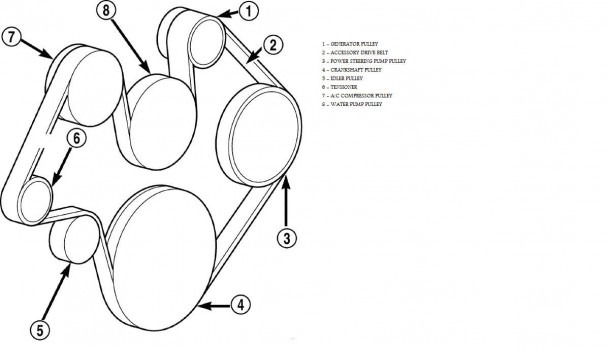
Alright, let's dive into the serpentine belt system on your 2004 Dodge Ram 1500 with the 4.7L engine. This article will give you a comprehensive understanding of the serpentine belt diagram, its components, and how to use it effectively for maintenance and troubleshooting. Whether you're replacing a worn belt, diagnosing a noisy pulley, or simply expanding your automotive knowledge, understanding this system is crucial.
Why This Diagram Matters
The serpentine belt diagram is your roadmap to understanding the belt's routing around various engine components. It's essential for several reasons:
- Belt Replacement: Correct routing is *critical* when installing a new belt. An incorrectly routed belt will not function properly, leading to component failure and potential engine damage.
- Troubleshooting: Identifying the components driven by the belt (alternator, power steering pump, A/C compressor, etc.) allows you to isolate the source of noises or malfunctions.
- Learning: Understanding the system's layout helps you grasp how the engine's accessories are powered.
- Maintenance: Regularly inspecting the belt and pulleys for wear and tear is key to preventative maintenance, saving you from costly repairs down the road.
Key Specs and Main Parts
Let's identify the core components involved in the serpentine belt system of your 2004 Dodge Ram 1500 4.7L:
- Serpentine Belt: A single, continuous belt that drives multiple engine accessories.
- Crankshaft Pulley (Harmonic Balancer): Connected directly to the engine's crankshaft, it's the driving force behind the serpentine belt.
- Alternator Pulley: Powers the alternator, which charges the battery and provides electrical power to the vehicle.
- Power Steering Pump Pulley: Drives the power steering pump, providing hydraulic assistance for steering.
- A/C Compressor Pulley: Engages the A/C compressor to cool the cabin.
- Water Pump Pulley: Drives the water pump, circulating coolant through the engine to regulate temperature.
- Idler Pulley(s): Smooth, ungrooved pulleys that guide the belt and maintain proper tension.
- Tensioner Pulley: A spring-loaded pulley that automatically adjusts belt tension, compensating for belt stretch and temperature changes. This maintains optimal grip for all driven components.
The *specific* routing and number of idler pulleys can vary slightly depending on options like A/C, but the fundamental principles remain the same. The 4.7L Dodge Ram 1500 will invariably have a tensioner pulley which is imperative to keep in good shape for proper belt operation.
Diagram Symbols and Interpretation
Understanding the symbols used in the serpentine belt diagram is key to its proper use:
- Solid Lines: Represent the path of the serpentine belt itself. The thickness of the line doesn't usually signify anything except visual clarity.
- Arrows: Indicate the direction of belt rotation around each pulley. Pay close attention to these arrows, as they are crucial for correct routing.
- Pulley Symbols: Circles typically represent pulleys. Some diagrams may differentiate between grooved pulleys (for components like the alternator or power steering pump) and smooth pulleys (idler pulleys).
- Component Labels: Each pulley will be labeled with its corresponding component (e.g., "ALT" for alternator, "P/S" for power steering, "A/C" for A/C compressor, "CRANK" for crankshaft).
- Tensioner Indicator: The tensioner pulley is often depicted with a spring symbol to indicate its spring-loaded mechanism. Some diagrams will also show the direction the tensioner moves to relieve tension for belt removal/installation.
Color coding is not standard in all diagrams, but if present, it might highlight different sections of the belt path or differentiate between smooth and grooved pulleys. However, rely primarily on the labels and arrows for accurate identification.
How It Works: The Serpentine System in Action
The serpentine belt system is designed to efficiently power multiple engine accessories using a single belt. The engine's crankshaft spins, rotating the crankshaft pulley. The serpentine belt, wrapped around the crankshaft pulley and all the other accessory pulleys, transfers this rotational force to each component. The tensioner pulley maintains constant tension on the belt, ensuring adequate grip on all pulleys, preventing slippage. If the belt slips it can melt to the pulleys and cause them to bind. This could have catastrophic affects on the engine. This consistent tension is crucial for the proper operation of all accessories. The idler pulleys simply guide the belt along its intended path, preventing it from rubbing against other components or interfering with other systems.
When the engine is running, the serpentine belt constantly rotates, driving the alternator to charge the battery, the power steering pump to provide steering assistance, the A/C compressor to cool the cabin, and the water pump to circulate coolant. Any failure in the belt or any of the driven components can disrupt this system, leading to various symptoms such as a dead battery, loss of power steering, a non-functioning A/C system, or engine overheating.
Real-World Use: Troubleshooting Tips
Here are some common issues you might encounter with your serpentine belt system and how to diagnose them:
- Squealing Noise: This is often caused by a worn, glazed, or loose belt. Inspect the belt for cracks, fraying, or missing chunks. Check the tensioner pulley to ensure it's functioning correctly and maintaining proper tension. A small amount of belt dressing can temporarily alleviate the noise, but it's not a long-term solution. A squealing sound can also be from a bad bearing on a pulley.
- Belt Slippage: If the belt is slipping, it may cause a burning rubber smell and reduced performance of the driven accessories (e.g., weak power steering, poor A/C cooling). This can be caused by a worn belt, a faulty tensioner, or a seized pulley.
- Component Failure: If a specific accessory is not working (e.g., alternator not charging), check the serpentine belt to ensure it's properly routed and driving the pulley. A failed bearing in an accessory can also cause the belt to snap.
- Belt Breakage: A broken belt is a serious issue. It will immediately stop all driven accessories from functioning and can lead to overheating if the water pump is no longer driven. Inspect all pulleys for damage or seized bearings. Replace the belt with a new one and address the underlying cause of the breakage.
Using a mechanic's stethoscope can be helpful for pinpointing the source of unusual noises within the serpentine belt system. Carefully touch the stethoscope probe to the housing of each pulley (while the engine is running) to listen for bearing noises. Always exercise extreme caution when working around a running engine.
Safety Precautions
Working on the serpentine belt system involves potential hazards. Always observe the following safety precautions:
- Disconnect the Battery: Disconnect the negative battery terminal before starting any work to prevent electrical shocks and accidental engine starting.
- Hot Engine: Allow the engine to cool completely before working on the serpentine belt system. Components can become extremely hot during operation.
- Moving Parts: Keep hands, hair, and clothing away from moving parts, especially the serpentine belt and pulleys, while the engine is running.
- Proper Tools: Use the correct tools for the job, such as a serpentine belt tool to relieve tension on the tensioner pulley.
- Eye Protection: Wear safety glasses to protect your eyes from debris.
- Radiator Fan: Be *extremely* careful around the radiator fan. It can start automatically, even with the engine off, if the engine is hot enough.
The tensioner pulley stores significant spring energy. Always use the proper tool to relieve the tension before removing or installing the belt. Releasing the tensioner without proper control can cause injury.
By carefully following these guidelines, you can safely and effectively maintain and troubleshoot the serpentine belt system on your 2004 Dodge Ram 1500 with the 4.7L engine.
We have the serpentine belt diagram file for the 2004 Dodge Ram 1500 4.7L engine available for download to aid in your work.