
2004 Dodge Ram 1500 Front Suspension Diagram
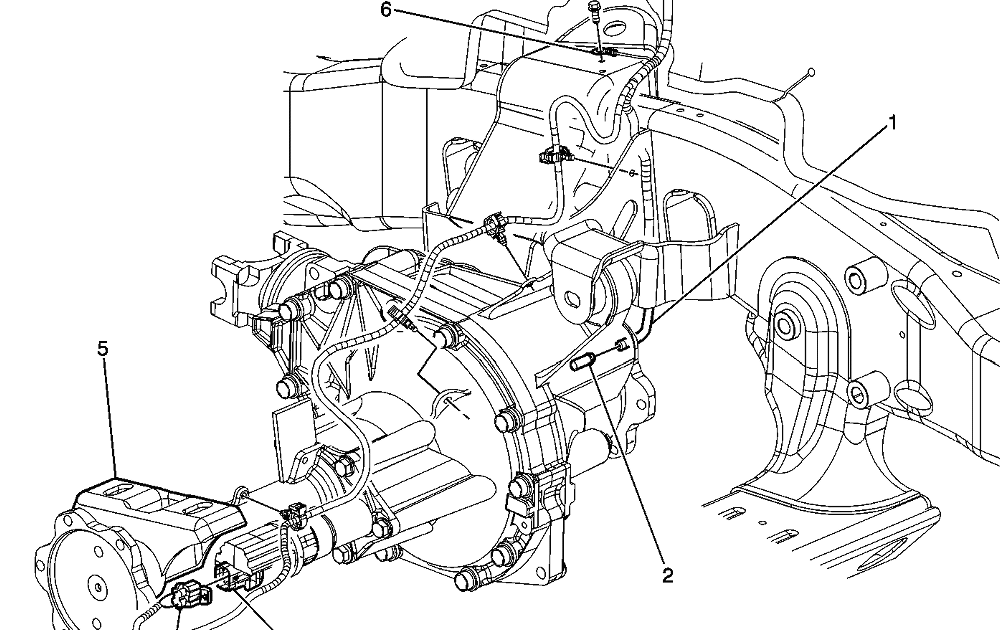
Okay, let's dive deep into the front suspension of your 2004 Dodge Ram 1500. This article provides a detailed explanation of the front suspension diagram. Understanding this system is crucial for everything from routine maintenance to diagnosing annoying rattles and even planning performance upgrades. Whether you're tackling a ball joint replacement or just want to learn more about how your truck handles, this guide will give you the knowledge you need.
Why This Diagram Matters
Think of this diagram as the roadmap to your front suspension. It shows you precisely where each component is located, how they're connected, and, crucially, what they're called. This knowledge is invaluable for:
- Diagnosis: Pinpointing the source of vibrations, noises, or handling issues.
- Repair: Knowing exactly which parts to order and how they fit together during replacement.
- Modification: Planning lift kits, leveling kits, or other performance upgrades by understanding the existing geometry.
- General Understanding: Gaining a deeper appreciation of your vehicle's engineering.
Key Specs and Main Parts
The 2004 Dodge Ram 1500 utilizes an independent front suspension, specifically a short-and-long arm (SLA), also known as a double-wishbone setup. This design offers a good balance between ride quality and handling. Here's a breakdown of the key components:
- Upper Control Arm: This arm connects the upper part of the steering knuckle (the part holding the wheel hub) to the vehicle's frame. It pivots on bushings and allows for vertical wheel travel.
- Lower Control Arm: Similar to the upper control arm, but connects the lower part of the steering knuckle to the frame. It typically bears the brunt of the suspension load.
- Steering Knuckle (Spindle): The central component that houses the wheel hub, bearings, and brake rotor. It connects to the upper and lower control arms via ball joints.
- Ball Joints: Spherical bearings that allow the steering knuckle to pivot in multiple directions, enabling steering and suspension movement. You'll have an upper ball joint and a lower ball joint on each side.
- Coil Spring: Provides the primary suspension support, absorbing bumps and maintaining ride height. It sits between the lower control arm and the frame.
- Shock Absorber (Damper): Controls the oscillation of the coil spring, preventing excessive bouncing and ensuring a smooth ride. It mounts inside the coil spring or adjacent to it.
- Sway Bar (Anti-Roll Bar): Connects the left and right sides of the suspension to reduce body roll during cornering. It twists to resist the tilting motion.
- Sway Bar End Links: Connect the sway bar to the control arms.
- Tie Rods (Inner and Outer): Part of the steering linkage, these connect the steering rack to the steering knuckle, transmitting steering inputs to the wheels. The inner tie rod connects to the steering rack and the outer tie rod connects to the steering knuckle.
- Hub Assembly: Contains the wheel bearings that allow the wheel to rotate freely.
Understanding the Diagram's Symbols
The diagram will employ standard engineering symbols. Pay close attention to these, as they convey important information. While specific diagrams may vary slightly, here are some common conventions:
- Solid Lines: Typically represent solid, physical components. Thicker lines often indicate major structural parts.
- Dashed Lines: Can indicate hidden components, the path of movement, or fluid lines (if applicable in a related system, like power steering).
- Circles and Dots: Usually denote connection points, such as bolts, rivets, or pivot points.
- Arrows: Indicate the direction of force, movement, or flow.
- Abbreviations: Common abbreviations include:
- UCA: Upper Control Arm
- LCA: Lower Control Arm
- BJ: Ball Joint
- SA: Shock Absorber
- SB: Sway Bar
- TR: Tie Rod
Pay attention to the exploded views often included in diagrams. These separate the components to show how they fit together in sequence.
How It Works
The SLA suspension on your Ram is designed to allow each wheel to move independently, improving ride quality and handling. Here's a simplified explanation:
When the wheel encounters a bump, the following happens:
- The lower control arm pivots upwards.
- The coil spring compresses, absorbing the impact energy.
- The shock absorber dampens the spring's oscillation, preventing it from bouncing uncontrollably.
- The upper control arm also pivots, allowing the wheel to move vertically while maintaining proper wheel alignment geometry.
During steering, the steering wheel's movement is translated through the steering shaft to the steering rack. The rack then pushes or pulls on the tie rods, which in turn rotate the steering knuckles, causing the wheels to turn. The ball joints allow this rotational movement while also accommodating the vertical movement of the suspension.
The sway bar resists body roll by transferring force from one side of the suspension to the other. When the vehicle leans in a turn, the sway bar twists, attempting to keep both wheels on the same plane. This helps to keep the vehicle level and improve handling.
Real-World Use & Basic Troubleshooting
Here are some common issues and how understanding the diagram can help:
- Clunking Noise: Could be worn ball joints, tie rod ends, sway bar end links, or control arm bushings. The diagram helps you visually inspect these components for play or damage.
- Squeaking Noise: Often caused by dry or worn bushings. Identify the bushings on the control arms and sway bar links using the diagram to determine which ones need lubrication or replacement.
- Wandering Steering: Could be caused by worn tie rod ends or ball joints, or even a misaligned suspension. The diagram will show you the location of these crucial steering components.
- Uneven Tire Wear: A sign of a misaligned suspension. After replacing suspension components, refer to the diagram to ensure everything is properly installed and then get a professional alignment.
Safety Considerations
The front suspension is a critical safety system. Never underestimate the forces involved. Incorrectly installed or worn components can lead to loss of control and serious accidents.
- Springs: Coil springs are under tremendous pressure. Use a proper spring compressor when removing or installing them. Improper use can result in serious injury or death. Do not attempt this without the correct tools and experience.
- Ball Joints: Worn ball joints can separate, causing the wheel to detach from the vehicle. Regularly inspect them for play and replace them promptly if necessary.
- Tightening Torque: Always tighten fasteners to the manufacturer's specified torque values. Use a torque wrench and consult a service manual for the correct specifications.
- Brake Lines: Be careful not to damage brake lines when working on the suspension. Damaged brake lines can lead to brake failure.
If you are not comfortable working on the front suspension, consult a qualified mechanic.