
2004 Dodge Ram 1500 Serpentine Belt Diagram
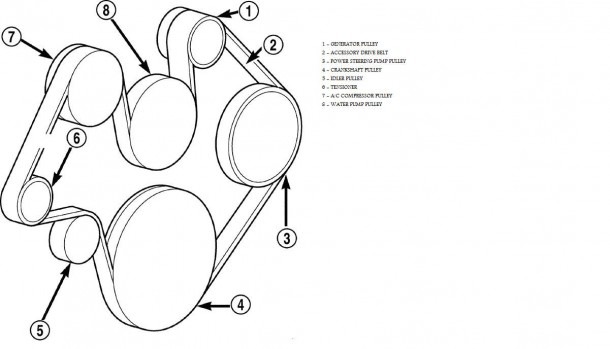
Welcome, fellow gearheads! Today, we're diving deep into the serpentine belt system of the 2004 Dodge Ram 1500. This isn't just about replacing a worn belt; it’s about understanding the heart of your truck's accessory drive. A clear understanding of the serpentine belt diagram is crucial for various tasks, from routine maintenance to diagnosing complex engine issues. We'll break down the diagram piece by piece, empowering you to confidently tackle repairs and upgrades.
Purpose of Understanding the Serpentine Belt Diagram
Why bother with a serpentine belt diagram? Well, the diagram serves as your roadmap for replacing the belt, diagnosing squealing noises, and ensuring proper accessory function. It's your guide to ensuring all the essential components like the alternator, power steering pump, and air conditioning compressor are running smoothly. More specifically, it lets you:
- Correctly Route the Belt: A misrouted belt can lead to serious engine damage. The diagram shows you the precise path.
- Identify Components: Know what each pulley is and what it does.
- Troubleshoot Issues: Squealing, slipping, or accessory failure can often be traced back to a belt problem or a failing component in the accessory drive.
- Perform Maintenance: Replacing the belt at recommended intervals prevents catastrophic failures.
Key Specs and Main Parts of the 2004 Dodge Ram 1500 Serpentine Belt System
Before we delve into the diagram, let’s familiarize ourselves with the key players and their specifications. The 2004 Dodge Ram 1500 came with several engine options, primarily the 3.7L V6, 4.7L V8, and 5.7L Hemi V8. Each engine utilizes a slightly different serpentine belt routing configuration.
Main Components:
- Crankshaft Pulley (Harmonic Balancer): This pulley, located at the bottom of the engine, is driven directly by the engine's crankshaft. It's the powerhouse that drives the entire serpentine belt system. It also acts as a harmonic damper, absorbing engine vibrations.
- Alternator Pulley: The alternator generates electricity to power the vehicle's electrical system and charge the battery. A properly tensioned belt is critical for its efficient operation.
- Power Steering Pump Pulley: The power steering pump provides hydraulic assistance, making steering easier.
- Air Conditioning Compressor Pulley: The A/C compressor circulates refrigerant in the air conditioning system.
- Idler Pulley(s): These smooth pulleys provide belt guidance and tension. They don't drive any specific accessory.
- Tensioner Pulley: This spring-loaded pulley maintains the correct tension on the serpentine belt. The tensioner is crucial for preventing slippage and ensuring proper operation of all accessories. A failing tensioner is a common cause of belt squeal.
- Water Pump Pulley: The water pump circulates coolant through the engine, preventing overheating. In some configurations, the serpentine belt drives the water pump.
Belt Specifications: The belt length and number of ribs vary depending on the engine. It’s critical to use the correct belt for your specific engine. Consult your owner's manual or a reliable parts supplier for the correct belt number. The belt is usually a multi-ribbed belt, also sometimes called a "poly-v" belt.
Understanding the Diagram Symbols
A serpentine belt diagram isn't just a pretty picture; it's a coded map. Here's how to decipher it:
- Solid Lines: Represent the path of the belt. Following the solid line shows you how the belt is routed around the pulleys.
- Arrows: Indicate the direction of belt travel. Always pay attention to the arrows to ensure you're routing the belt in the correct direction.
- Pulley Symbols: Usually, a circle or a representation of the pulley with its component name (e.g., ALT for alternator, P/S for power steering).
- Tensioner Symbol: Typically shown with an arrow indicating the direction the tensioner moves to relieve tension.
- Diagram Orientation: Diagrams usually depict the engine as viewed from the front of the vehicle.
How the Serpentine Belt System Works
The serpentine belt system is elegantly simple in principle. The crankshaft pulley, driven by the engine, spins the serpentine belt. This belt, in turn, wraps around and drives the various accessory pulleys. The tensioner pulley maintains constant tension on the belt, preventing slippage. Because the belt drives multiple accessories with a single belt, it's crucial for all of these components to be functioning optimally. A failing bearing in one of the pulleys can cause excessive drag, putting undue stress on the belt and potentially leading to premature failure. The entire system is a closed loop, and the routing is designed to maximize grip and minimize slippage.
Real-World Use: Troubleshooting Tips
Here's how understanding the diagram can help you troubleshoot common issues:
- Squealing Belt: Often caused by a loose belt, a worn belt, or a failing tensioner. Check the belt tension. If the tensioner is bouncing excessively, it may be failing. Also, inspect the belt for cracks, glazing, or missing ribs.
- Accessory Failure: If an accessory, like the alternator or A/C compressor, isn't working, confirm the belt is properly routed and tensioned. If the belt is slipping on that specific pulley, it could indicate a problem with the accessory itself.
- Belt Slippage: A slipping belt can cause reduced accessory performance and overheating. Ensure the belt is properly tensioned and in good condition. Check the pulleys for damage or contamination.
- Visual Inspection: Regularly inspect the serpentine belt for signs of wear and tear. Cracks, fraying, and missing chunks are all indicators that the belt needs to be replaced.
Safety Considerations
Working on the serpentine belt system can be dangerous if proper precautions aren't taken.
- Engine Off: Always work on the serpentine belt system with the engine off and the key removed from the ignition.
- Cool Engine: Allow the engine to cool down completely before working on the system, as components can be extremely hot.
- Battery Disconnect: Disconnect the negative battery terminal to prevent accidental electrical shorts.
- Moving Parts: Keep your hands and clothing away from moving parts when the engine is running. A spinning serpentine belt can cause serious injury.
- Tensioner Spring: Be extremely careful when releasing the tensioner. The spring is under significant tension and can cause injury if released improperly. Use the correct tool to relieve the tension.
Important Note: The tensioner pulley is a crucial component, but also potentially risky. Always use the correct tool to relieve tension. Never attempt to pry or force the tensioner without the proper leverage.
Replacing the serpentine belt can often be accomplished by using a standard wrench or socket on the tensioner pulley to relieve tension, allowing you to remove and replace the belt. Make sure the new belt is routed exactly as shown in the diagram.
Conclusion
Understanding the serpentine belt system of your 2004 Dodge Ram 1500 empowers you to perform routine maintenance, diagnose problems, and ensure the reliable operation of your vehicle. Remember to always prioritize safety and consult the diagram whenever you're working on the system.
We have the 2004 Dodge Ram 1500 serpentine belt diagram available for download. You can find the download link [link to diagram]. Download it, print it out, and keep it in your toolbox for easy reference. Happy wrenching!