
2004 Honda Accord Exhaust System Diagram
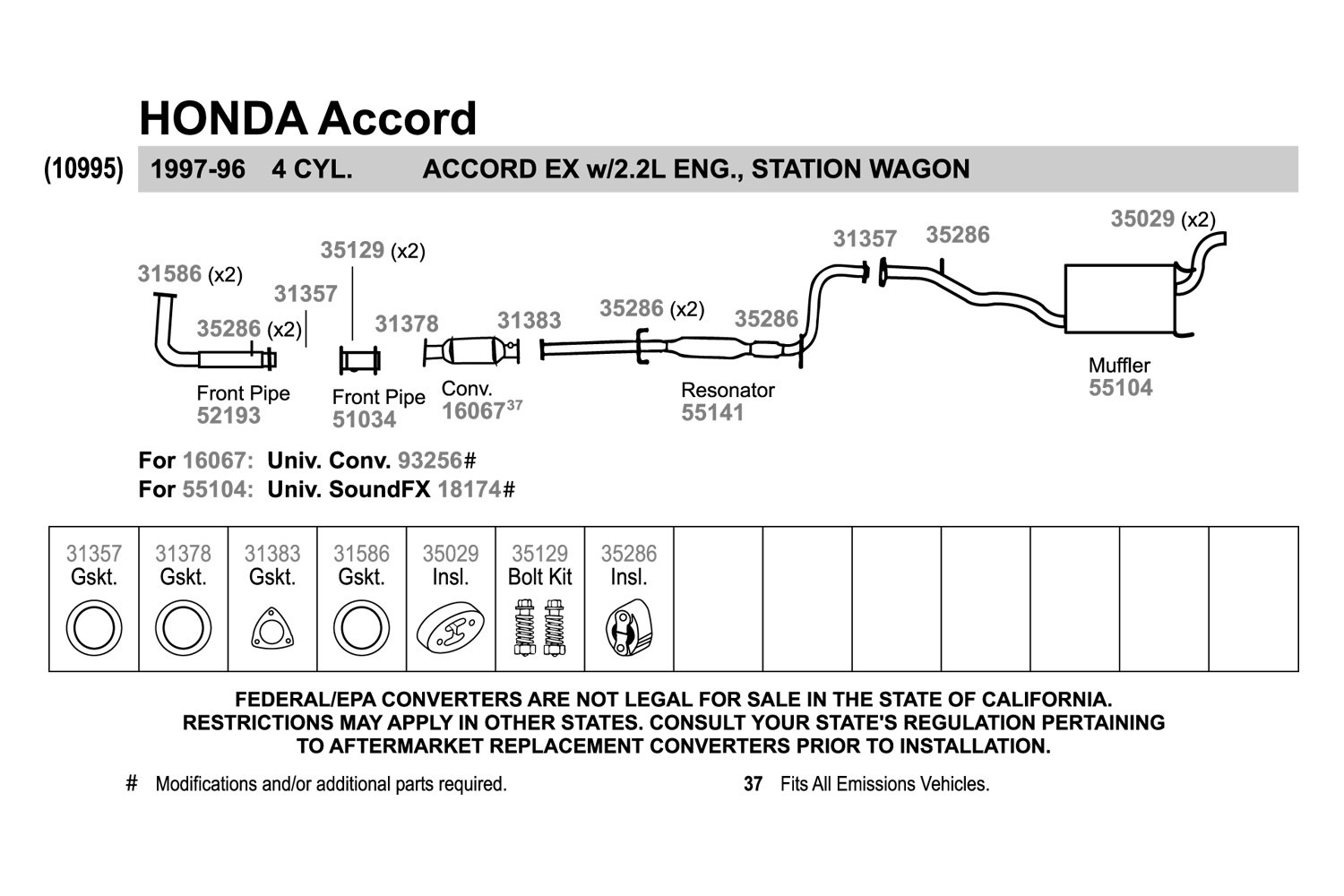
Alright, let's dive into the 2004 Honda Accord exhaust system. Whether you're planning a repair, contemplating a performance upgrade, or just trying to understand what's going on under your car, having a clear understanding of the exhaust system is crucial. This article will break down the 2004 Accord's exhaust system diagram, explaining its components, function, and common issues.
Why Bother with an Exhaust Diagram?
Why should you even bother looking at a diagram? Because understanding the exhaust system diagram empowers you. It's not just a pretty picture; it's a roadmap for:
- Troubleshooting: Pinpointing the source of that annoying rattle or figuring out why your fuel economy has tanked.
- Repairs: Knowing exactly what parts you need and how they connect makes repairs smoother and prevents costly mistakes.
- Modifications: Planning upgrades like a new muffler or headers requires a solid understanding of the existing system.
- General Knowledge: Simply understanding how your car works is satisfying and builds confidence in your ability to maintain it.
Key Specs and Main Parts of the 2004 Accord Exhaust System
The 2004 Honda Accord, depending on the engine (2.4L inline-4 or 3.0L V6), has a slightly different exhaust configuration. However, the core components remain similar. Here's a breakdown of the key parts:
- Exhaust Manifold (or Headers): This is where it all begins. The manifold collects exhaust gases from each cylinder of the engine and directs them into a single pipe. The V6 engine will have two manifolds, one for each bank of cylinders. High-performance aftermarket manifolds are often called headers and are designed for improved exhaust flow.
- Catalytic Converter: This is an emissions control device that uses catalysts (usually platinum, palladium, and rhodium) to convert harmful pollutants like hydrocarbons (HC), carbon monoxide (CO), and nitrogen oxides (NOx) into less harmful substances like carbon dioxide (CO2), water (H2O), and nitrogen (N2). The 2004 Accord may have one or two catalytic converters depending on the engine and trim.
- Resonator (Optional): Some Accord models include a resonator. Its job is to reduce specific frequencies of sound, helping to control droning and overall noise levels.
- Muffler: The muffler is the primary sound dampening component. It uses internal baffles and chambers to reduce exhaust noise to an acceptable level.
- Exhaust Piping: These are the pipes that connect all the components together. They're typically made of steel (often aluminized steel for corrosion resistance). Pipe diameter plays a crucial role in exhaust flow and overall performance.
- Oxygen Sensors (O2 Sensors): These sensors monitor the oxygen content in the exhaust gas. There are typically two types: upstream sensors (before the catalytic converter) and downstream sensors (after the catalytic converter). Upstream sensors provide feedback to the engine control unit (ECU) for fuel mixture adjustments, while downstream sensors monitor the efficiency of the catalytic converter.
- Exhaust Hangers: These rubber or metal hangers support the exhaust system and prevent it from rattling against the chassis.
- Gaskets and Flanges: Gaskets create a seal between exhaust components, preventing leaks. Flanges are the metal plates used to bolt the components together.
Understanding the Diagram's Symbols
The diagram itself uses specific symbols to represent the various components and connections. Here's a quick guide:
- Solid Lines: Typically represent the exhaust piping itself. The thickness of the line might indicate the pipe diameter.
- Dashed Lines: Could represent vacuum lines associated with emissions control systems, or less critical components.
- Boxes or Rectangles: Often represent the catalytic converter, resonator, or muffler. They may contain internal details or cutaway views.
- Circles or Ovals: Might represent O2 sensor locations or mounting points.
- Arrows: Indicate the direction of exhaust flow.
- Numbers or Letters: Correspond to part numbers or component labels in the parts list. This is crucial for ordering the correct replacement parts.
- Color Coding (If Present): Some diagrams use color to differentiate components or systems. The legend should explain the meaning of each color. For example, red might indicate a high-temperature area.
How the Exhaust System Works
The exhaust system's primary function is to remove combustion byproducts from the engine and expel them safely into the atmosphere. Here's a simplified overview:
- Exhaust Stroke: During the exhaust stroke, the exhaust valve opens, and the piston pushes the burnt gases out of the cylinder and into the exhaust manifold.
- Manifold Collection: The exhaust manifold collects gases from all cylinders and directs them into a single pipe.
- Catalytic Conversion: The catalytic converter uses chemical reactions to convert harmful pollutants into less harmful substances.
- Sound Reduction: The resonator (if present) and muffler dampen the exhaust noise.
- Exhaustion: The exhaust gases are expelled through the tailpipe into the atmosphere.
- O2 Sensor Feedback: Oxygen sensors monitor the exhaust gas composition and provide feedback to the ECU. This feedback loop allows the ECU to adjust the air-fuel mixture for optimal combustion and emissions control.
Real-World Use and Basic Troubleshooting
Here are some common problems and how the diagram can help you diagnose them:
- Exhaust Leak: A hissing or roaring sound coming from under the car, especially under acceleration, often indicates an exhaust leak. The diagram helps you pinpoint the likely location of the leak (e.g., a cracked manifold, a rusted-through pipe, or a bad gasket). You can then visually inspect the area.
- Rattling Noise: A rattling sound could be caused by a loose exhaust hanger, a broken baffle inside the muffler, or the exhaust pipe hitting the chassis. The diagram shows the location of the hangers and the layout of the system, making it easier to identify the source of the rattle.
- Check Engine Light (CEL): If the check engine light comes on, and the code relates to the exhaust system (e.g., P0420 - Catalyst System Efficiency Below Threshold), the diagram can help you understand which components are involved. For example, you can use the diagram to locate and test the O2 sensors.
- Reduced Fuel Economy: A failing catalytic converter or a malfunctioning O2 sensor can negatively impact fuel economy. The diagram shows the placement of these components, allowing you to inspect them for damage or corrosion.
Safety Considerations
Working on the exhaust system can be dangerous. Here are some key safety precautions:
- Heat: The exhaust system gets extremely hot. Always allow the system to cool down completely before working on it. Even after the engine is off, the system can retain heat for a significant amount of time.
- Lifting: Always use proper jack stands when lifting the vehicle. Never work under a vehicle supported only by a jack.
- Eye Protection: Wear safety glasses to protect your eyes from debris.
- Hand Protection: Wear gloves to protect your hands from cuts, burns, and chemicals.
- Welding (If Applicable): If you're welding on the exhaust system, take proper precautions to prevent fires and burns. Use a welding helmet and gloves, and ensure adequate ventilation.
- Catalytic Converter: The catalytic converter contains harmful materials. Handle it with care and dispose of it properly.
Important Note: Tampering with or removing emissions control devices (like the catalytic converter) is illegal in many jurisdictions. Always check your local regulations before making any modifications.
This guide provides a general overview of the 2004 Honda Accord exhaust system and its diagram. For specific repairs or modifications, always consult the factory service manual for detailed instructions and torque specifications.
To get the complete 2004 Honda Accord Exhaust System Diagram file, you can download it from our resources section. Having the full diagram will make your repair and modification projects much easier.