
2004 Mustang Front Suspension Diagram
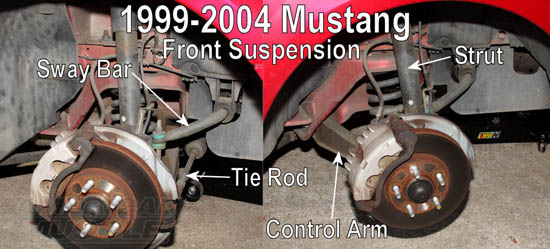
Let's dive into the front suspension of the 2004 Mustang. Whether you're planning on doing some maintenance, upgrading components, or just trying to understand how your car works, having a good grasp of the front suspension is crucial. This article will break down a typical 2004 Mustang front suspension diagram, explain its components, and offer some practical tips.
Purpose of the Front Suspension Diagram
A front suspension diagram serves as a roadmap for understanding and working on your Mustang's front end. It's invaluable for several reasons:
- Diagnosis: Quickly identify components related to a specific issue (e.g., a clunking noise could point to worn ball joints).
- Repair: Follow the diagram for proper disassembly and reassembly, ensuring everything goes back together correctly.
- Modification: Plan and execute suspension upgrades, such as lowering springs or sway bar installations, with confidence.
- Learning: Gain a deeper understanding of how the suspension system functions and how each component contributes to ride quality and handling.
Think of the diagram as your visual guide to the front suspension, allowing you to navigate its complexities and avoid costly mistakes.
Key Specs and Main Parts of the 2004 Mustang Front Suspension
The 2004 Mustang uses a MacPherson strut front suspension design. This is a common and relatively simple independent suspension system. Here's a breakdown of the key components:
Main Components
- Strut Assembly: The heart of the system. It combines the shock absorber and coil spring into a single unit. The shock absorber dampens vibrations, while the coil spring provides support and absorbs bumps.
- Coil Spring: A helical spring that supports the vehicle's weight and allows the suspension to compress and extend.
- Shock Absorber (Damper): Controls the rate of compression and rebound of the suspension, preventing excessive bouncing.
- Lower Control Arm: Connects the spindle (wheel hub) to the vehicle's frame. It pivots to allow vertical wheel movement.
- Ball Joints: Allow for articulation between the lower control arm and the spindle. They are critical for steering.
- Spindle (Steering Knuckle): The component that holds the wheel hub and bearings. It connects to the control arm(s) and steering components.
- Wheel Hub and Bearings: Allow the wheel to rotate smoothly.
- Sway Bar (Stabilizer Bar): Connects the left and right sides of the suspension to reduce body roll during cornering. It twists to resist independent movement of the wheels.
- Sway Bar End Links: Connect the sway bar to the strut or lower control arm.
- Tie Rod Ends: Connect the steering rack to the spindles. They transmit steering input to the wheels.
- Steering Rack: The main component of the power steering system, converting rotational steering input into linear motion to turn the wheels.
Key Specs
While a diagram itself won't show exact measurements, it's crucial to know that certain specifications are critical for the 2004 Mustang front suspension. These include:
- Torque Specifications: Every fastener has a specific torque value. Over-tightening can damage components, while under-tightening can lead to looseness and failure. Always consult a repair manual or online database for the correct torque specs for each bolt and nut.
- Alignment Angles: Camber, caster, and toe are the angles that determine how the wheels are positioned relative to the vehicle. Proper alignment is essential for tire wear, handling, and stability. After any suspension work, a wheel alignment is mandatory.
- Spring Rates: If replacing springs, it's important to choose springs with the correct spring rate for your driving style and desired ride height.
Understanding Symbols on the Diagram
Suspension diagrams use standard symbols to represent different components and connections. These can vary slightly depending on the diagram's source, but here are some common interpretations:
- Solid Lines: Typically represent rigid components like control arms, struts, and tie rods.
- Dashed Lines: May indicate hidden components or lines that are part of the vehicle's chassis but not directly part of the suspension.
- Circles: Often represent bolt holes or connection points.
- Arrows: Show the direction of movement or force. For example, an arrow on a shock absorber might indicate the direction of compression.
- Color Coding: Different colors can be used to differentiate between components or systems. For example, the steering system might be shown in blue, while the suspension components are in black.
- Labels: Each component should be clearly labeled with its name or a part number.
It's essential to familiarize yourself with the legend or key that accompanies the diagram. This will explain any specific symbols or conventions used.
How It Works: A Simplified Explanation
The front suspension of the 2004 Mustang is designed to provide a comfortable ride and stable handling. Here's a simplified overview of how it works:
- When the wheel encounters a bump, the coil spring compresses, absorbing the impact energy.
- The shock absorber dampens the oscillation of the spring, preventing the vehicle from bouncing excessively.
- The lower control arm pivots, allowing the wheel to move vertically while maintaining its position relative to the vehicle's frame.
- The ball joints allow the spindle to articulate, enabling steering.
- The sway bar resists body roll during cornering by transferring force from one side of the suspension to the other.
- Steering input from the steering wheel is transmitted through the steering rack to the tie rod ends, which turn the spindles and steer the wheels.
This system works in concert to isolate the vehicle's body from road imperfections, providing a smooth and controlled driving experience.
Real-World Use: Basic Troubleshooting Tips
Here are some common symptoms and potential causes related to the front suspension:
- Clunking Noise: Could indicate worn ball joints, sway bar end links, or strut mounts.
- Squeaking Noise: Often caused by dry or worn ball joints or control arm bushings.
- Excessive Bouncing: Worn shock absorbers are the likely culprit.
- Poor Handling: Can be caused by worn ball joints, tie rod ends, or sway bar bushings. Also, check for broken or sagging springs.
- Uneven Tire Wear: Often indicates an alignment problem.
When diagnosing suspension problems, always start with a visual inspection. Look for worn bushings, leaking shocks, and damaged components. Use a pry bar to check for play in ball joints and tie rod ends. A thorough inspection can often pinpoint the source of the problem.
Safety Considerations
Working on the front suspension can be dangerous due to the presence of compressed springs and high-torque fasteners. Here are some essential safety precautions:
- Spring Compression: Never attempt to disassemble a strut assembly without using a proper spring compressor. The compressed spring stores a tremendous amount of energy, and releasing it without control can cause serious injury or death. Always wear safety glasses.
- Torque Specifications: Use a torque wrench to ensure that all fasteners are tightened to the correct torque. Over-tightening can damage components, while under-tightening can lead to looseness and failure.
- Vehicle Support: Always use jack stands to support the vehicle when working underneath it. Never rely solely on a jack.
- Disconnect the Battery: Although not directly related to the suspension itself, disconnecting the negative battery terminal is a good practice when working on any part of the car to avoid accidental electrical shorts.
- Penetrating Oil: Use penetrating oil on corroded fasteners to make them easier to remove.
Warning: The spring is under extreme tension. Improper handling can lead to serious injury or death. If you are not comfortable with this procedure, seek the help of a qualified mechanic.
By understanding the front suspension system and following proper safety precautions, you can confidently tackle maintenance and repair tasks on your 2004 Mustang. Remember to always consult a repair manual and follow the manufacturer's recommendations.
We have a downloadable diagram of the 2004 Mustang's front suspension available. This detailed visual aid can be a valuable asset for your projects. Just reach out, and we'll provide you with the file.