
2004 Silverado Serpentine Belt Diagram
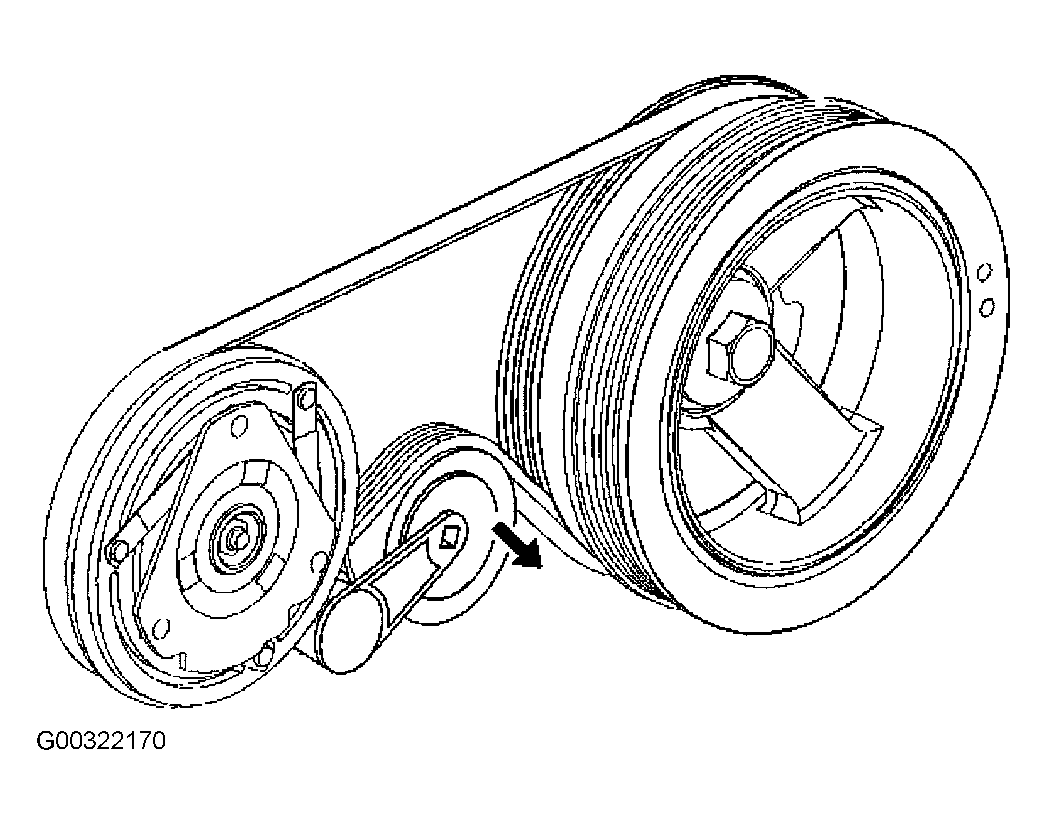
The serpentine belt in your 2004 Silverado is a critical component. It's a single, continuous belt that drives several important engine accessories. Understanding its routing and function is essential for preventative maintenance, troubleshooting, and repairs. This article will provide a detailed breakdown of the 2004 Silverado serpentine belt diagram, focusing on its purpose, key components, how it works, troubleshooting, and safety considerations. We've also made the diagram available for download, which you'll find linked at the end.
Purpose of the Serpentine Belt Diagram
The serpentine belt diagram serves several crucial purposes. First and foremost, it's your roadmap for replacing the belt itself. Without it, correctly routing the new belt around all the pulleys can be a frustrating and potentially damaging exercise. Incorrect routing can lead to component failure, belt slippage, and even engine damage. Beyond replacement, the diagram is invaluable for:
- Diagnosis: Visual inspection of the belt's path can help identify misalignment or issues with individual components.
- Maintenance: Understanding the belt's path allows for proper tensioner adjustment and inspection of pulleys for wear or damage.
- Learning: For those interested in understanding the inner workings of their vehicle, the diagram offers a visual representation of how various engine accessories are driven.
Key Specs and Main Parts
The 2004 Silverado came with various engine options, and the serpentine belt routing differs slightly depending on the engine. We will focus on the most common configurations, but always consult your vehicle's specific service manual or a reliable parts database for precise information.
Here's a breakdown of the key components typically found in a 2004 Silverado serpentine belt system:
- Crankshaft Pulley (Harmonic Balancer): This pulley is directly connected to the crankshaft and provides the primary driving force for the belt. It's also known as a vibration damper, designed to absorb engine vibrations.
- Alternator Pulley: The alternator generates electrical power for the vehicle. The serpentine belt drives the alternator, ensuring the battery stays charged and the electrical system functions correctly.
- Power Steering Pump Pulley: The power steering pump provides hydraulic assistance for steering. Driven by the serpentine belt, it allows for easier turning of the steering wheel.
- Air Conditioning Compressor Pulley: The A/C compressor circulates refrigerant, cooling the air inside the vehicle. Its pulley is driven by the serpentine belt.
- Idler Pulley(s): These pulleys provide guidance and support for the belt, ensuring it maintains proper tension and avoids interference. They do not drive any accessories.
- Tensioner Pulley: The tensioner pulley applies constant pressure to the belt, maintaining proper tension. It typically consists of a spring-loaded arm and a pulley. The tensioner is crucial for preventing belt slippage and premature wear.
- Water Pump Pulley: The water pump circulates coolant throughout the engine, preventing overheating. Its pulley is driven by the serpentine belt.
Belt Length: The length of the serpentine belt is critical. Using the wrong length will result in either the belt being too loose (causing slippage) or too tight (putting excessive strain on components). Check your vehicle's specific engine and options to determine the correct belt length. This is commonly found in your owner's manual or a parts catalog.
Serpentine Belt Diagram Symbols
Understanding the symbols used in a serpentine belt diagram is essential for proper interpretation. While conventions can vary slightly, here are some common elements:
- Solid Lines: These represent the path of the serpentine belt. The direction of the line indicates which direction the belt is traveling.
- Dashed Lines: Dashed lines may indicate the rear or obscured portion of the belt path. They help show how the belt wraps around pulleys that may be partially hidden from view in a 2D representation.
- Arrows: Arrows may indicate the direction of belt rotation. This can be helpful in visualizing how each component is driven.
- Pulley Symbols: Each pulley is typically represented by a circle or a simplified illustration. Labels next to the pulley indicate its function (e.g., "ALT" for alternator, "P/S" for power steering).
- Tensioner Symbol: The tensioner is often depicted with a spring or an arrow indicating the direction of tension.
How It Works
The serpentine belt system works by transferring rotational force from the crankshaft to various engine accessories. The crankshaft pulley, driven directly by the engine, spins the serpentine belt. The belt, in turn, wraps around each of the accessory pulleys, transferring rotational force to them. The tensioner maintains the appropriate amount of tension on the belt, ensuring that it doesn't slip or come off the pulleys.
The efficient operation of the serpentine belt system is crucial for the proper functioning of several vital vehicle systems. A malfunctioning serpentine belt can lead to:
- Loss of Power Steering: Making the vehicle difficult to steer.
- Overheating: Due to the water pump not circulating coolant properly.
- Battery Drainage: The alternator failing to charge the battery.
- A/C Malfunction: The air conditioning compressor not functioning.
Real-World Use: Basic Troubleshooting Tips
Here are some basic troubleshooting tips related to your 2004 Silverado's serpentine belt:
- Squealing Noise: A common symptom of a worn or loose serpentine belt. Check the belt for cracks, fraying, or glazing. Also, inspect the tensioner to ensure it's applying adequate pressure.
- Belt Slippage: Can be caused by a loose belt, a worn belt, or a faulty tensioner. Look for signs of belt dust or debris around the pulleys.
- Cracked or Frayed Belt: Replace the belt immediately. A severely damaged belt is likely to fail, leaving you stranded.
- Pulley Noise: Grinding or squealing noises coming from individual pulleys can indicate bearing failure. Use a mechanic's stethoscope to pinpoint the source of the noise.
Using the Diagram for Troubleshooting: Visually compare the actual belt routing on your vehicle to the diagram. Ensure the belt is properly aligned on each pulley and that it's not rubbing against any other components. The diagram is invaluable when checking the installation after replacing a component.
Safety Considerations
Working on the serpentine belt system can be dangerous. Here are some important safety precautions:
- Disconnect the Battery: Always disconnect the negative battery terminal before working on any electrical components.
- Hot Engine: Never work on the serpentine belt system when the engine is hot. Allow the engine to cool completely before starting.
- Moving Parts: Be extremely careful when working near the serpentine belt while the engine is running. Keep hands, clothing, and tools clear of moving parts. The spinning belt and pulleys can cause serious injury.
- Tensioner Spring: The tensioner spring is under considerable pressure. Use the correct tools and techniques when releasing the tension to avoid injury.
- Eye Protection: Wear safety glasses to protect your eyes from debris.
Specifically, pay close attention to the following potentially risky components:
- Crankshaft Pulley: Avoid touching the crankshaft pulley when the engine is running, as it spins at engine speed.
- Tensioner Assembly: When releasing the tension on the belt, use the correct size wrench or tool designed for your specific vehicle. Failure to do so could cause the tensioner to release rapidly and cause injury.
Remember, if you are not comfortable working on the serpentine belt system, it is best to consult a qualified mechanic.
We've prepared a downloadable version of the 2004 Silverado Serpentine Belt Diagram for your convenience. You can access it here: [Insert Download Link Here - Placeholder]. This diagram will provide you with a clear and concise visual reference for your vehicle.