
2005 Dodge Ram 1500 Serpentine Belt Diagram
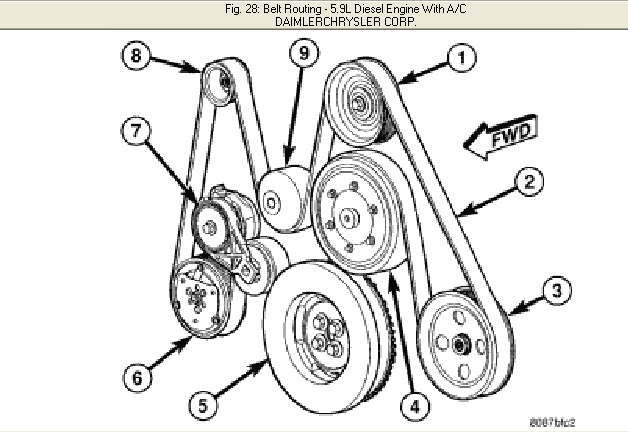
Let's dive into the serpentine belt system of your 2005 Dodge Ram 1500. This guide is tailored for intermediate DIYers who want to understand, troubleshoot, or replace the serpentine belt on their truck. A clear understanding of the belt's routing is crucial for proper operation, preventing damage, and ensuring the longevity of various engine components.
Purpose of Understanding the Serpentine Belt Diagram
The serpentine belt diagram is your roadmap to the engine's accessory drive system. It provides a visual representation of how the serpentine belt is routed around various components. Why is this important? Several reasons:
- Proper Belt Installation: Incorrect routing can lead to component damage, premature belt wear, and system failure. The diagram ensures you route the new belt correctly.
- Troubleshooting: Squealing noises, overheating, or a non-functional AC can often be traced back to a worn, loose, or improperly routed serpentine belt. The diagram helps you identify the components driven by the belt and diagnose related issues.
- Component Replacement: When replacing components like the alternator, power steering pump, or AC compressor, you'll need to remove and reinstall the serpentine belt. The diagram ensures you do it right.
- General Engine Understanding: Familiarizing yourself with the serpentine belt system provides a deeper understanding of your engine's operation.
Key Specs and Main Parts (2005 Dodge Ram 1500)
The 2005 Dodge Ram 1500 came with several engine options, and the serpentine belt routing varies slightly depending on the engine. We'll focus on the most common configurations, but always consult your vehicle's specific diagram (available for download at the end of this article) for accuracy.
Engines and Belt Configurations:
- 3.7L V6: A simpler setup with fewer accessories.
- 4.7L V8: A more common configuration with a standard set of accessories.
- 5.7L HEMI V8: Another common configuration, potentially with slight variations depending on options.
Main Parts Involved:
- Serpentine Belt: The continuous belt that drives all accessory components. It is made of rubber reinforced with fabric. The belt's length and rib profile (the number and shape of the ribs) are crucial. Always use the correct replacement belt.
- Crankshaft Pulley (Harmonic Balancer): Located at the bottom of the engine, this pulley is driven directly by the engine and provides power to the serpentine belt.
- Alternator: Generates electricity to power the vehicle's electrical system and charge the battery.
- Power Steering Pump: Provides hydraulic pressure to assist steering.
- Air Conditioning Compressor: Compresses refrigerant to cool the cabin.
- Water Pump: Circulates coolant through the engine to regulate temperature.
- Idler Pulley(s): Smooth pulleys that guide the belt and maintain proper tension. They don't drive any specific component.
- Tensioner Pulley: A spring-loaded pulley that automatically maintains the correct tension on the serpentine belt. This is a critical component; a failing tensioner can cause belt slippage, noise, and component damage.
Understanding Serpentine Belt Diagram Symbols
Serpentine belt diagrams use specific symbols to represent components and belt routing. Let's break down the common ones:
- Solid Line: Represents the path of the serpentine belt. The thickness of the line doesn't usually have any specific meaning.
- Arrows: Indicate the direction of belt travel. Pay close attention to the arrows to ensure correct routing.
- Circles: Typically represent pulleys. Some diagrams might differentiate between grooved pulleys (driving pulleys) and smooth pulleys (idler pulleys) with slightly different symbols.
- Component Labels: Each pulley will be labeled with the component it drives (e.g., ALT for Alternator, P/S for Power Steering, A/C for Air Conditioning).
- Tensioner Symbol: The tensioner pulley is often represented with a spring symbol or a distinct shape indicating its spring-loaded function.
Color coding is less common on serpentine belt diagrams than on wiring diagrams, but if colors are used, they usually indicate the relative position of the belt (e.g., a lighter color for the belt section in front, a darker color for the section in the back).
How the Serpentine Belt System Works
The serpentine belt system is a closed-loop system driven by the engine's crankshaft. The crankshaft pulley (harmonic balancer) provides the rotational force to the belt. The belt then transfers this force to the various accessory components (alternator, power steering pump, AC compressor, water pump). The tensioner pulley maintains constant tension on the belt, preventing slippage and ensuring efficient power transfer.
The routing of the belt is crucial. It's designed to maximize contact area between the belt and the pulleys, providing optimal grip. The belt wraps around each pulley in a specific sequence, determined by the engine's design and the location of the accessories.
The tensioner is a spring-loaded device that allows the belt to maintain optimal tension even as it stretches slightly over time or as the temperature changes. A properly functioning tensioner is essential for the system's performance.
Real-World Use: Basic Troubleshooting Tips
Here are some common problems related to the serpentine belt and how the diagram can help you troubleshoot:
- Squealing Noise: This is often caused by a slipping belt. Check the belt tension, look for signs of wear (cracks, glazing), and inspect the pulleys for damage or contamination (oil, coolant). The diagram helps you identify all the components that could be contributing to the issue.
- Belt Wear: Inspect the belt for cracks, fraying, or missing ribs. The diagram helps you verify that the belt is routed correctly and not rubbing against any sharp edges or other components. Misalignment can also cause premature wear.
- Component Failure: If an accessory component (e.g., alternator, AC compressor) fails, it can put excessive strain on the serpentine belt. The diagram helps you identify the affected component and determine if the belt needs replacement as well.
- Overheating: While not directly caused by the serpentine belt itself, a slipping belt can prevent the water pump from circulating coolant effectively, leading to overheating. The diagram reminds you that the water pump is driven by the belt.
- Battery Light On: The alternator, powered by the serpentine belt, charges the battery. A slipping belt can prevent the alternator from generating sufficient power, resulting in the battery light illuminating on the dashboard.
To diagnose any of these problems, start by visually inspecting the serpentine belt and all related pulleys with the engine off. If you see excessive wear, slippage, or damage, replace the belt and/or the offending component. Always refer to the diagram to ensure correct routing during reinstallation. Use a serpentine belt tool to relieve tension on the tensioner when removing or installing the belt.
Safety Considerations
Working on the serpentine belt system can be dangerous if proper precautions are not taken. Here are some key safety considerations:
- Disconnect the Battery: Always disconnect the negative battery terminal before working on any electrical components, including the alternator.
- Hot Engine: Never work on the serpentine belt system while the engine is hot. Allow the engine to cool completely before starting any work. Exhaust manifolds and other engine components can cause severe burns.
- Moving Parts: Never start the engine with the serpentine belt removed or partially installed. The belt can become a projectile and cause serious injury. Keep your hands and tools clear of the belt and pulleys while the engine is running.
- Tensioner Spring: The tensioner pulley is spring-loaded and can snap back forcefully if not handled correctly. Use a serpentine belt tool to safely relieve tension on the tensioner.
- Eye Protection: Wear safety glasses to protect your eyes from debris.
The harmonic balancer (crankshaft pulley) is a potentially dangerous component. If it is damaged, cracked or coming apart, it can separate and become a very dangerous projectile. Do not run the engine if you suspect a harmonic balancer failure.
Download the 2005 Dodge Ram 1500 Serpentine Belt Diagram
For your convenience, we have the 2005 Dodge Ram 1500 serpentine belt diagram available for download. This diagram is specifically tailored for the 3.7L, 4.7L, and 5.7L engine options. Remember to verify the diagram matches your specific engine configuration before proceeding with any repairs or maintenance.
We have the diagram and, upon request, can provide it to you. With this diagram in hand, you'll be well-equipped to understand, troubleshoot, and maintain the serpentine belt system on your 2005 Dodge Ram 1500. Good luck, and stay safe!