
2005 Dodge Ram 2500 4x4 Front Suspension Diagram
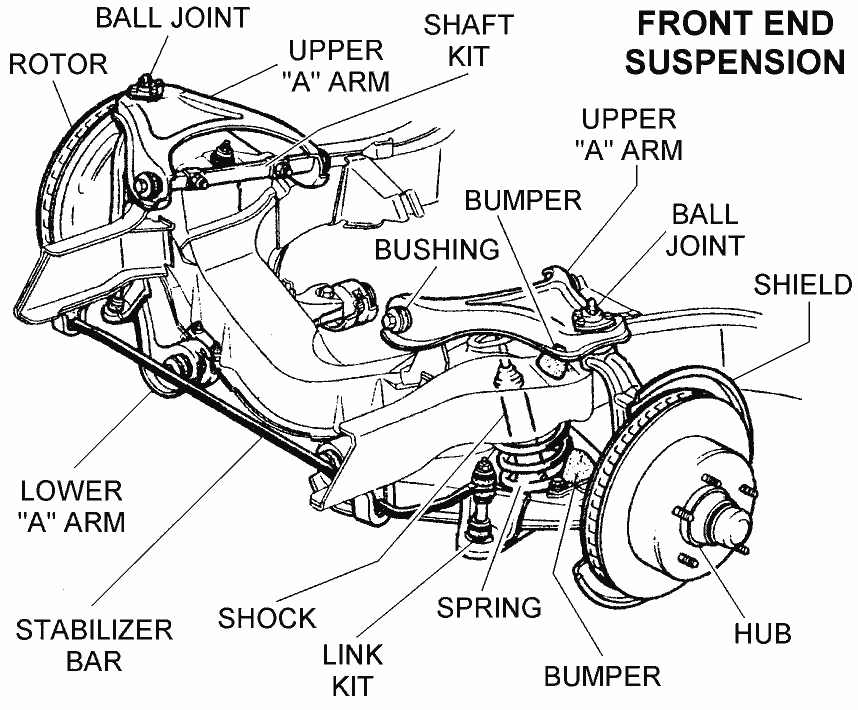
If you're tackling front suspension work on your 2005 Dodge Ram 2500 4x4, having a solid understanding of the system is crucial. This article provides a detailed breakdown of the front suspension diagram, explaining its purpose, key components, functionality, and real-world applications. Consider this your roadmap to successful DIY repairs, upgrades, or even just understanding how your truck handles. Understanding the diagram allows you to identify parts, diagnose issues and perform necessary repairs or modifications effectively and safely. We'll also cover safety precautions, as suspension work can be hazardous.
Purpose of the Diagram
A front suspension diagram for your 2005 Dodge Ram 2500 4x4 is essentially a technical blueprint. Its primary purposes include:
- Identification of Parts: Clearly shows each component, from the upper and lower ball joints to the coil springs and shocks.
- Assembly and Disassembly Reference: Provides a visual guide for taking apart and putting back together the suspension system, ensuring proper orientation and torque specifications.
- Troubleshooting: Helps pinpoint the location of potential problems based on symptoms (e.g., identifying a worn ball joint causing clunking noises).
- Modification Planning: Allows you to visualize how aftermarket components, such as lift kits or upgraded shocks, will integrate with the existing system.
- Ordering Parts: Provides accurate part names and locations, crucial when ordering replacements from a parts supplier.
Key Specs and Main Parts
The 2005 Dodge Ram 2500 4x4 utilizes a solid axle front suspension system, which is known for its durability and off-road capability. Here are the key components:
- Solid Axle: The core of the system, connecting both front wheels. It transmits power and supports the weight of the vehicle.
- Coil Springs: Located between the axle and the frame, coil springs absorb shocks and bumps, providing a smoother ride. The spring rate (measured in lbs/inch) determines how much weight it takes to compress the spring one inch.
- Shock Absorbers (Dampers): Control the oscillation of the springs, preventing excessive bouncing. There are several types, including hydraulic and gas-charged.
- Control Arms (Radius Arms): These arms locate the axle and control fore-aft movement. They attach to the axle and the frame. Bushings in the control arms are crucial for isolating vibrations.
- Track Bar (Panhard Rod): Prevents lateral movement of the axle. It's attached to the frame on one side and the axle on the other.
- Ball Joints: Allow the steering knuckle to pivot, enabling the wheels to turn. The upper and lower ball joints are critical wear items.
- Steering Knuckle: Connects the wheel hub and bearing assembly to the suspension system, providing a mounting point for the ball joints and tie rod end.
- Tie Rods and Drag Link: Part of the steering linkage, transmitting steering input from the steering box to the steering knuckles, causing the wheels to turn.
- Sway Bar (Stabilizer Bar): Reduces body roll during cornering, improving stability.
- Bushings: Located at the attachment points of various suspension components (control arms, track bar, sway bar), bushings dampen vibrations and allow for controlled movement. Common materials include rubber and polyurethane.
Understanding the Diagram's Symbols
A technical diagram uses symbols to represent various components and connections. Here’s a basic guide to interpreting them:
- Solid Lines: Typically represent physical components, such as control arms, the axle housing, or tie rods. Their thickness may indicate relative size or importance.
- Dashed Lines: Often indicate hidden components, fluid lines (e.g., brake lines), or imaginary lines used for measurement or alignment.
- Arrows: Show the direction of movement, force, or flow (e.g., direction of shock absorber damping).
- Circles/Dots: Represent connection points, such as bolts, rivets, or pivot points.
- Hatch Marks: Commonly used to indicate a cross-sectional view of a component, revealing its internal structure.
- Abbreviations: Expect to see common abbreviations like "LH" (left hand), "RH" (right hand), "T" (torque), and "Nm" (Newton-meters).
- Colors: Some diagrams may use colors to differentiate components (e.g., different types of lines or materials), though this is less common on older diagrams. If colors are used, there is always a legend to explain them.
How It Works: A Functional Overview
The front suspension of your 2005 Ram 2500 4x4 is designed to perform several crucial functions:
- Support the Vehicle's Weight: The solid axle and coil springs carry the considerable weight of the engine, cab, and chassis.
- Absorb Road Shocks and Vibrations: The coil springs compress and expand to absorb impacts, while the shock absorbers dampen the resulting oscillations, preventing a bouncy ride.
- Maintain Wheel Alignment: The control arms, track bar, and ball joints work together to keep the wheels properly aligned, ensuring even tire wear and predictable handling. Misalignment leads to premature tire wear and poor steering response.
- Allow for Steering: The steering linkage (tie rods, drag link) translates steering wheel input into wheel movement, allowing you to control the direction of the vehicle.
- Control Body Roll: The sway bar connects the left and right sides of the suspension, reducing body lean during cornering.
In essence, the suspension system is a complex interplay of components working in harmony to provide a comfortable ride, precise handling, and safe operation.
Real-World Use: Basic Troubleshooting
Here are some common front suspension problems and how the diagram can help you diagnose them:
- Clunking Noise: Could indicate worn ball joints, loose control arm bushings, or a failing shock absorber. Use the diagram to identify the location of each component and inspect them for excessive play or damage.
- Wandering Steering: May be caused by worn tie rod ends, loose ball joints, or improper alignment. The diagram shows the steering linkage and ball joint locations for inspection.
- Excessive Bouncing: Likely a sign of worn shock absorbers. The diagram highlights their position for easy access.
- Uneven Tire Wear: Points to a possible alignment issue, potentially caused by worn ball joints, bent control arms, or a misadjusted track bar. The diagram shows the position of adjustable components affecting alignment.
Safety Precautions
Working on suspension systems can be dangerous due to the high forces involved. Always take the following precautions:
- Use Jack Stands: Never work under a vehicle supported only by a jack. Properly rated jack stands are essential.
- Compress Coil Springs Safely: Coil springs store a tremendous amount of energy. Use a specialized coil spring compressor to safely compress and decompress them. Improper use can result in serious injury or death!
- Wear Safety Glasses: Protect your eyes from flying debris.
- Use Proper Tools: Avoid using makeshift tools, as they can slip or break.
- Torque to Specification: Use a torque wrench to tighten fasteners to the manufacturer's specified torque values. Over-tightening can damage components, while under-tightening can lead to failure. Refer to the vehicle's service manual for torque specs.
- Disconnect the Battery: Disconnecting the battery can prevent accidental activation of electrical components while you're working.
Specifically, the coil springs and ball joints present the greatest risk. Coil springs, as mentioned, can release stored energy violently if not handled correctly. Ball joints can suddenly separate if worn, causing the steering knuckle to swing freely.
Remember, if you are not comfortable performing suspension work yourself, it is always best to consult a qualified mechanic. Safety should always be your top priority.
We have the complete 2005 Dodge Ram 2500 4x4 front suspension diagram available for download. It provides a detailed, high-resolution view of all components and their relationships. This diagram serves as an invaluable resource for any DIY mechanic or enthusiast working on this particular model.