
2006 Ford F150 Exhaust System Diagram
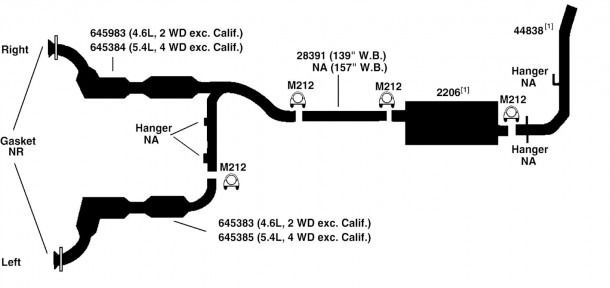
Alright, let's dive deep into the exhaust system of the 2006 Ford F-150. Understanding this system is crucial whether you're tackling a repair, planning an upgrade, or just trying to get a better grasp of your truck's mechanics. We're going to dissect the exhaust system diagram so you can navigate it like a pro. Plus, we've got the diagram itself ready for you to download (link provided at the end), so you can follow along as we go.
Purpose of the Exhaust System Diagram
Why bother with an exhaust system diagram? Simple: it's your roadmap. It provides a visual representation of all the components, their connections, and their locations. This is invaluable for:
- Troubleshooting: Pinpointing the source of exhaust leaks, rattling noises, or performance issues.
- Repair Work: Replacing damaged parts, ensuring proper fitment, and understanding how everything connects.
- Modifications: Planning aftermarket exhaust upgrades, knowing where to cut and weld (if necessary), and ensuring compatibility.
- General Knowledge: Simply understanding how your truck's exhaust system works to improve your diagnostic skills.
Without a diagram, you're essentially working blind. You might end up replacing the wrong parts or damaging something in the process.
Key Specs and Main Parts of the 2006 F-150 Exhaust
The 2006 F-150 came with several engine options, most commonly the 4.6L and 5.4L V8 engines. Each engine variant will have slight differences in the exhaust manifold design, but the overall system layout remains largely the same. Here's a breakdown of the main components:
- Exhaust Manifolds: These are bolted directly to the cylinder heads. They collect exhaust gases from each cylinder and direct them into the exhaust system. The diagram will show their specific shape and attachment points. Aftermarket headers are often installed to improve flow here.
- Catalytic Converters: A crucial component for emissions control. Catalytic converters use chemical reactions to reduce harmful pollutants (hydrocarbons, carbon monoxide, and nitrogen oxides) into less harmful substances. The 2006 F-150 typically has two catalytic converters, one on each side of the engine.
- Oxygen (O2) Sensors: These sensors monitor the oxygen content in the exhaust stream. There are usually two types: upstream (before the catalytic converter) and downstream (after the catalytic converter). Upstream sensors help the engine control unit (ECU) regulate the air-fuel mixture, while downstream sensors monitor the efficiency of the catalytic converters. The diagram will show their precise locations.
- Exhaust Pipes: These connect the various components of the exhaust system. They are typically made of steel or stainless steel. The diagram will show the routing and diameter of these pipes.
- Muffler: The muffler reduces the noise produced by the engine. It contains baffles and chambers that dampen sound waves.
- Tailpipe: The final section of the exhaust system that directs exhaust gases away from the vehicle.
- Hangers and Mounts: These support the exhaust system and prevent it from vibrating against the vehicle's chassis.
- Gaskets and Flanges: These provide a seal between the various components of the exhaust system to prevent leaks. Pay close attention to the gaskets in the diagram; reusing old gaskets is a recipe for leaks.
Decoding the Symbols on the Diagram
The exhaust system diagram will use various symbols to represent different components and features. Here's a general guide:
- Solid Lines: Typically represent exhaust pipes or tubing. The thickness of the line may indicate the pipe diameter.
- Dashed Lines: May represent vacuum lines, electrical wiring related to the oxygen sensors, or other auxiliary components.
- Circles or Ovals: Often represent sensors (like O2 sensors) or connection points. The diagram key should specify what each shape represents.
- Rectangles or Squares: Could indicate catalytic converters, mufflers, or other large components.
- Arrows: Indicate the direction of exhaust gas flow.
- Numbers or Letters: May be used to identify specific parts or components. Refer to the diagram key for their meaning.
- Colors (if present): While less common, some diagrams use colors to differentiate between different materials or systems. The key will explain the color coding.
Always refer to the diagram's legend or key to understand the specific symbols used. Don't assume you know what a symbol means; double-check!
How the 2006 F-150 Exhaust System Works
The process is relatively straightforward:
- Exhaust gases are produced during the combustion process inside the engine cylinders.
- These gases are forced out of the cylinders and into the exhaust manifolds.
- The exhaust manifolds collect the gases and direct them into the catalytic converters.
- The catalytic converters reduce harmful pollutants in the exhaust gases.
- Oxygen sensors monitor the oxygen content of the exhaust gases before and after the catalytic converters.
- The exhaust gases flow through the exhaust pipes to the muffler.
- The muffler reduces the noise of the exhaust gases.
- Finally, the exhaust gases exit the vehicle through the tailpipe.
The ECU uses the information from the oxygen sensors to adjust the air-fuel mixture and ensure optimal engine performance and emissions control. A properly functioning exhaust system is critical for engine efficiency, power output, and environmental compliance.
Real-World Use: Basic Troubleshooting Tips
Here are a few ways you can use the exhaust system diagram to troubleshoot common problems:
- Exhaust Leaks: Use the diagram to identify potential leak points, such as gaskets, flanges, or welds. Visually inspect these areas for signs of corrosion, cracks, or soot. A hissing sound is a common indicator of a leak. Pay close attention to the manifold gasket, these are known to fail.
- Rattling Noises: Check the exhaust hangers and mounts to ensure they are secure and not broken. Use the diagram to locate all the hangers. A loose or broken hanger can cause the exhaust system to vibrate against the chassis.
- Check Engine Light (CEL): If the CEL is illuminated, use an OBD-II scanner to retrieve the error codes. Common codes related to the exhaust system include those related to oxygen sensors or catalytic converter efficiency. The diagram will help you locate the affected sensor or component.
- Poor Performance: A clogged catalytic converter can restrict exhaust flow and reduce engine power. The diagram can help you identify the location of the catalytic converters and inspect them for damage or deterioration.
Remember to always consult a qualified mechanic if you are unsure about any repair or modification.
Safety Precautions
Working on the exhaust system can be dangerous. Keep these points in mind:
- Heat: Exhaust systems get extremely hot. Allow the system to cool down completely before working on it. Touching a hot exhaust pipe can cause severe burns.
- Lifting: Use proper lifting equipment (jack stands, ramps) to safely raise the vehicle. Never work under a vehicle supported only by a jack.
- Eye Protection: Wear safety glasses to protect your eyes from debris and rust.
- Gloves: Wear gloves to protect your hands from cuts and burns.
- Carbon Monoxide: Work in a well-ventilated area. Exhaust fumes contain carbon monoxide, a deadly gas.
- Catalytic Converters: Handle catalytic converters with care. They contain precious metals and can be damaged easily. Additionally, tampering with or removing catalytic converters is illegal in many jurisdictions.
Important Note: The oxygen sensors are electronically controlled, meaning you must disconnect the negative terminal on the battery before disconnecting and reinstalling them. Failure to do so can cause electrical problems.
We've covered a lot of ground here. By understanding the 2006 Ford F-150 exhaust system diagram, you're well-equipped to tackle repairs, plan modifications, and diagnose problems. Remember to prioritize safety and consult a professional if you're unsure about anything.