
2006 Ford Five Hundred Serpentine Belt Diagram
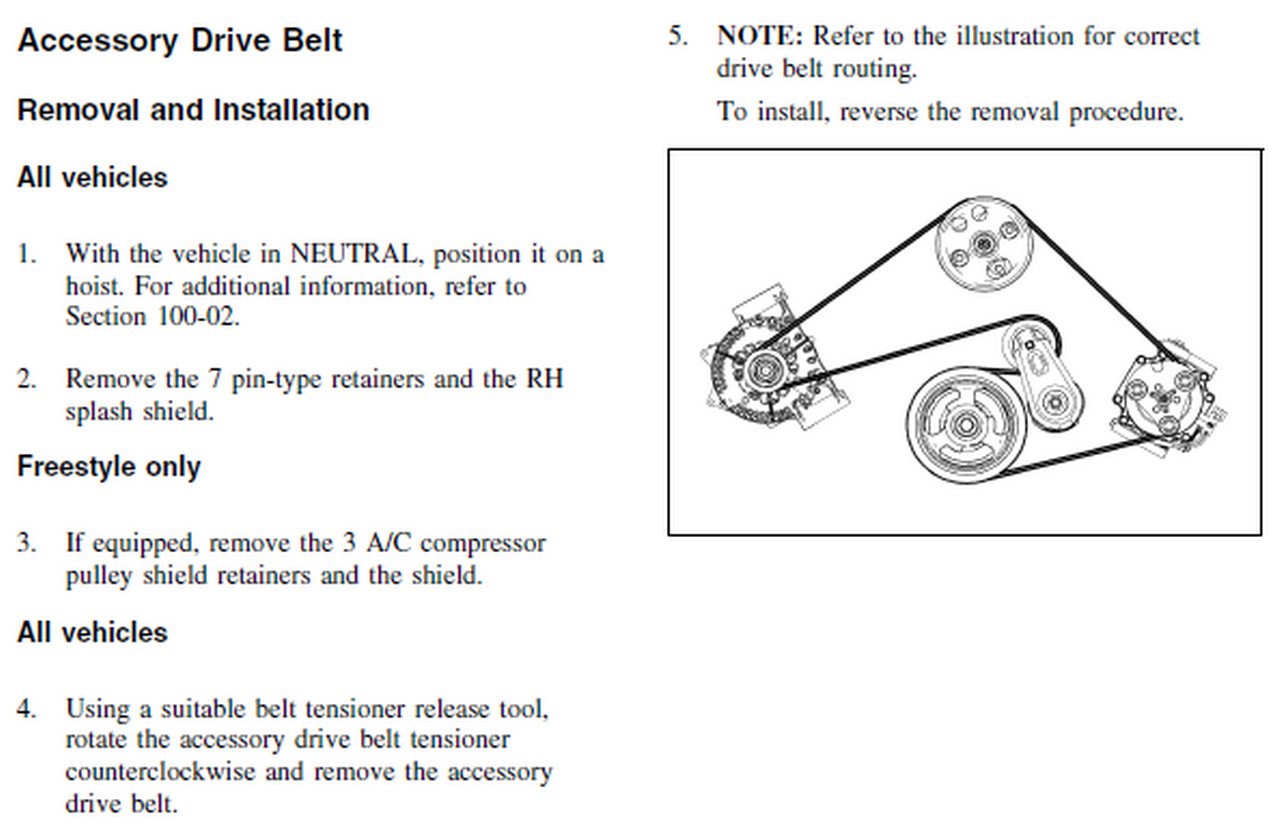
Okay, let's dive into the serpentine belt system on your 2006 Ford Five Hundred. Whether you're facing a squealing belt, planning some preventative maintenance, or just want to better understand how your engine's accessories are driven, knowing your way around the serpentine belt diagram is crucial. We're going to break down everything you need to know, from the key components to troubleshooting common problems. And the best part? We've got the 2006 Ford Five Hundred serpentine belt diagram available for download so you can follow along. Consider this your comprehensive guide.
Purpose of the Serpentine Belt Diagram
Why is a serpentine belt diagram so important? It's more than just a pretty picture. Think of it as the roadmap for your engine's accessory drive system. Without it, replacing a belt or diagnosing issues becomes a frustrating guessing game. Here's why you need it:
- Repair and Replacement: The most obvious reason. When your belt breaks or needs replacement, the diagram shows you the correct routing. Incorrect routing can lead to component damage or belt failure.
- Troubleshooting: Squealing noises, lack of power steering, or overheating can often be traced back to a worn or improperly routed serpentine belt. The diagram helps you identify which components are affected.
- Maintenance: Knowing the system layout helps you inspect the belt and pulleys for wear, damage, or misalignment during routine maintenance.
- Learning: Understanding the serpentine belt system gives you a better overall understanding of how your engine works. It empowers you to perform basic repairs and maintenance yourself, saving you money and time.
Key Specs and Main Parts
The 2006 Ford Five Hundred typically uses a single serpentine belt to drive multiple engine accessories. The belt's length and width are specific to the engine configuration (usually a 3.0L Duratec V6), so always verify the correct part number when purchasing a replacement. The diagram will show these key parts:
- Crankshaft Pulley (or Damper): This is the main driver. Connected directly to the engine's crankshaft, it provides the rotational force for the entire system.
- Alternator Pulley: Driven by the belt to generate electricity for the car's electrical system. A failing alternator can sometimes cause the belt to squeal due to increased resistance.
- Power Steering Pump Pulley: Powers the hydraulic power steering system. A failing power steering pump can also cause belt issues.
- Air Conditioning Compressor Pulley: Engages and disengages to power the air conditioning system. When the A/C compressor seizes, it can shred the belt.
- Idler Pulley(s): Smooth, non-driven pulleys used to guide the belt and maintain proper tension. They are simple bearings, and when they fail, they often squeal and can cause the belt to jump off.
- Tensioner Pulley: A spring-loaded pulley that automatically maintains the correct tension on the belt. This is a *critical* component. If the tensioner is weak or seized, the belt will slip or come off. A tensioner pulley can be fixed (if it uses bearings) by replacing the bearings.
- Water Pump Pulley: Circulates coolant throughout the engine to prevent overheating.
It's important to identify each of these components on the diagram and then locate them on your engine. Familiarity with their positions is essential for efficient troubleshooting and repairs.
Symbols and Diagram Conventions
Serpentine belt diagrams use a standardized set of symbols to represent different components and belt routing. Understanding these symbols is crucial for interpreting the diagram correctly:
- Solid Lines: These represent the serpentine belt itself. The thickness of the line doesn't typically indicate anything; it's just for visual clarity.
- Arrows: Arrows indicate the direction of belt travel. Pay close attention to these arrows when routing a new belt.
- Circles/Ovals: These represent the pulleys. Sometimes, the diagram will include a small label within the circle identifying the component (e.g., "ALT" for alternator, "P/S" for power steering).
- Rough/Dashed Lines near a Pulley: These indicate that the component may be hidden from view by another component. This is helpful in determining the correct belt routing when obstructions exist.
Some diagrams might also use different colors to highlight specific sections of the belt or to differentiate between the "smooth" side and the "grooved" side of the belt. Pay attention to any legends or keys provided with the diagram to understand any color-coding conventions.
How It Works: The Serpentine Belt System
The serpentine belt system is elegantly simple. The crankshaft pulley, driven by the engine, turns the serpentine belt. This belt, in turn, drives all the other accessories: alternator, power steering pump, air conditioning compressor, and water pump. The tensioner pulley maintains constant tension on the belt, preventing slippage and ensuring efficient power transfer. The belt must be routed in a specific pattern, wrapping around each pulley in a way that maximizes contact and provides the necessary driving force. A slipping belt can cause a multitude of problems, from a dimming headlights, over heating, a loss of power steering and a screeching noise.
The system's effectiveness relies on the integrity of all its components. A worn belt, a seized pulley, or a malfunctioning tensioner can disrupt the entire system. Regular inspection and maintenance are key to preventing these issues.
Real-World Use: Basic Troubleshooting Tips
Here are a few common issues you might encounter with your 2006 Ford Five Hundred serpentine belt system, and how the diagram can help:
- Squealing Noise: Often caused by a slipping belt. The diagram helps you check if the belt is correctly routed and if the tensioner is functioning properly. Also, inspect the pulleys for glazing or contamination. A slight spray of belt dressing (use sparingly!) can sometimes temporarily quiet a squealing belt, but it's usually a sign that the belt needs replacement or that another component is failing.
- Belt Slippage: Results in reduced performance of the affected accessories (e.g., weak air conditioning, poor power steering). The diagram helps you identify which accessories are being affected and pinpoint potential causes, such as a worn belt or a failing tensioner.
- Belt Breakage: Usually caused by a seized pulley or a worn belt. The diagram is *essential* for routing the new belt correctly. Before installing a new belt, inspect all the pulleys for free movement and any signs of damage. Replace any suspect components.
- Component Failure: If an accessory like the alternator or power steering pump fails, it can put excessive strain on the belt, leading to premature wear or breakage. The diagram helps you isolate the faulty component and understand its relationship to the serpentine belt system.
Safety: Highlighting Risky Components
Working on the serpentine belt system involves certain risks. Always disconnect the negative battery cable before working on any part of the electrical system. Here are some components to be particularly careful around:
- Crankshaft Pulley: This is directly connected to the engine. Never put your hands or tools near it while the engine is running.
- Tensioner Pulley: The tensioner is spring-loaded and can snap back forcefully if released improperly. Use the correct tools and techniques to release the tension before removing the belt. Make sure you know how to properly use the tension release.
- Moving Parts: Be extremely cautious when working around any moving parts, including the belt and pulleys. Keep your hands and clothing clear to avoid injury.
It is always recommended to wear safety glasses and gloves when working on any part of your car. Be sure to understand all instructions before beginning any repair.
Now that you have a solid understanding of the 2006 Ford Five Hundred serpentine belt system, you're well-equipped to tackle repairs and maintenance with confidence. Remember to download the diagram we've provided – it's an invaluable tool for any DIY mechanic working on this vehicle. Good luck, and happy wrenching!