
2006 Hyundai Sonata 2.4 Serpentine Belt Diagram
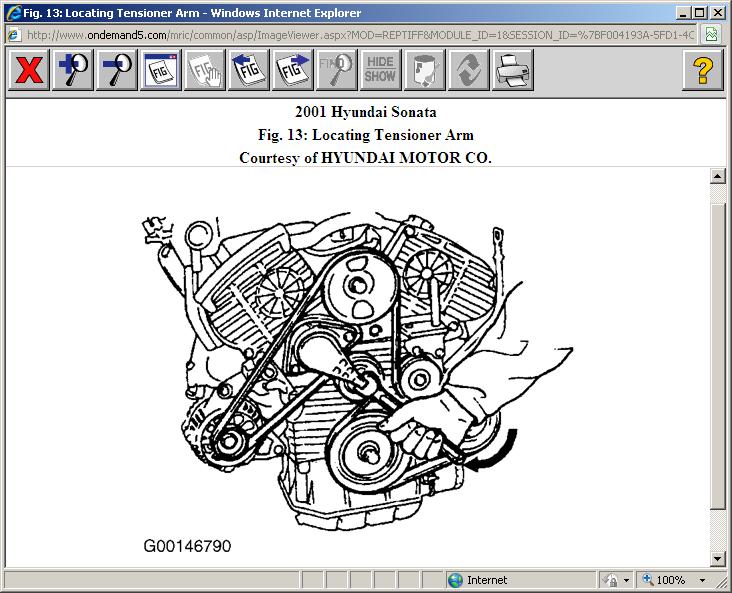
Replacing a serpentine belt on your 2006 Hyundai Sonata with the 2.4L engine is a common maintenance task. Having a clear serpentine belt diagram is crucial for ensuring proper belt routing and preventing engine damage. This guide will walk you through understanding the diagram, identifying key components, and performing basic troubleshooting, all while keeping safety in mind.
Purpose of the Serpentine Belt Diagram
The serpentine belt diagram for your 2006 Sonata 2.4L isn't just a pretty picture; it's an essential tool for several reasons:
- Correct Belt Routing: The primary purpose is to illustrate the precise path the serpentine belt must follow around the various pulleys. Incorrect routing can lead to component failure, belt slippage, and even engine damage.
- Component Identification: The diagram helps you identify all the components driven by the serpentine belt, such as the alternator, power steering pump, air conditioning compressor, and tensioner pulley.
- Troubleshooting: If you're experiencing issues like squealing noises or a loss of power steering, the diagram can assist in diagnosing potential problems with the belt or driven components.
- Maintenance and Repair: Whether you're replacing the belt, inspecting components, or performing other engine maintenance, the diagram is a handy reference.
- Learning: Even if you're not actively working on your car, understanding the serpentine belt system can give you a better understanding of your engine's operation.
Key Specs and Main Parts
The 2006 Hyundai Sonata 2.4L engine uses a single serpentine belt to drive multiple accessories. Key components in this system include:
- Crankshaft Pulley (Harmonic Balancer): Located at the bottom of the engine, this pulley is directly connected to the crankshaft and provides the rotational power for the belt.
- Alternator Pulley: The alternator generates electricity to charge the battery and power the car's electrical system.
- Power Steering Pump Pulley: The power steering pump provides hydraulic assistance to make steering easier.
- Air Conditioning Compressor Pulley: The A/C compressor circulates refrigerant in the air conditioning system.
- Tensioner Pulley: This spring-loaded pulley maintains proper tension on the serpentine belt. It's *crucial* for preventing slippage and ensuring efficient operation.
- Idler Pulley (Optional): Some configurations may include an idler pulley, which simply guides the belt and provides additional wrap around other pulleys.
The belt itself is typically a multi-ribbed V-belt, designed to maximize surface contact and grip. The specific belt length and rib configuration are critical for proper fit and performance. Consult your owner's manual or a parts catalog for the correct replacement belt part number.
Understanding the Diagram Symbols
Serpentine belt diagrams use specific symbols to represent different components and the belt's path. Understanding these symbols is essential for interpreting the diagram correctly:
- Solid Lines: A solid line represents the primary path of the serpentine belt. Follow these lines carefully to ensure proper routing.
- Dotted Lines: Dotted lines may indicate the backside of the belt where it wraps around a smooth pulley, or areas where the belt passes behind other components.
- Arrows: Arrows indicate the direction of rotation for each pulley. Pay attention to these, as incorrect belt routing can cause components to rotate in the wrong direction, potentially leading to damage.
- Component Icons: Each component is typically represented by a simplified icon or labeled with abbreviations (e.g., ALT for alternator, P/S for power steering).
- Tensioner Location: The tensioner pulley is often clearly marked, sometimes with an arrow indicating the direction to move it to release tension on the belt.
Color is rarely used in standard diagrams. If color is used, a legend will clarify its meaning. For instance, a particular color might indicate the front or back of the belt.
How the Serpentine Belt System Works
The serpentine belt system is a relatively simple, but vital, closed-loop system. The crankshaft pulley, driven by the engine, transmits rotational force to the serpentine belt. The belt, in turn, wraps around and drives the pulleys of the alternator, power steering pump, A/C compressor, and other accessories. The tensioner pulley maintains consistent tension on the belt, ensuring it doesn't slip or come off the pulleys.
The efficiency of this system relies on proper belt tension and alignment. A loose belt will slip, leading to reduced performance from the driven accessories. A belt that's too tight can put excessive strain on the pulleys and bearings, potentially causing premature failure. *Misalignment* can cause the belt to wear unevenly and even jump off the pulleys.
Real-World Use and Basic Troubleshooting
Here are some common issues you might encounter and how the diagram can help:
- Squealing Noise: A squealing noise often indicates a slipping belt. Use the diagram to check for proper belt routing and tension. Look for signs of glazing (a shiny, hardened surface) on the belt. A worn tensioner can also cause slippage.
- Loss of Power Steering: If you experience a sudden loss of power steering, check the diagram to ensure the belt is properly routed around the power steering pump pulley. A broken or slipped belt will prevent the pump from functioning.
- Alternator Not Charging: If your battery isn't charging, the alternator may not be spinning. Verify the belt is properly routed around the alternator pulley and that the belt is not slipping.
- A/C Not Working: Similar to the power steering and alternator, a malfunctioning A/C system could be related to a slipping or broken belt. Check the belt's routing and condition.
- Visual Inspection: Regularly inspect the belt for cracks, fraying, or missing ribs. Use the diagram to ensure the belt is properly seated in all the pulley grooves.
When diagnosing issues, always start with a visual inspection. Refer to the diagram to confirm the correct belt path and identify any potential problem areas.
Safety Precautions
Working on the serpentine belt system can be hazardous. Here are some important safety precautions:
- Disconnect the Battery: Before working on any electrical components (like the alternator), disconnect the negative terminal of the battery to prevent accidental shorts.
- Engine Off and Cool: Never work on the serpentine belt system with the engine running or hot. Allow the engine to cool completely before starting any work.
- Proper Tools: Use the correct tools for the job. A serpentine belt tool (a specialized wrench) is often necessary to release tension on the tensioner pulley.
- Keep Hands and Fingers Clear: Be extremely careful to keep your hands and fingers clear of the belt and pulleys when releasing or applying tension to the belt. The belt can snap back suddenly and cause injury.
- Rotating Components: Be aware that all the pulleys driven by the serpentine belt are rotating components. Keep loose clothing, jewelry, and hair away from these moving parts.
- Eye Protection: Wear safety glasses to protect your eyes from dirt, debris, and potential projectiles.
- High-Pressure A/C Lines: Be extremely cautious around the air conditioning compressor and its lines. These lines contain high-pressure refrigerant, which can cause serious injury if released improperly. Avoid disconnecting any A/C lines unless you are a qualified technician with the proper equipment.
The most dangerous component is arguably the tensioner. Its spring is under considerable pressure, and improper handling can lead to serious injury. Always use the correct tool and follow the manufacturer's instructions carefully.
Now that you have a better understanding of the 2006 Hyundai Sonata 2.4L serpentine belt diagram, you're well-equipped to tackle maintenance and repairs on your own vehicle. Remember to prioritize safety and double-check your work.
We have the file for the 2006 Hyundai Sonata 2.4L Serpentine Belt Diagram for download. Please contact us to get the file.