
2006 Toyota Camry 2.4 Serpentine Belt Diagram
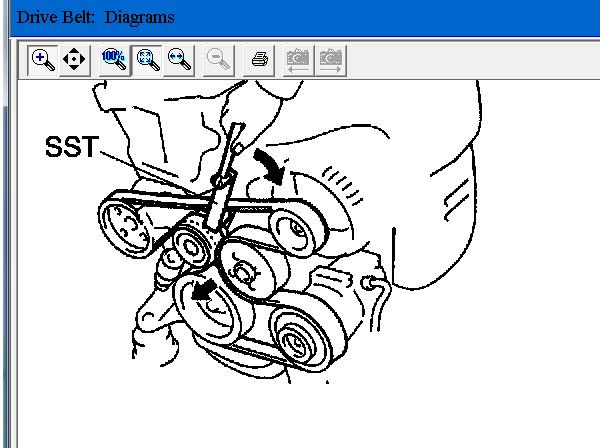
Alright, let's dive into the serpentine belt diagram for your 2006 Toyota Camry with the 2.4L engine (2AZ-FE). Understanding this diagram is crucial for various maintenance and repair tasks, from simple belt replacement to diagnosing more complex accessory drive issues. This isn't just a piece of paper; it's your roadmap to keeping your Camry running smoothly.
Purpose of the Serpentine Belt Diagram
Why bother with a diagram? The serpentine belt diagram is your key to correctly routing the belt around all the engine accessories. It acts as a visual guide that illustrates the precise path the serpentine belt takes around the pulleys of various engine components. Using this diagram avoids misrouting the belt, which can lead to serious problems like:
- Malfunctioning accessories: Your alternator won't charge the battery, your power steering pump won't assist steering, and your AC compressor won't cool the cabin.
- Belt slippage: A misrouted belt might not have enough tension, causing it to slip and wear prematurely, potentially snapping.
- Engine damage: In extreme cases, a severely misrouted or snapped belt can damage other components, especially if pieces of the belt get caught in other engine mechanisms.
Beyond repairs, understanding the diagram can also deepen your general understanding of how your engine's accessory drive system works. It allows you to learn the layout, understand the function of each component, and proactively identify potential issues before they become major headaches.
Key Specs and Main Parts
Before cracking open the diagram, let's get familiar with the key components involved in your 2006 Camry's serpentine belt system:
- Crankshaft Pulley: This is the driving force of the entire system, connected directly to the engine's crankshaft. It provides the rotational energy to drive all other accessories.
- Alternator Pulley: Driven by the serpentine belt, the alternator generates electrical power to charge the battery and run the car's electrical systems.
- Power Steering Pump Pulley: This pulley drives the power steering pump, which provides hydraulic assistance to the steering system, making turning the wheel easier.
- A/C Compressor Pulley: This pulley drives the A/C compressor, which is responsible for cooling the car's cabin.
- Water Pump Pulley: The water pump circulates coolant throughout the engine to regulate temperature. In the 2006 Camry 2.4L, the water pump is often driven by the timing chain, not the serpentine belt, but confirming this on your specific engine configuration is crucial.
- Tensioner Pulley: This is a spring-loaded pulley that maintains the correct tension on the serpentine belt. It's crucial for preventing slippage and ensuring proper operation of all accessories. This is usually an automatic tensioner, meaning it self-adjusts.
- Idler Pulley (If applicable): Some configurations may have an idler pulley, which is a smooth pulley used to guide the belt around other components and optimize its wrap angle on other pulleys. The 2006 Camry 2.4L may or may not have an idler pulley depending on specific options.
- Serpentine Belt: The belt itself is a reinforced rubber belt with multiple V-shaped ribs that grip the pulleys.
Serpentine Belt Diagram Symbols Explained
The diagram isn't just a picture; it's a language. Here's how to interpret the common symbols:
- Solid Lines: These represent the path of the serpentine belt, showing how it wraps around each pulley.
- Arrows: Arrows indicate the direction of belt travel. This is critical for ensuring the belt is installed correctly.
- Pulley Symbols: Each pulley is represented by a circle or cylinder. Some diagrams label the pulleys with abbreviations (e.g., ALT for alternator, P/S for power steering).
- Tensioner Symbol: The tensioner is usually represented by a symbol that indicates its spring-loaded mechanism. It might be shown as a pulley with a spring attached.
- Diagram Orientation: Pay attention to the orientation of the engine in the diagram. This is often indicated by a small illustration of the engine block or a directional arrow.
Keep in mind that specific diagrams may vary slightly in their symbols, but the core principles remain the same. The 2006 Camry 2.4L diagram will clearly illustrate the serpentine belt's route in a top-down view of the engine bay.
How It Works
The serpentine belt system is relatively straightforward. The crankshaft pulley, driven by the engine, rotates. This rotation is transferred to the serpentine belt, which, in turn, drives all the other accessory pulleys. The tensioner maintains the correct belt tension, preventing slippage and ensuring efficient power transfer. The water pump, if driven by the serpentine belt (which is rare in the 2.4L, but double-check!), circulates coolant. The alternator generates electricity. The power steering pump provides steering assistance, and the A/C compressor cools the cabin.
The system's efficiency relies on the proper tension and alignment of the belt and pulleys. Misalignment or insufficient tension will lead to slippage, reduced performance, and premature wear.
Real-World Use: Basic Troubleshooting Tips
Here's how you can use the diagram in real-world situations:
- Belt Replacement: Before removing the old belt, carefully study the diagram. Take a picture or make a drawing to ensure you reinstall the new belt correctly. Use the tensioner to release the tension on the old belt for removal.
- Squealing Noise: A squealing noise, especially when the engine is cold or under load, often indicates a slipping serpentine belt. Check the belt's condition for cracks, wear, or glazing. Also, inspect the tensioner for proper operation. The diagram won't fix it, but it verifies everything is routed correctly.
- Accessory Malfunction: If you notice that your alternator isn't charging, your power steering isn't working, or your A/C isn't cooling, check the serpentine belt for proper routing and tension. A snapped or severely worn belt will prevent these accessories from functioning.
- Visual Inspection: Regularly inspect the serpentine belt for signs of wear, such as cracks, fraying, or missing ribs. Replace the belt if you find any damage. The diagram is key to making sure the new belt is in the correct path.
Safety First!
Working on the serpentine belt system involves inherent risks. Here are some critical safety precautions:
- Disconnect the Battery: Always disconnect the negative battery terminal before working on the serpentine belt system. This prevents accidental starting of the engine.
- Hot Engine: Never work on the serpentine belt system when the engine is hot. Allow the engine to cool completely before starting any repairs.
- Moving Parts: The serpentine belt system involves moving parts. Keep your hands, hair, and clothing clear of the belt and pulleys when the engine is running.
- Tensioner Safety: Be extremely careful when releasing the tension on the serpentine belt. The tensioner is spring-loaded and can snap back forcefully if not handled correctly. Use the correct tool and follow the manufacturer's instructions.
- Eye Protection: Wear safety glasses to protect your eyes from debris and flying objects.
Remember, safety is paramount. If you're not comfortable performing these repairs yourself, consult a qualified mechanic.
We have the 2006 Toyota Camry 2.4L Serpentine Belt Diagram available for download. This file will provide you with a clear and detailed visual guide to assist you in your maintenance and repair tasks. Having this diagram readily accessible will undoubtedly make your work easier and more efficient.