
2007 Honda Accord Front Suspension Diagram
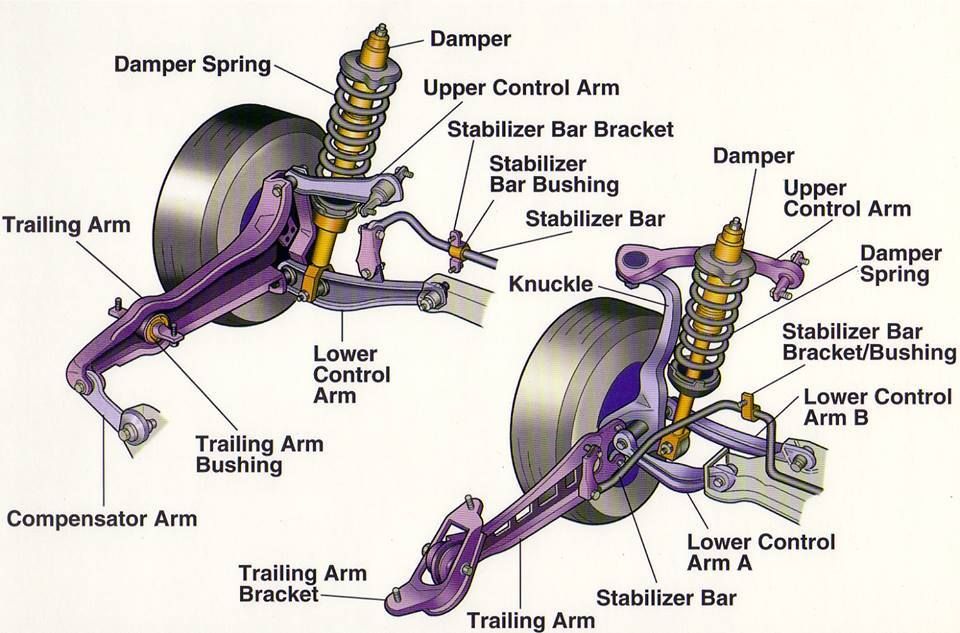
Understanding the front suspension of your 2007 Honda Accord is crucial for anyone tackling DIY repairs, modifications, or even just routine maintenance. This article delves into the details of the suspension system, providing a comprehensive guide to its components, function, and common issues. Having a clear understanding, aided by a detailed diagram, allows you to diagnose problems more effectively, perform repairs with confidence, and even improve your vehicle's handling. We'll explore the system's architecture, explain the role of each part, and provide practical troubleshooting tips. This knowledge is invaluable, whether you're replacing a worn ball joint or contemplating a suspension upgrade.
Why This Diagram Matters
A detailed front suspension diagram is more than just a pretty picture. It's your roadmap to understanding and working on this critical system. Specifically, a diagram allows you to:
- Identify parts quickly and accurately: When ordering replacement parts, knowing exactly what you need is essential to avoid costly mistakes.
- Understand component relationships: Seeing how parts interact helps you diagnose problems by tracing the chain of cause and effect.
- Follow repair procedures: A diagram acts as a visual guide during disassembly and reassembly, ensuring you don't miss steps or incorrectly install components.
- Plan modifications: If you're considering lowering springs, upgraded struts, or other performance enhancements, a diagram will help you visualize the impact of these changes on the overall system.
- Educate yourself: Simply studying the diagram will deepen your understanding of automotive engineering.
Key Specs and Main Parts
The 2007 Honda Accord utilizes a double-wishbone front suspension design. This independent suspension system offers excellent handling and ride quality compared to simpler designs like MacPherson struts. Here's a breakdown of the key components:
- Upper and Lower Control Arms: These A-shaped arms pivot on the frame and connect to the wheel hub via ball joints. They control the vertical movement of the wheel and contribute to the vehicle's handling characteristics. The upper control arm is usually shorter than the lower.
- Shock Absorber (Strut): Damping oscillations from springs. Also contributes to supporting vehicle weight.
- Coil Spring: The coil spring provides the main source of suspension, absorbing bumps and maintaining the vehicle's ride height.
- Steering Knuckle (Spindle): The steering knuckle connects the control arms, the strut, the tie rod end, and the wheel hub. It allows the front wheels to pivot for steering.
- Ball Joints: Ball joints connect the control arms to the steering knuckle, allowing for smooth movement in multiple planes. They are wear items that need periodic replacement.
- Tie Rod Ends (Inner and Outer): These connect the steering rack to the steering knuckle, transmitting steering input to the wheels. They're crucial for maintaining proper alignment.
- Sway Bar (Stabilizer Bar): A sway bar connects the left and right sides of the suspension, reducing body roll during cornering. It twists to resist differences in suspension compression between the wheels.
- Sway Bar End Links: These connect the sway bar to the control arms or struts. They are also wear items that are prone to failure.
- Wheel Hub and Bearing: The wheel hub is the central part that the wheel bolts to. The wheel bearing allows the hub to rotate smoothly.
Understanding the Diagram: Lines, Colors, and Symbols
A typical suspension diagram uses specific conventions to represent different components and their connections. While variations exist, these are some common elements:
- Solid Lines: Generally represent physical components, such as control arms, struts, and tie rods.
- Dashed Lines: May indicate hidden lines, lines of symmetry, or specific types of connections (e.g., hydraulic lines).
- Colors: Colors can be used to differentiate parts or systems. For example, different shades of gray might distinguish between upper and lower control arms, or blue might indicate hydraulic components.
- Symbols:
- Ground Symbols: Indicate a connection to the vehicle's chassis.
- Fastener Symbols: Represent bolts, nuts, and screws. Different symbols may denote different types of fasteners.
- Arrows: Indicate direction of movement or force.
- Callouts: Numbers or letters pointing to specific components, linked to a parts list or legend.
How It Works: The Suspension System in Action
The 2007 Honda Accord's double-wishbone front suspension is designed to provide a balance of ride comfort and handling performance. Here's a simplified explanation of how it works:
- Bump Absorption: When the wheel encounters a bump, the suspension compresses. The lower control arm pivots upwards, compressing the coil spring.
- Damping: The strut (shock absorber) dampens the oscillation of the spring, preventing the vehicle from bouncing excessively. It converts kinetic energy into heat, controlling the spring's rebound.
- Steering: When the steering wheel is turned, the steering rack moves laterally. This movement is transmitted through the tie rod ends to the steering knuckles, causing the front wheels to pivot and steer the vehicle.
- Roll Resistance: During cornering, the sway bar resists body roll by transferring force from the compressed side of the suspension to the extended side. This helps keep the vehicle level and improves handling.
Real-World Use: Basic Troubleshooting Tips
A good understanding of your car's suspension can help you diagnose common problems. Here are some basic troubleshooting tips, referring to your 2007 Honda Accord's front suspension:
- Clunking Noises: Clunking sounds, especially when going over bumps, can indicate worn ball joints, tie rod ends, or sway bar end links. Inspect these components for play or looseness.
- Squeaking Noises: Squeaking noises can be caused by dry or worn bushings. Check the bushings on the control arms and sway bar.
- Vibration: Vibration in the steering wheel or seat can be caused by unbalanced tires, worn wheel bearings, or damaged suspension components.
- Uneven Tire Wear: Uneven tire wear (e.g., wear on the inside or outside edge) can indicate misalignment or worn suspension components. A proper wheel alignment is crucial for tire longevity.
- Poor Handling: If the car feels floaty, unstable, or excessively rolls during cornering, it could indicate worn struts, damaged springs, or a broken sway bar link.
Safety: Handle with Care
Working on suspension components can be dangerous if proper safety precautions are not taken. Springs, in particular, store a tremendous amount of energy and can cause serious injury if released unexpectedly. Always use appropriate spring compressors when removing or installing coil springs. Other key safety points:
- Support the Vehicle Properly: Never work under a vehicle supported only by a jack. Use jack stands to support the vehicle securely.
- Loosen Fasteners Before Lifting: Loosen lug nuts and other tight fasteners before lifting the vehicle off the ground.
- Wear Eye Protection: Always wear safety glasses to protect your eyes from debris.
- Use the Right Tools: Use the correct tools for the job. Don't try to force things.
- Consult a Professional: If you're not comfortable working on suspension components, consult a qualified mechanic.
Now that you're armed with this information, you're well on your way to better understanding and maintaining your 2007 Honda Accord's front suspension. Don't forget, we have the full, detailed diagram available for you to download. Happy wrenching!