
2007 Toyota Tacoma 4.0 Serpentine Belt Diagram
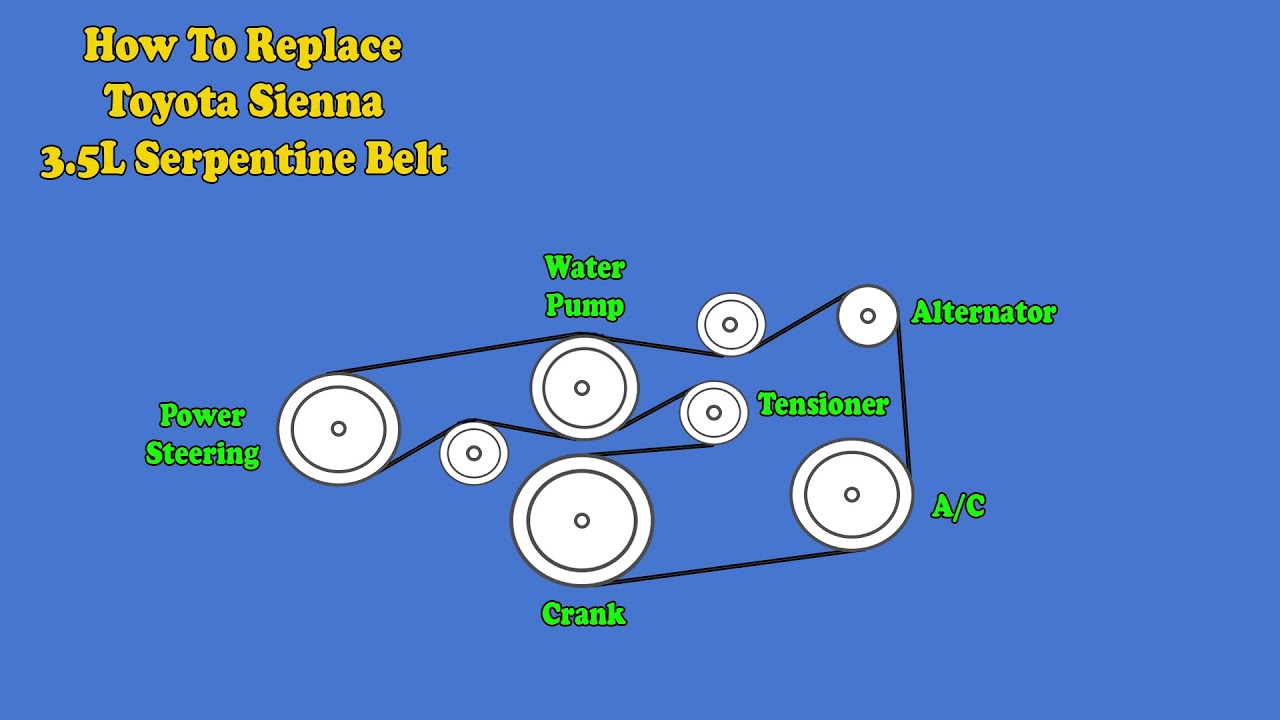
Let's dive into the serpentine belt system of the 2007 Toyota Tacoma with the 4.0L V6 engine (1GR-FE). This article provides a detailed breakdown of the serpentine belt diagram, offering valuable insights for maintenance, troubleshooting, and repair. Understanding this system empowers you to tackle common issues, saving you time and money. We assume you have a foundational understanding of automotive mechanics and are comfortable working on your vehicle.
Purpose of Understanding the Serpentine Belt Diagram
The serpentine belt diagram is your roadmap to understanding the belt routing and identifying the various components it drives. Its purpose is multi-faceted:
- Repair and Replacement: When replacing a worn or broken serpentine belt, the diagram shows the correct routing, preventing improper installation and potential damage.
- Troubleshooting: A squealing belt or non-functioning accessory (like the A/C) often leads back to the belt or a failing component on the circuit. The diagram helps pinpoint the source.
- Component Identification: The diagram labels each component driven by the belt, allowing you to understand the system's interconnectedness.
- Preventive Maintenance: Regular inspection, guided by the diagram, helps catch potential problems before they escalate into costly repairs.
- System Comprehension: Even if you don't plan to work on the belt yourself, understanding the diagram allows you to communicate effectively with your mechanic.
Key Specs and Main Parts (2007 Toyota Tacoma 4.0L)
The 2007 Tacoma 4.0L uses a single serpentine belt to drive multiple engine accessories. Here's a rundown of the key components:
- Crankshaft Pulley (Harmonic Balancer): Located at the bottom of the engine, this is the primary driver of the belt, connected directly to the crankshaft.
- Alternator: Generates electrical power to charge the battery and run electrical systems. Look for the "ALT" marking in diagrams.
- Power Steering Pump: Provides hydraulic assistance for steering, making it easier to turn the wheel. Usually marked "P/S" or "PSP".
- Air Conditioning Compressor: Compresses refrigerant to cool the air entering the cabin. Typically labeled "A/C" or "COMP".
- Water Pump: Circulates coolant throughout the engine to regulate temperature. Can be abbreviated as "W/PUMP".
- Idler Pulley(s): Smooth, ungrooved pulleys that guide the belt and maintain proper tension. These *do not* drive any accessory.
- Tensioner Pulley: A spring-loaded pulley that automatically adjusts belt tension. The *tensioner assembly* includes the pulley and spring mechanism. The tensioner pulley is usually grooved.
- Serpentine Belt: A single, long, multi-ribbed belt made of rubber compounds reinforced with fibers (often polyester or aramid).
The specific belt length and rib count are crucial. Refer to your vehicle's owner's manual or a reputable parts supplier (like NAPA, AutoZone, or RockAuto) for the correct belt for your 2007 Tacoma 4.0L. Incorrect belt length can lead to improper tensioning and damage to the belt or driven components.
Understanding Serpentine Belt Diagram Symbols
Serpentine belt diagrams use a standardized set of symbols to represent components and belt routing. Here's a breakdown:
- Solid Lines: Represent the driving side of the belt – the section in direct contact with the pulleys.
- Dotted Lines: Represent the back side of the belt – where the belt rides against a smooth pulley (like an idler pulley) or the tensioner pulley.
- Arrows: Indicate the direction of belt travel. Follow these arrows carefully when routing the belt.
- Circles: Represent pulleys. Grooved pulleys (those driving accessories) are often drawn with visible grooves. Smooth pulleys (idlers) are typically depicted as plain circles.
- Component Labels: Each pulley is labeled with an abbreviation or full name of the corresponding component (e.g., "ALT" for Alternator, "A/C" for Air Conditioning Compressor).
- Tensioner Arrow: A small arrow often indicates the direction in which to move the tensioner pulley to relieve tension for belt removal and installation.
Colors in some diagrams can also provide additional information. For example, a diagram might use different colors to highlight the belt path before and after passing through the tensioner. While not always present, these color cues can be helpful.
How the Serpentine Belt System Works
The serpentine belt system transfers rotational power from the engine's crankshaft to various accessories. Here's the process:
- The engine turns the crankshaft, which in turn rotates the crankshaft pulley (harmonic balancer).
- The serpentine belt, wrapped around the crankshaft pulley, is driven by its rotation.
- The belt then loops around other pulleys connected to the alternator, power steering pump, A/C compressor, and water pump.
- As the crankshaft pulley spins, it forces the belt to rotate these accessory pulleys, powering the respective components.
- The tensioner pulley maintains constant tension on the belt, preventing slippage and ensuring efficient power transfer. The tensioner uses a spring mechanism to automatically compensate for belt wear and stretching.
- Idler pulleys guide the belt along its path, preventing it from rubbing against engine components and ensuring proper wrap angle around driven pulleys. Wrap angle is the amount of the pulley's circumference that the belt is in contact with, more is better for power transfer.
The entire system relies on proper belt tension. Too loose, and the belt will slip, leading to reduced accessory performance and belt wear. Too tight, and you risk premature bearing failure in the driven components.
Real-World Use: Basic Troubleshooting Tips
Here are some common problems related to the serpentine belt system and how to use the diagram for troubleshooting:
- Squealing Noise: Often indicates a slipping belt due to wear, contamination (oil or coolant), or improper tension. Inspect the belt for cracks, glazing (shiny surface), or missing ribs. Use the diagram to check the tensioner's position – if it's at its maximum travel, the belt may be stretched and require replacement.
- Accessory Malfunction: If the A/C isn't cooling, the power steering is stiff, or the battery isn't charging, check the belt. If the belt is broken or missing ribs in the area of that particular component, it's the likely culprit. The diagram will quickly show you which component is failing based on which area of the belt is broken.
- Belt Slippage on Startup: This can occur in wet conditions or when accessories place a high load on the engine immediately after starting (e.g., A/C on full blast). Ensure the belt is properly tensioned and free from contamination.
- Visual Inspection: Regularly inspect the belt for wear, cracks, glazing, and missing ribs. Use the diagram to verify the correct belt routing after any maintenance or repairs.
Always consult your vehicle's service manual for specific troubleshooting procedures and torque specifications.
Safety Considerations
Working on the serpentine belt system can be hazardous. Observe these safety precautions:
- Disconnect the Negative Battery Terminal: This prevents accidental starting of the engine while you're working on the belt system.
- Hot Engine Components: Allow the engine to cool completely before working near the belt, pulleys, or other engine components. Exhaust manifolds and the engine block can remain hot for a considerable time.
- Rotating Parts: Never, ever put your hands or tools near the serpentine belt or pulleys while the engine is running. The rotating components can cause serious injury.
- Tensioner Spring: The tensioner pulley is under spring tension. Use the correct tool (a serpentine belt tool) to safely relieve tension before removing the belt. Improperly releasing the tensioner can cause injury.
- Eye Protection: Wear safety glasses to protect your eyes from debris.
The tensioner spring is particularly risky. It can snap back with considerable force if released incorrectly. Always use the proper tool and follow the manufacturer's instructions carefully. Improper tool use can damage the tensioner assembly.
By understanding the 2007 Toyota Tacoma 4.0L serpentine belt diagram, you'll be well-equipped to diagnose problems, perform maintenance, and keep your truck running smoothly. Remember to prioritize safety and consult the service manual for specific procedures.
We have a high-resolution file of the serpentine belt diagram available for download. It provides a detailed and clear view of the belt routing and component locations. This diagram will be very useful to you during your projects.