
2008 Dodge Ram 1500 Evap System Diagram
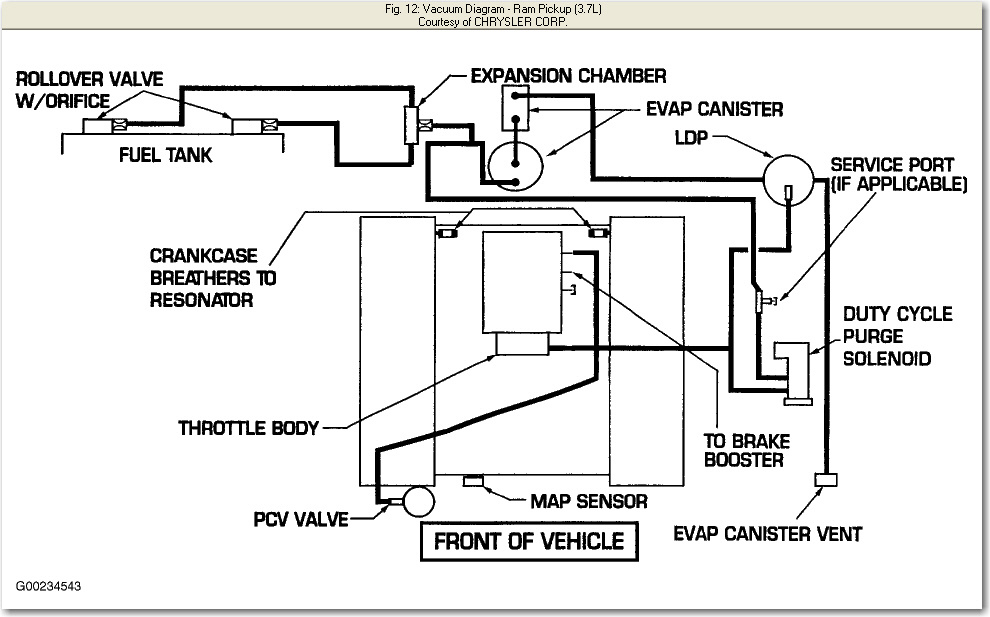
Alright, let's dive into the EVAP system diagram for your 2008 Dodge Ram 1500. Understanding this system is crucial for diagnosing and repairing emissions-related issues, which can range from annoying check engine lights to failed emissions tests. This article will break down the diagram, explain its components, and provide some practical troubleshooting tips. We've also got the actual diagram available for download, so you can follow along. Consider this your comprehensive guide to the 2008 Dodge Ram 1500 EVAP system.
Purpose of the EVAP Diagram
Why bother with an EVAP (Evaporative Emission Control) system diagram? Simple: it's your roadmap to understanding how your truck manages fuel vapor. The EVAP system prevents harmful gasoline vapors from escaping into the atmosphere. When something goes wrong – a leak, a malfunctioning valve, a clogged hose – it triggers that dreaded check engine light. The diagram is invaluable for:
- Troubleshooting: Pinpointing the exact location of a problem.
- Repairing: Ensuring you replace the correct parts and connect them properly.
- Understanding: Gaining a deeper knowledge of your vehicle's emissions system.
- Modifying (Carefully!): Knowing the impact of any modifications on the EVAP system. Remember, tampering with emissions systems can have legal consequences.
Ignoring EVAP issues can lead to poor fuel economy, a failed emissions test (depending on your location), and a contribution to air pollution. So, let's get this system sorted.
Key Specs and Main Parts of the 2008 Dodge Ram 1500 EVAP System
The 2008 Dodge Ram 1500, depending on the engine (3.7L V6, 4.7L V8, or 5.7L Hemi V8), will have slight variations in the EVAP system layout, but the core components remain the same. Here are the key players:
- Fuel Tank: The source of the fuel vapors.
- Fuel Cap: Seems simple, but a loose or faulty fuel cap is a VERY common cause of EVAP issues. Ensure it's properly tightened and the seal is intact.
- Fuel Tank Pressure Sensor (FTP): Monitors the pressure inside the fuel tank. This sensor provides crucial data to the PCM (Powertrain Control Module).
- Charcoal Canister: This is the heart of the system, storing fuel vapors until the engine is ready to burn them. It's filled with activated charcoal, which absorbs the hydrocarbons.
- Purge Valve (Canister Purge Solenoid): This valve, controlled by the PCM, allows the engine to draw the stored fuel vapors from the charcoal canister into the intake manifold to be burned. Its duty cycle is often modulated for precise vapor control.
- Vent Valve (Canister Vent Solenoid): This valve controls airflow into the charcoal canister. It's usually open when the engine is off to allow the canister to vent. During EVAP tests, the PCM closes this valve to create a vacuum.
- Leak Detection Pump (LDP) (May vary by model): Some models use an LDP to actively test for leaks in the system. It creates a vacuum and monitors the pressure to see if it holds.
- Hoses and Lines: Connect all the components, allowing the flow of fuel vapors and air. These are often made of rubber or plastic and can crack or become brittle over time.
- PCM (Powertrain Control Module): The "brain" of the system, controlling the purge and vent valves based on inputs from various sensors.
Understanding EVAP System Diagram Symbols
Decoding the diagram is key to understanding the system. Here's a breakdown of common symbols:
- Lines: Represent hoses and fuel lines. Different colors might indicate different materials or functions (e.g., green for vapor lines, black for vacuum lines). Check the diagram legend for specifics.
- Solid Lines: Typically indicate hard lines or fuel lines.
- Dashed Lines: Usually represent vacuum lines or control lines.
- Components: Represented by simplified icons of the actual parts (e.g., a rectangle for the charcoal canister, a circle with a line through it for a valve).
- Arrows: Indicate the direction of flow.
- Electrical Symbols: Used for sensors and solenoids, showing wiring and connections to the PCM.
- Ground Symbols: Indicate grounding points for electrical components.
Always refer to the specific legend on your diagram. Color coding and symbols can vary slightly between different diagrams, even for the same vehicle.
How the 2008 Dodge Ram 1500 EVAP System Works
The EVAP system's operation can be broken down into a few key stages:
- Vapor Collection: Fuel vapors from the fuel tank are routed to the charcoal canister.
- Vapor Storage: The charcoal canister absorbs and stores these vapors.
- Purging: When the engine is running and certain conditions are met (e.g., engine warmed up, cruising speed), the PCM opens the purge valve. This allows engine vacuum to draw fresh air through the vent valve, through the charcoal canister, and into the intake manifold. The air flow desorbs the fuel vapors from the charcoal, and the mixture is burned in the engine.
- Leak Detection: The PCM periodically runs tests to check for leaks in the system. This might involve closing both the purge and vent valves and monitoring the fuel tank pressure. A significant pressure drop indicates a leak. Some systems use an LDP to actively create a vacuum and monitor its decay.
The PCM monitors the FTP sensor, purge valve, vent valve, and sometimes the LDP to ensure the system is functioning correctly. If it detects a problem, it will set a diagnostic trouble code (DTC) and illuminate the check engine light.
Real-World Use: Basic Troubleshooting Tips
So, your check engine light is on, and you suspect an EVAP issue. Here's a basic troubleshooting approach:
- Read the Codes: Use an OBD-II scanner to retrieve the DTCs. Common EVAP codes include P0440, P0442, P0455, P0456, P0457. Write down all codes and their descriptions before clearing them.
- Check the Fuel Cap: As mentioned earlier, this is the most common culprit. Make sure it's properly tightened and the seal is in good condition. Replacing a worn fuel cap is a cheap and easy fix.
- Visual Inspection: Carefully inspect all hoses and lines for cracks, leaks, or disconnections. Pay close attention to areas near heat sources or where hoses rub against other components.
- Listen for Leaks: With the engine running (or just after turning it off), listen for hissing sounds near the fuel tank, charcoal canister, and purge/vent valves.
- Smoke Test: A smoke test is a great way to find leaks. A special machine introduces smoke into the EVAP system, and you can visually see where the smoke is escaping. This is a common diagnostic procedure at repair shops.
- Component Testing: Use a multimeter to check the resistance and voltage of the purge and vent valves. Consult your service manual for specific test procedures and specifications.
Important Note: Many EVAP problems require specialized equipment and knowledge to diagnose accurately. Don't hesitate to consult a qualified mechanic if you're unsure about anything.
Safety Considerations
Working on the EVAP system involves dealing with fuel vapors, which are flammable. Take these precautions:
- Work in a well-ventilated area.
- Do not smoke or use open flames near the fuel system.
- Disconnect the negative battery cable before working on any electrical components.
- Relieve fuel pressure before disconnecting any fuel lines. Consult your service manual for the proper procedure. This usually involves removing the fuel pump relay and running the engine until it stalls.
- Wear safety glasses to protect your eyes.
- Be aware that the fuel tank can contain pressure, especially on hot days. When opening the fuel filler cap, do it slowly to release any pressure gradually.
The fuel tank itself is a high-risk component if mishandled. Never weld or cut near the fuel tank unless it has been completely emptied and purged of all fuel vapors. Improper handling can result in an explosion.
High Voltage Alert: Some components might contain potentially dangerous voltages. Always disconnect the negative battery terminal before working on any part of the electrical system.
Conclusion
The 2008 Dodge Ram 1500 EVAP system is a complex network of components designed to keep your vehicle environmentally friendly and running efficiently. By understanding the diagram, you can confidently troubleshoot and repair common EVAP issues. Remember to prioritize safety and consult a professional when needed. You now have a better understanding of how everything works.
We have the full 2008 Dodge Ram 1500 EVAP system diagram available for download. It's a valuable resource for any DIY mechanic working on this system.