
2008 Ford F150 Serpentine Belt Diagram
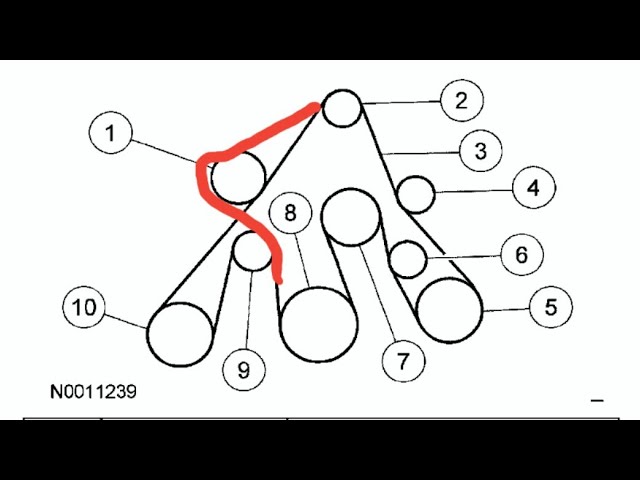
The serpentine belt on your 2008 Ford F150 is a critical component, responsible for powering various engine accessories. Understanding its routing and operation is essential for preventative maintenance, troubleshooting, and repairs. This article provides a detailed explanation of the 2008 F150 serpentine belt diagram, equipping you with the knowledge to tackle belt-related issues with confidence.
Purpose of Understanding the Serpentine Belt Diagram
Why bother understanding the serpentine belt diagram? There are several compelling reasons:
- Belt Replacement: When replacing a worn or damaged belt, the diagram ensures correct routing. Incorrect routing can lead to accessory malfunction or even belt failure.
- Troubleshooting: A squealing or slipping belt can indicate various problems. The diagram helps identify which accessories are affected and pinpoint the source of the issue (e.g., a faulty tensioner or seized pulley).
- Accessory Replacement: If you're replacing an alternator, power steering pump, or other accessory, knowing the belt path is crucial for removal and reinstallation.
- Preventative Maintenance: Regularly inspecting the belt and its components, guided by the diagram, can prevent breakdowns and costly repairs.
- Learning and Empowerment: Understanding how your engine works empowers you to perform basic maintenance and repairs yourself, saving money and increasing your vehicle knowledge.
Key Specs and Main Parts
The 2008 Ford F150 was offered with several engine options, each having a slightly different serpentine belt routing. We will focus on the most common engines:
- 4.6L 2V V8: This engine is known for its reliability and straightforward serpentine belt layout.
- 5.4L 3V V8: This engine features a slightly more complex routing due to the larger engine size and potentially different accessory configurations.
The main components involved in the serpentine belt system include:
- Serpentine Belt: A long, continuous belt made of reinforced rubber that transmits power from the crankshaft pulley to the various accessories.
- Crankshaft Pulley (Harmonic Balancer): Located at the front of the crankshaft, this pulley drives the serpentine belt. It is often referred to as the harmonic balancer because it includes a damper to reduce torsional vibrations from the engine.
- Alternator Pulley: Powers the alternator, which generates electricity to charge the battery and run electrical systems.
- Power Steering Pump Pulley: Powers the power steering pump, which provides hydraulic assistance for steering.
- Air Conditioning Compressor Pulley: Powers the AC compressor, which circulates refrigerant to cool the cabin.
- Idler Pulley(s): Smooth, non-driven pulleys that guide the belt around the engine and maintain proper tension.
- Tensioner Pulley: A spring-loaded pulley that automatically maintains the correct tension on the serpentine belt. This is *critical* for proper belt operation. A failing tensioner can cause belt slippage, noise, and premature wear.
- Water Pump Pulley: Powers the water pump, which circulates coolant to regulate engine temperature.
Serpentine belts are typically specified by their length and number of ribs. When replacing your belt, ensure you use the correct part number specified for your engine and vehicle configuration. Using the wrong belt can lead to improper tension, accessory malfunction, and belt failure.
Symbols Explained: Deciphering the Diagram
A serpentine belt diagram uses various symbols to represent the different components and belt routing. Understanding these symbols is crucial for interpreting the diagram correctly.
- Solid Lines: Represent the serpentine belt itself. The thickness of the line may vary, but generally indicates the main belt path.
- Dashed Lines: May indicate the *backside* of the belt making contact with a pulley. This is often used to differentiate between the grooved (ribbed) side of the belt and the smooth back.
- Circles/Discs: Represent pulleys. These are typically labeled with abbreviations indicating their function (e.g., ALT for alternator, P/S for power steering, A/C for air conditioning).
- Arrows: Indicate the direction of belt travel. Following the arrows helps understand how the belt loops around the pulleys.
- Text Labels: Provide additional information, such as pulley sizes, belt length, and component names.
- Tensioner Symbol: Usually represented by a pulley with an attached spring or arrow indicating the direction of tension application. The tensioner is essential in maintaining proper belt tightness.
Color-coding is not universally used, but some diagrams may employ different colors to highlight specific sections or components. Always refer to the legend or key provided with the diagram to understand the meaning of any color-coded elements.
How It Works: The Serpentine Belt in Action
The serpentine belt system operates on a simple principle: transferring rotational power from the engine's crankshaft to various accessories. The crankshaft pulley, driven by the engine, rotates the serpentine belt. The belt, in turn, wraps around the pulleys of the alternator, power steering pump, AC compressor, water pump, and idler pulleys. As the crankshaft pulley rotates, it drives these accessory pulleys, causing them to function. The tensioner pulley maintains constant tension on the belt, ensuring proper grip and preventing slippage.
The belt's ribs grip the grooved pulleys, while the smooth back of the belt often contacts idler pulleys. The routing is carefully designed to optimize belt contact and minimize slippage, ensuring efficient power transfer to all accessories.
Real-World Use: Troubleshooting Tips
Here are some common serpentine belt-related issues and troubleshooting tips:
- Squealing Noise: Often indicates a loose belt, glazed belt, or a misaligned pulley. Check the belt tensioner and inspect the belt for cracks or glazing. A small amount of belt dressing *might* temporarily alleviate the squeal, but it's generally a sign that the belt needs replacement.
- Slipping Belt: Can cause accessories to malfunction (e.g., weak power steering, poor AC performance). Check belt tension and inspect the pulleys for wear or damage.
- Cracked or Worn Belt: Indicates the belt is nearing the end of its lifespan and should be replaced. Look for deep cracks, fraying, or missing chunks of rubber.
- Accessory Failure: If a specific accessory (e.g., alternator, power steering pump) is not functioning correctly, inspect the belt and pulley associated with that accessory. A seized pulley can cause the belt to break or slip.
- Tensioner Issues: A noisy or vibrating tensioner indicates a problem with the tensioner bearing or spring. Replace the tensioner assembly as a unit.
When troubleshooting, always visually inspect the belt and pulleys for any signs of damage or wear. Use a belt tension gauge to verify proper belt tension. If you suspect a seized pulley, try rotating it by hand with the engine off. A pulley that is difficult to turn or makes noise should be replaced.
Safety Precautions
Working on the serpentine belt system involves several safety risks:
- Hot Engine: Never work on the engine while it's hot. Allow the engine to cool completely before starting any repairs.
- Moving Parts: The serpentine belt and pulleys are moving parts. Keep your hands, tools, and clothing away from these components when the engine is running.
- High Voltage: The alternator generates high voltage. Disconnect the negative battery cable before working on the electrical system.
- Belt Tension: Releasing the belt tension can cause the tensioner arm to snap back forcefully. Use caution when releasing the tension and wear eye protection.
- Sharp Edges: Some pulleys and components may have sharp edges. Wear gloves to protect your hands.
The crankshaft pulley (harmonic balancer) can be particularly dangerous if damaged. A failing harmonic balancer can separate and cause significant engine damage. If you suspect a problem with the harmonic balancer, have it inspected by a qualified mechanic.
Remember: If you're not comfortable working on the serpentine belt system, it's best to consult a qualified mechanic. Improper installation or repair can lead to further damage and potential safety hazards.
We have a high-resolution serpentine belt diagram available for download. This diagram will provide a clear visual representation of the belt routing for your specific 2008 Ford F150 engine. Use it as a guide for your maintenance and repair tasks.