
2008 Honda Accord V6 Serpentine Belt Diagram
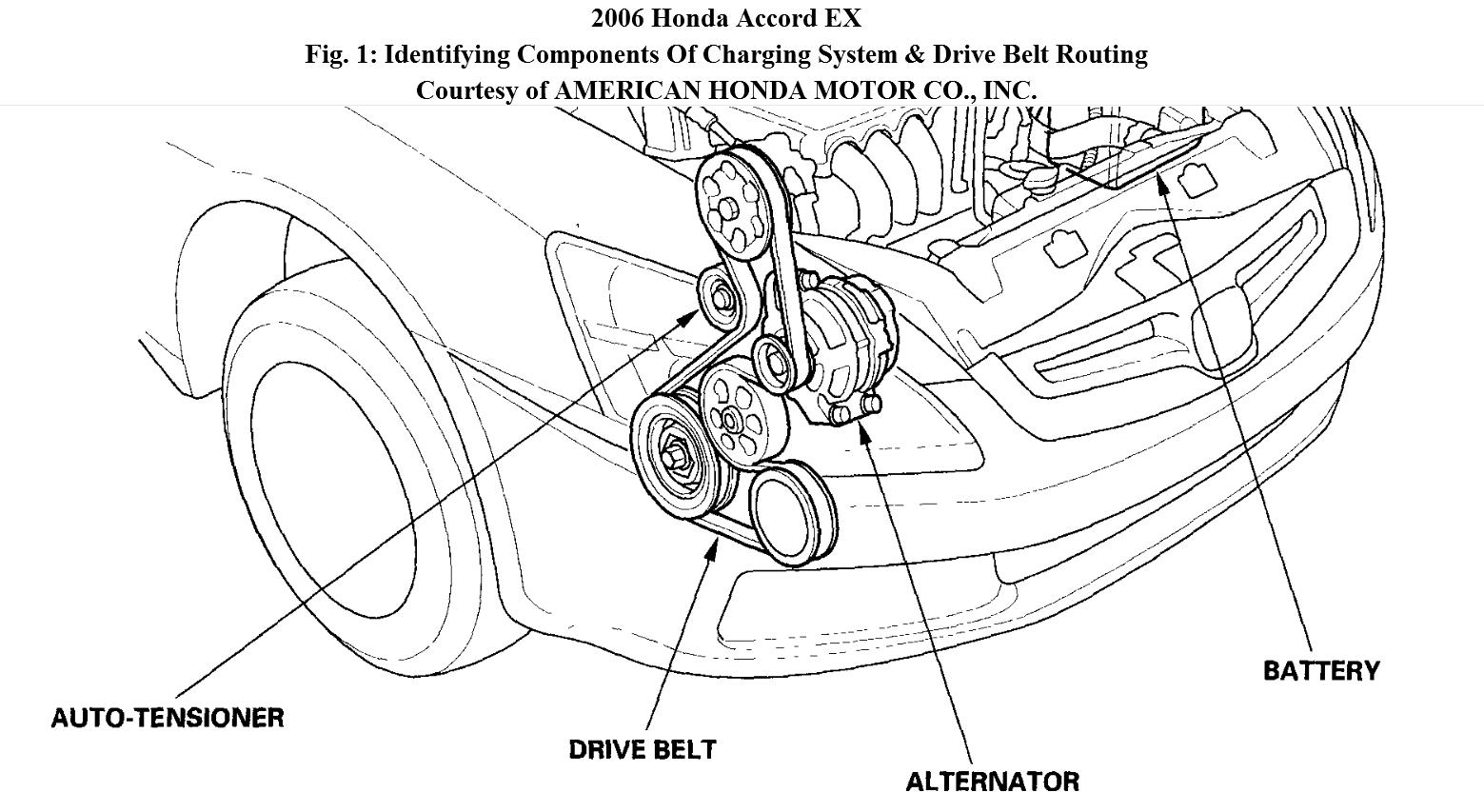
So, you're tackling the serpentine belt on your 2008 Honda Accord V6? Smart move. It's a crucial component, and understanding its layout is key to keeping your engine running smoothly. This article will break down the serpentine belt diagram, explain its function, and give you the knowledge to confidently handle related repairs or maintenance. We're talking about the 3.5L V6, engine code J35Z2, specifically. While similar, other engines may have slightly different routing.
Why This Diagram Matters
Why bother learning about this diagram? Simple. The serpentine belt drives essential engine accessories. If it fails, you're looking at more than just a breakdown; you risk damage to vital components. A serpentine belt diagram provides a visual guide for:
- Replacement: Correct routing is *critical*. If you install it incorrectly, accessories won't function, and the belt can shred quickly.
- Troubleshooting: Is the belt slipping? Is an accessory not working? The diagram helps you trace the belt path and identify potential issues.
- Maintenance: Understanding the system allows you to inspect the belt and pulleys for wear and tear effectively.
- Learning: Gaining a deeper understanding of your engine's mechanical systems empowers you to perform more complex repairs in the future.
Key Specs and Main Parts
Before diving into the diagram itself, let's cover the core components involved:
- Serpentine Belt: The continuous belt that transmits rotational power from the crankshaft to the accessories. These are usually made of EPDM rubber (Ethylene Propylene Diene Monomer). A typical belt length for a 2008 Accord V6 is around 83 inches, but always double-check with your parts supplier based on your vehicle's specific VIN.
- Crankshaft Pulley (or Damper): Attached to the end of the crankshaft, this pulley is driven directly by the engine's rotation. It's the *driving* pulley in the serpentine belt system.
- Alternator Pulley: Driven by the serpentine belt, the alternator generates electrical power for the vehicle.
- Power Steering Pump Pulley: This pulley drives the power steering pump, providing hydraulic assistance for steering.
- Air Conditioning Compressor Pulley: This pulley engages and drives the A/C compressor to cool the cabin.
- Idler Pulleys: Smooth, ungrooved pulleys that guide the belt around the engine and provide the necessary wrap angle on other pulleys. They often help prevent belt vibration and ensure proper tension.
- Tensioner Pulley: A spring-loaded pulley that automatically maintains the correct tension on the serpentine belt. It's crucial for proper belt function and prevents slippage and premature wear. The tensioner typically has a square opening for a wrench or socket to relieve tension during belt installation/removal.
You might also see mention of things like the *water pump* in other diagrams, but on the 2008 Accord V6 (J35Z2), the water pump is driven by the timing belt, *not* the serpentine belt.
Decoding the Serpentine Belt Diagram Symbols
A serpentine belt diagram isn't just a random drawing; it's a standardized representation. Here’s what the common symbols mean:
- Solid Lines: Represent the serpentine belt itself, showing its path around the various pulleys.
- Arrows: Indicate the direction of belt travel. Follow these arrows to understand which pulley is driving which accessory.
- Pulleys: Circles or rounded shapes representing each pulley. Some diagrams might label each pulley with abbreviations like "ALT" for alternator, "P/S" for power steering, and "A/C" for air conditioning. The crankshaft pulley may be labeled "CRANK" or simply identified as the largest pulley in the system.
- Tensioner Symbol: Usually depicted as a pulley with an arrow indicating the direction of its spring-loaded movement. This symbolizes the tensioner's role in maintaining belt tightness.
- Idler Pulley Symbol: Often depicted as a smooth pulley, with or without a label.
Some more advanced diagrams might use different line thicknesses to represent the belt on the front and back sides of the pulleys, but most standard diagrams for a 2008 Accord V6 are fairly straightforward.
How It Works: The Flow of Power
The crankshaft pulley is the heart of the system. As the engine rotates, this pulley spins the serpentine belt. The belt, in turn, wraps around and drives the other pulleys connected to the various accessories. The tensioner pulley plays a vital role in maintaining the correct amount of tension on the belt, ensuring that the belt grips the pulleys securely and prevents slippage.
If the belt is too loose, it will slip, causing accessories to function poorly (e.g., dim headlights from a slipping alternator) or not at all. If the belt is too tight, it can put excessive stress on the accessory bearings and lead to premature failure. The automatic tensioner compensates for belt stretch over time, maintaining optimal tension throughout the belt's lifespan.
Real-World Use: Basic Troubleshooting
Here are a few common scenarios where understanding the serpentine belt diagram is crucial:
- Squealing Belt: A squealing belt often indicates slippage. Check the belt for cracks, glazing, or wear. Also, inspect the tensioner to ensure it's functioning correctly. If the tensioner arm is bouncing excessively, it might be failing. A properly routed belt is essential, so confirm the routing against the diagram.
- Accessory Malfunction: If your alternator, power steering, or A/C isn't working, check the serpentine belt first. Is it intact? Is it properly routed? A broken or incorrectly routed belt will prevent the accessory from functioning. Also check individual components for seizing. A seized component, like the AC compressor, can cause the belt to snap.
- Belt Replacement: When replacing the serpentine belt, *always* refer to the diagram. Make a sketch or take a picture of the old belt's routing *before* removing it. This will prevent headaches during installation. Use the tensioner to relieve tension on the belt and slip the new belt into place, following the diagram carefully.
Example Troubleshooting: Let's say your power steering suddenly stops working. First, check the fluid level. If that's fine, look at the serpentine belt. Is it still intact? Is it properly routed around the power steering pump pulley? If the belt is broken or misrouted, that's your problem. If the belt *appears* fine, the power steering pump itself might be failing, but the belt is the first and easiest thing to check.
Safety First
Working on the serpentine belt system involves potential hazards. Keep these safety tips in mind:
- Disconnect the Battery: Disconnect the negative battery terminal to prevent accidental electrical shock.
- Hot Engine: Never work on the serpentine belt system when the engine is hot. Allow the engine to cool completely before starting any repairs.
- Moving Parts: Keep your hands, hair, and clothing away from the serpentine belt and pulleys when the engine is running. Even a slow-spinning belt can cause serious injury.
- Sharp Edges: Be aware of sharp edges on the pulleys and surrounding components. Wear gloves to protect your hands.
- Tensioner Springs: The tensioner pulley is spring-loaded. Use caution when releasing the tensioner to prevent injury. Use the correct tool (usually a wrench or socket) to control the tensioner's movement.
- Air Conditioning Compressor: The A/C system contains refrigerant under high pressure. Avoid disconnecting any A/C lines unless you are a qualified technician with the proper equipment. Improper handling of refrigerant can be dangerous and harmful to the environment.
Crucially, the crankshaft pulley and timing belt area are extremely sensitive. Do not put excessive pressure or shock load on the crankshaft pulley. Severe vibration here can damage the crankshaft position sensor.
By understanding the serpentine belt diagram and following these safety guidelines, you can confidently tackle serpentine belt maintenance and repairs on your 2008 Honda Accord V6.
We have the serpentine belt diagram for your 2008 Honda Accord V6 (J35Z2 engine) available for download in a high-resolution, printable format. Contact us to receive the file.