
2008 Nissan Altima Alternator Wiring Diagram
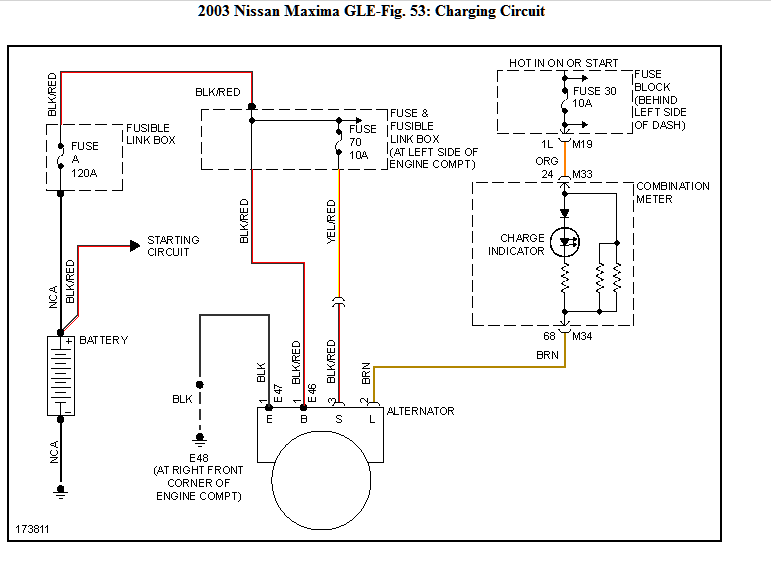
Alright, let's dive into the alternator wiring diagram for the 2008 Nissan Altima. This is a crucial piece of information for any DIY mechanic or car enthusiast working on their Altima's electrical system. Whether you're dealing with a charging issue, upgrading your electrical components, or simply trying to understand how your car's electrical system works, knowing how to read and interpret this diagram is invaluable.
Purpose of the Alternator Wiring Diagram
The alternator wiring diagram is essentially a roadmap of the electrical connections associated with your Altima's alternator. Its primary purpose is to provide a visual representation of how the alternator is wired to the rest of the vehicle's electrical system. This allows you to:
- Troubleshoot electrical problems: Pinpoint wiring faults like shorts, opens, or high resistance in the alternator circuit.
- Perform repairs: Accurately reconnect wiring after alternator replacement or other electrical work.
- Install aftermarket accessories: Safely tap into the vehicle's electrical system for adding things like amplifiers or auxiliary lighting.
- Understand the charging system: Gain a deeper understanding of how the alternator interacts with the battery and other components to keep your car running.
Having access to a reliable diagram significantly reduces the risk of making costly mistakes and ensures you're working safely.
Key Specs and Main Parts
Before we dissect the diagram, let's briefly cover the key components and specifications involved. Remember, the exact specifications can vary slightly depending on your Altima's trim level (e.g., 2.5S, 2.5SL, 3.5SE, 3.5SL) and engine (2.5L QR25DE or 3.5L VQ35DE). Here are the basics:
- Alternator: The heart of the charging system, responsible for converting mechanical energy (engine rotation) into electrical energy to power the vehicle's electrical loads and charge the battery. Typical output is around 110-130 Amps.
- Battery: Stores electrical energy and provides power to start the engine and operate electrical accessories when the engine isn't running. A 12-volt lead-acid battery is standard.
- Voltage Regulator: Internally integrated into the alternator. The regulator maintains a constant voltage output (typically around 13.8-14.4 volts) to prevent overcharging the battery and damaging electrical components.
- Fusible Link/Main Fuse: A safety device (usually a high-amperage fuse or fusible link) that protects the entire electrical system from overcurrents. Located near the battery.
- Wiring Harness: Bundles of wires that connect the alternator to the battery, fuse box, and other components.
- Engine Control Module (ECM): In some cases, the ECM monitors alternator performance, providing diagnostic information.
Symbols: Lines, Colors, and Icons
Understanding the symbols used in the wiring diagram is crucial for proper interpretation. Here's a breakdown:
- Lines: Represent wires. A solid line indicates a direct connection, while a dashed line may indicate a shielded wire or a connection that exists only in specific models or conditions. Line thickness can sometimes indicate wire gauge (thicker lines for higher current).
- Colors: Wires are color-coded to aid in identification. Common colors include red (positive power), black (ground), blue, green, yellow, and white. The diagram will have a legend explaining the color codes. For example:
- Red (R): Typically connected to the positive terminal of the battery.
- Black (B): Typically connected to the chassis ground.
- Blue (L): Often used for the alternator's indicator light circuit.
- White (W): Can be used for various signals, including voltage sensing.
- Icons: Represent electrical components. Some common icons include:
- Rectangle with a diagonal line: Resistor
- Circle with an "X": Lamp (e.g., charging indicator light)
- Rectangle with a fuse symbol inside: Fuse
- A stylized drawing resembling the alternator's physical appearance.
- Ground Symbol: A series of downward-pointing lines, indicating a connection to the vehicle's chassis ground.
- Connectors: Shown as circles or squares where wires join. Connector identification numbers are often included.
How It Works: A Simplified Overview
The alternator's wiring is relatively straightforward. Here's a simplified explanation of how it works within the Altima's electrical system:
- Battery Connection: A heavy-gauge wire (usually red) connects the alternator's output terminal directly to the positive terminal of the battery, often through a fusible link or main fuse. This wire carries the charging current.
- Ground Connection: The alternator is grounded to the engine block, providing a return path for the current. This is typically a braided ground strap.
- Voltage Sensing: Another wire (often white) connects to the battery voltage, allowing the voltage regulator to monitor the battery's charge level. This wire might connect directly to the battery or to another point in the electrical system that provides an accurate voltage reading.
- Charging Indicator Light: A wire (often blue or green) connects to the instrument cluster's charging indicator light. When the alternator isn't producing enough voltage, this wire provides a ground path, illuminating the light. Once the alternator is charging properly, the voltage on this wire rises, turning the light off.
- ECM Communication (If Applicable): On some models, the alternator's operation is monitored by the ECM. A data wire may connect the alternator to the ECM, allowing it to track alternator output and diagnose charging problems.
Real-World Use: Basic Troubleshooting Tips
Here are some common problems you might encounter and how the wiring diagram can help:
- Battery Not Charging: Use the diagram to check the continuity of the main charging wire between the alternator and the battery. Look for corrosion or damage at the connections. Check the fusible link or main fuse.
- Charging Indicator Light Stays On: Use the diagram to trace the wire connecting the alternator to the light. A break in this wire or a faulty connection can cause the light to stay on. Also, a faulty alternator or voltage regulator can cause this.
- Excessive Voltage: A faulty voltage regulator can cause the alternator to overcharge the battery. The wiring diagram can help you check the voltage sensing wire.
- Intermittent Charging: Loose connections or corroded terminals can cause intermittent charging problems. The diagram can help you locate all the relevant connections to inspect and clean.
Always use a multimeter to check for voltage, continuity, and resistance. The wiring diagram tells you where to test; the multimeter tells you what you’re getting.
Safety: Highlight Risky Components
Working on the electrical system can be dangerous if you don't take proper precautions:
- Disconnect the Battery: Always disconnect the negative terminal of the battery before working on any electrical components. This will prevent accidental shorts and potential electric shock.
- High-Amperage Circuits: The main charging wire from the alternator carries a large amount of current. Be extremely careful when working around this wire, even with the battery disconnected.
- Avoid Shorts: Never allow metal tools to come into contact with exposed terminals or wires. This can cause a short circuit, which can damage the vehicle's electrical system and cause a fire.
- Insulate Tools: Use insulated tools whenever possible to reduce the risk of electric shock.
- Consult the Service Manual: The wiring diagram is a valuable tool, but it's not a substitute for the official Nissan service manual. Refer to the service manual for detailed instructions and torque specifications.
Remember, if you're not comfortable working on the electrical system, it's best to consult a qualified mechanic.
We have the 2008 Nissan Altima Alternator Wiring Diagram available for you to download. It includes detailed color codes and connector locations. With the diagram and these instructions, you'll be well-equipped to tackle your Altima's charging system issues.