
2008 Toyota Tundra 4.7 Serpentine Belt Diagram
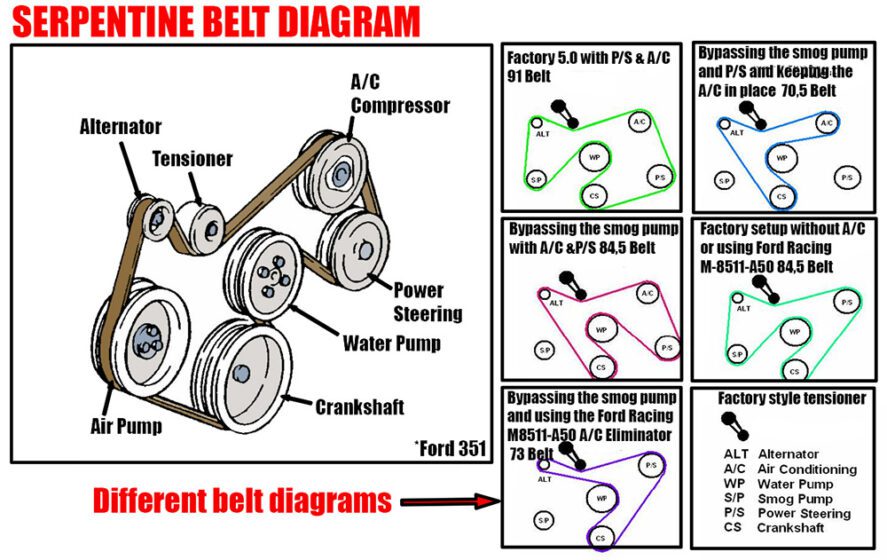
Alright, let's dive into the serpentine belt diagram for your 2008 Toyota Tundra with the 4.7L engine. This isn't just a pretty picture; it's your roadmap to a smooth-running engine, crucial for everything from powering your air conditioning on a hot day to keeping your battery charged. Understanding this diagram empowers you to perform basic maintenance, diagnose problems, and even tackle some repairs yourself.
Purpose: Why Bother with a Serpentine Belt Diagram?
So, why bother with this diagram? Here’s the rundown:
- Repairs and Maintenance: The most obvious reason. If you're replacing the serpentine belt itself (a common maintenance item), the diagram is your guide to routing the new belt correctly. Incorrect routing can lead to serious problems, including component damage and belt failure.
- Troubleshooting: Squealing noises from the engine bay? Battery not charging properly? These could be serpentine belt related. The diagram helps you identify which component the belt drives and narrow down the possible causes of the issue.
- Understanding Your Engine: Even if you're not planning on doing any work yourself, understanding the serpentine belt system gives you a better grasp of how your engine operates.
- Preventative Maintenance: Inspecting the belt for wear and tear is crucial. The diagram reminds you which components the belt interacts with, prompting you to check those associated pulleys and tensioners too.
Key Specs and Main Parts of the Serpentine Belt System (2008 Tundra 4.7L)
Let's break down the major players in this system. We're focusing on the 2008 Toyota Tundra with the 4.7L 2UZ-FE engine. While variations exist across models and years, this breakdown covers the fundamentals.
- Serpentine Belt: The heart of the system. This single, long belt snakes around various pulleys, transferring rotational power from the engine's crankshaft to other components.
- Crankshaft Pulley (or Damper): This pulley is directly connected to the crankshaft, the engine's main rotating shaft. It's the source of power for the entire serpentine belt system.
- Alternator Pulley: The alternator generates electricity to charge the battery and power the vehicle's electrical system. The serpentine belt drives the alternator.
- Power Steering Pump Pulley: This pulley drives the power steering pump, which provides hydraulic assistance to make steering easier.
- Air Conditioning (A/C) Compressor Pulley: The A/C compressor circulates refrigerant to cool the cabin. The serpentine belt powers the A/C compressor.
- Water Pump Pulley: This pulley drives the water pump, which circulates coolant through the engine to regulate temperature.
- Idler Pulley(s): These are smooth, unpowered pulleys that guide the belt and maintain proper tension and routing. They often appear as simple wheels.
- Belt Tensioner: This spring-loaded or hydraulic device applies constant tension to the serpentine belt, preventing slippage. A failing tensioner can lead to belt squealing and component damage.
Decoding the Serpentine Belt Diagram: Symbols and Conventions
The diagram itself can seem confusing at first, but understanding the symbols makes it much easier to interpret. Here’s what to look for:
- Solid Lines: Typically represent the serpentine belt itself. The thickness of the line might indicate the belt's position (closer to the viewer).
- Dashed Lines: Often represent the path of the belt on the *backside* of a pulley. It's a way to show how the belt wraps around components in three dimensions on a 2-dimensional diagram.
- Circles or Ovals: Represent pulleys. The size of the circle doesn't necessarily indicate the pulley's actual size, but rather its position in the diagram.
- Labels: Each pulley should be labeled with its corresponding component (e.g., ALT for alternator, AC for air conditioning compressor, P/S for power steering, WP for water pump).
- Arrows: Indicate the direction of rotation of each pulley. Pay attention to these! Incorrect belt routing can cause components to rotate in the wrong direction, leading to damage.
- Tensioner Symbol: The tensioner is usually represented with a special symbol, often depicting the spring or arm mechanism.
- Routing Arrows/Marks on Tensioner: Often located on the tensioner body. These are *critical* when installing the new belt. They will show which way to rotate the tensioner to release the belt.
How the Serpentine Belt System Works
The basic principle is simple: the engine's crankshaft turns the crankshaft pulley, which then drives the serpentine belt. The serpentine belt, in turn, transfers that rotational energy to all the other pulleys connected to it. Each pulley then drives its respective component (alternator, power steering pump, etc.).
The belt tensioner is crucial for maintaining the correct amount of tension on the belt. Too little tension, and the belt will slip, causing components to malfunction and potentially damaging the belt. Too much tension, and you risk premature bearing wear in the driven components and potentially cracking of the bracketry.
Real-World Use: Troubleshooting Serpentine Belt Issues
Here are some common issues and how the diagram can help you diagnose them:
- Squealing Noise:
Possible Causes: Slipping belt due to wear, contamination (oil, coolant), loose tensioner, or a seized component.
Use the diagram to: Identify which components the belt drives. Check the belt for cracks, fraying, or glazing. Inspect the tensioner for proper movement and tension. With the engine off, try spinning each pulley by hand. A seized or rough-spinning pulley is a prime suspect.
- Battery Not Charging:
Possible Causes: Faulty alternator, loose or damaged serpentine belt, slipping belt.
Use the diagram to: Confirm the belt is properly routed and tensioned around the alternator pulley. If the belt is slipping, the alternator won't be able to generate enough electricity.
- Power Steering Not Working:
Possible Causes: Low power steering fluid, faulty power steering pump, slipping or broken serpentine belt.
Use the diagram to: Verify the belt is driving the power steering pump pulley. A broken belt will obviously prevent the pump from working. A slipping belt may cause intermittent or reduced power steering assistance.
- Overheating:
Possible Causes: Low coolant, faulty water pump, slipping or broken serpentine belt.
Use the diagram to: Ensure the belt is driving the water pump. If the belt is broken, the water pump won't circulate coolant, leading to overheating.
Safety First! Working with the Serpentine Belt System
This system involves moving parts and potential hazards. Always disconnect the negative battery terminal before working on the serpentine belt system. This prevents accidental starting of the engine while your hands are near moving components. Never put your hands or tools near a running serpentine belt. The belt can grab tools or clothing and pull you into the engine, causing serious injury.
The crankshaft pulley is a particularly dangerous component because of its size, speed, and proximity to the engine block. Be extremely careful when working near it. When releasing tension on the serpentine belt, ensure that the tensioner doesn’t snap back and cause injury. Wear safety glasses to protect your eyes from debris.
Finally, be aware that some components (like the catalytic converter) can be extremely hot, even after the engine has been off for a while. Give the engine time to cool down before working on it.
With a little knowledge and caution, you can confidently diagnose and repair serpentine belt issues on your 2008 Toyota Tundra. Remember to always consult your vehicle's repair manual for specific instructions and torque specifications.
We have a high-resolution, printable version of the 2008 Toyota Tundra 4.7L Serpentine Belt Diagram available for download. It includes detailed routing information and component identification. Feel free to download it and keep it handy for your future maintenance needs. Just search for "2008 Tundra 4.7L Serpentine Belt Diagram Download" and you'll find it.