
2010 Ford Escape Exhaust System Diagram
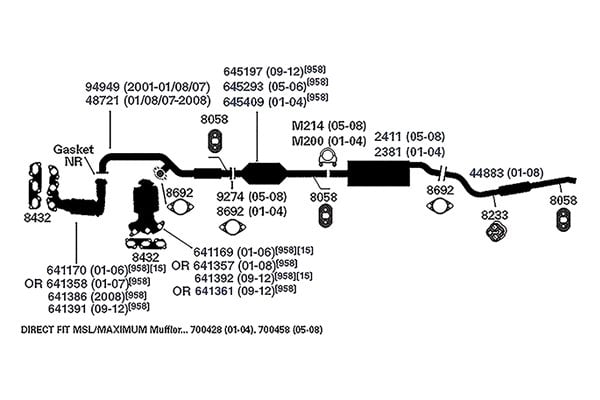
Understanding your vehicle's exhaust system is crucial for maintaining optimal performance, fuel efficiency, and emissions compliance. This article delves into the 2010 Ford Escape exhaust system diagram, providing you with the knowledge needed to diagnose issues, perform repairs, and even consider modifications. Think of this as a blueprint to your Escape's breathing apparatus.
Purpose of Understanding the 2010 Ford Escape Exhaust System Diagram
Why bother with a diagram? Several reasons make understanding the exhaust system valuable:
- Diagnostics: Pinpointing the source of exhaust leaks, catalytic converter failures, or muffler damage becomes significantly easier with a visual representation of the system's layout.
- Repairs and Replacements: Knowing the arrangement of pipes, hangers, and components simplifies the process of replacing worn or damaged parts. You'll know exactly what you're looking at and how it connects.
- Modifications: For those looking to upgrade their exhaust system for performance gains or a different sound, the diagram serves as a foundation for planning and executing modifications safely and effectively.
- Understanding Vehicle Operation: Comprehending how the exhaust system functions is essential for any serious DIY mechanic or car enthusiast. It contributes to a more holistic understanding of your vehicle.
Key Specs and Main Parts of the 2010 Ford Escape Exhaust System
The 2010 Ford Escape exhaust system, depending on the engine (2.5L I4 or 3.0L V6), typically comprises the following key components. Keep in mind that specifications can vary slightly depending on the specific trim level and options package.
- Exhaust Manifold(s): Bolted directly to the engine cylinder head(s), the manifold collects exhaust gases from each cylinder and directs them into the exhaust system. The V6 engine will have two manifolds, one for each bank of cylinders.
- Catalytic Converter: A critical emissions control device that uses chemical reactions to convert harmful pollutants (hydrocarbons, carbon monoxide, and nitrogen oxides) into less harmful substances. The Escape utilizes a three-way catalytic converter.
- Oxygen Sensors (O2 Sensors): Located upstream and downstream of the catalytic converter, these sensors monitor the oxygen content in the exhaust gases. The upstream sensor provides feedback to the engine control unit (ECU) to optimize fuel mixture, while the downstream sensor monitors the efficiency of the catalytic converter.
- Resonator (Optional): Some Escape models have a resonator, a small chamber designed to reduce specific frequencies of sound waves, helping to minimize unwanted noise and drone.
- Muffler: The primary noise reduction device, the muffler uses a series of chambers and baffles to dampen sound waves before they exit the tailpipe.
- Exhaust Pipes: Connect all the components, transporting the exhaust gases from the manifold to the tailpipe. These are typically steel and can be subject to corrosion.
- Hangers and Brackets: Support the exhaust system and prevent it from vibrating against the vehicle's chassis. These are essential for preventing rattles and damage.
- Gaskets and Flanges: Create airtight seals between exhaust components, preventing leaks and ensuring proper system operation.
Understanding the Symbols on the Diagram
An exhaust system diagram isn't just a pretty picture. It uses specific conventions to convey information clearly. Here's a breakdown of common symbols you might encounter:
- Lines: Solid lines typically represent exhaust pipes. The thickness of the line might indicate the pipe's diameter. Dotted or dashed lines could represent vacuum lines related to emissions control or other auxiliary systems.
- Arrows: Arrows indicate the direction of exhaust gas flow.
- Component Symbols:
- Catalytic converters are often represented by a rectangle or cylinder with internal lines indicating the catalyst material.
- Mufflers are usually shown as a larger, rounded rectangle or oval.
- O2 sensors might be depicted as small circles or squares with wires leading from them.
- Flanges will appear as flat, circular connections between pipe sections.
- Numbers and Labels: Numbers and labels identify specific parts, allowing you to cross-reference them with part numbers in a catalog or repair manual.
- Hanger Locations: Hangers are usually shown as small brackets or loops attached to the exhaust pipes and the vehicle's frame.
- Color Coding: While not always present, color coding can differentiate between different materials or sections of the exhaust system. For example, heat shields might be colored differently.
How the 2010 Ford Escape Exhaust System Works
The 2010 Ford Escape's exhaust system functions as a carefully orchestrated pathway for spent gases, moving them away from the engine while minimizing pollution and noise.
- Exhaust Collection: Exhaust gases from the engine cylinders are forced into the exhaust manifold(s) under high pressure and temperature.
- Pollution Reduction: The gases then flow into the catalytic converter, where chemical reactions reduce harmful emissions. Platinum, palladium, and rhodium within the converter act as catalysts, speeding up the conversion of pollutants into carbon dioxide, water, and nitrogen.
- Oxygen Monitoring: O2 sensors before and after the catalytic converter monitor the effectiveness of the emissions reduction process. The upstream sensor provides feedback to the ECU to optimize the air/fuel mixture. The downstream sensor signals whether the catalytic converter is functioning properly. A faulty downstream sensor often triggers a "Check Engine" light and a diagnostic trouble code (DTC) related to catalytic converter efficiency.
- Noise Reduction: From the catalytic converter (or resonator if equipped), the exhaust gases enter the muffler. The muffler's internal design reduces noise by causing sound waves to interfere with each other, canceling out much of the sound.
- Exhaust Discharge: Finally, the cleaned and quieted exhaust gases exit the vehicle through the tailpipe.
Real-World Use: Basic Troubleshooting Tips
Understanding the exhaust system allows you to diagnose common issues. Here are a few scenarios:
- Loud Exhaust: A loud or raspy exhaust often indicates a leak. Inspect the exhaust pipes, flanges, and muffler for rust, cracks, or holes. Pay close attention to weld seams and connections.
- Reduced Fuel Economy: A clogged catalytic converter can restrict exhaust flow, leading to reduced engine performance and fuel economy. This is often accompanied by a sulfurous smell.
- "Check Engine" Light: A "Check Engine" light could be triggered by a faulty O2 sensor or a problem with the catalytic converter. Use an OBD-II scanner to retrieve the diagnostic trouble code (DTC) and pinpoint the issue. Codes like P0420 (Catalyst System Efficiency Below Threshold) are common.
- Rattling Noise: A rattling noise coming from underneath the vehicle often indicates a loose exhaust hanger or a broken heat shield.
Safety Considerations
Working on the exhaust system presents several safety hazards:
- High Temperatures: The exhaust system gets extremely hot. Allow the engine and exhaust to cool completely before working on it. Ideally, let it sit overnight.
- Exhaust Gases: Exhaust gases contain harmful substances, including carbon monoxide. Work in a well-ventilated area and avoid breathing exhaust fumes.
- Rust and Sharp Edges: Exhaust pipes can be rusty and have sharp edges. Wear gloves and eye protection to prevent cuts and injuries.
- Lifting the Vehicle: If you need to lift the vehicle to access the exhaust system, use jack stands to support the vehicle securely. Never work under a vehicle supported only by a jack.
- Catalytic Converter: Never attempt to remove or tamper with the catalytic converter unless you are replacing it with a compliant unit. Tampering with emissions control devices is illegal in many areas and can result in fines.
When replacing exhaust components, always use new gaskets and hardware to ensure a proper seal and prevent leaks. Consider using anti-seize compound on bolts to make future removal easier.
We understand that having the right tools and information makes all the difference. That's why we have the detailed 2010 Ford Escape exhaust system diagram file available for you. This diagram will provide you with a clear and concise visual representation of the entire exhaust system, making it easier to diagnose problems, plan repairs, and understand how your vehicle works.