
2010 Ford Focus Serpentine Belt Diagram
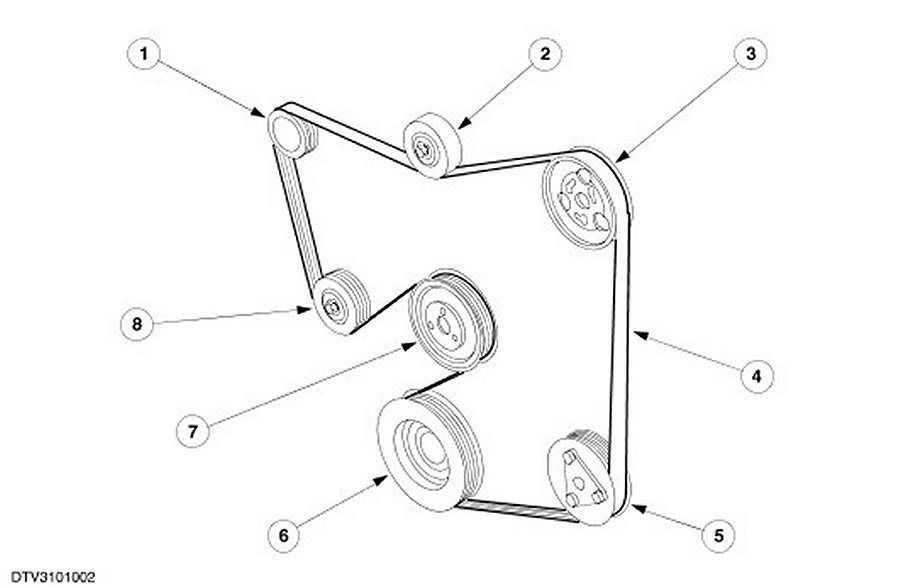
The serpentine belt in your 2010 Ford Focus is a critical component, responsible for powering numerous engine accessories. Understanding its layout and operation, aided by a reliable diagram, is crucial for maintenance, troubleshooting, and repairs. This article will provide a detailed breakdown of the 2010 Ford Focus serpentine belt diagram, empowering you to confidently tackle related automotive tasks.
Purpose of the Serpentine Belt Diagram
Why bother with a serpentine belt diagram? The answer is multifaceted. Primarily, the diagram acts as a roadmap for replacing the belt. Without it, routing the new belt correctly can be a frustrating and potentially damaging process. Incorrect routing can lead to accessories not functioning correctly, belt slippage, and even belt failure. Additionally, the diagram is invaluable for:
- Troubleshooting: Identifying potential issues by visually inspecting the belt's path and associated components.
- Maintenance: Understanding the belt's lifespan and when to consider preventative replacement.
- Learning: Familiarizing yourself with your vehicle's engine layout and accessory drive system.
- DIY Repairs: Enabling you to perform belt replacements and related repairs with confidence.
Key Specs and Main Parts
Before diving into the diagram, let's define the key components of the serpentine belt system in a 2010 Ford Focus. Understanding these parts will make interpreting the diagram much easier.
- Serpentine Belt: The continuous belt itself, usually made of reinforced rubber. Its job is to transmit power from the crankshaft pulley to the various accessories.
- Crankshaft Pulley (Crank Pulley): Driven directly by the engine's crankshaft, this pulley is the driving force behind the entire system.
- Alternator Pulley: Powers the alternator, which charges the battery and provides electrical power to the vehicle.
- Power Steering Pump Pulley: Operates the power steering pump, providing hydraulic assistance for steering.
- Air Conditioning Compressor Pulley: Engages to run the air conditioning compressor, responsible for cooling the cabin.
- Idler Pulley(s): Smooth, bearing-equipped pulleys that guide the belt and maintain proper tension. They do not drive any accessories. Their primary role is to provide optimal belt routing and prevent excessive flexing.
- Tensioner Pulley: A spring-loaded pulley that applies the correct amount of tension to the serpentine belt. This tension is critical for preventing slippage and ensuring proper accessory operation.
Typical serpentine belt specifications for the 2010 Ford Focus (depending on engine and options) will include length (in inches or millimeters), width, and number of ribs. Refer to your vehicle's owner's manual or a reliable parts catalog for the exact specifications for your specific model. It's crucial to use the correct belt for proper fit and performance.
Understanding the Symbols in the Diagram
The diagram itself isn't just a simple drawing; it uses specific conventions to convey information. Here's a breakdown of common symbols you'll encounter:
- Solid Lines: Typically represent the front side of the belt (the side in contact with the pulleys).
- Dashed Lines: Often indicate the back side of the belt. They show how the belt wraps around pulleys and behind other components.
- Arrows: Show the direction of belt rotation. This is essential for correct belt routing.
- Pulley Symbols: Each pulley is represented by a circle. The diagram usually labels each pulley (e.g., ALT for alternator, PS for power steering). Sometimes, the diameter of the pulley might be indicated.
- Tensioner Symbol: The tensioner pulley is often depicted with a spring or an arrow indicating the direction of its tensioning force. This is a key location to pay attention to when installing or inspecting the belt.
- Idler Pulley Symbol: Represented as a plain circle, typically without an associated accessory label.
While color-coding is less common in basic serpentine belt diagrams, some more advanced schematics might use colors to differentiate between the belt itself and the various pulleys or components. Refer to the legend on the specific diagram you're using for clarification.
How the Serpentine Belt System Works
The serpentine belt system is a relatively simple yet effective mechanism. The engine's crankshaft rotates, driving the crankshaft pulley. The serpentine belt wraps around the crankshaft pulley and transfers this rotational force to the other pulleys in the system. Each pulley, in turn, drives its respective accessory (alternator, power steering pump, A/C compressor, etc.). The tensioner pulley maintains the necessary tension on the belt to prevent slippage and ensure efficient power transfer. The idler pulleys guide the belt along its path, optimizing its contact with each pulley and preventing excessive flexing, which could lead to premature wear or failure.
The beauty of the serpentine belt design is its simplicity and efficiency. A single belt drives all the accessories, minimizing the number of components and streamlining the engine bay. This also makes maintenance easier as you only have to worry about one belt.
Real-World Use: Basic Troubleshooting
The serpentine belt diagram can be your best friend when diagnosing problems related to the accessory drive system. Here are some common issues and how the diagram can help:
- Squealing Noise: Often indicates a slipping belt. Use the diagram to inspect the belt's condition. Look for cracks, fraying, or glazing. Also, check the tensioner pulley to ensure it's providing adequate tension. If the tensioner is weak, it may need replacement.
- Accessory Malfunction: If your alternator isn't charging the battery or your power steering isn't working correctly, consult the diagram to verify that the belt is properly routed and in good condition. An incorrectly routed belt can cause accessories to spin at the wrong speed or not spin at all.
- Belt Failure: If the belt breaks, the diagram will be crucial for routing the new belt correctly. Note the position of each pulley and the direction of belt travel before removing the old belt.
- Visual Inspection: Regularly inspect the belt for signs of wear. Use the diagram to ensure you are checking all sections of the belt, paying particular attention to areas where the belt bends sharply or comes into contact with other components.
Safety Considerations
Working around the serpentine belt system involves potential hazards. Here are some crucial safety precautions:
- Disconnect the Battery: Always disconnect the negative battery terminal before working on the serpentine belt system to prevent accidental starting of the engine.
- Engine Off and Cool: Ensure the engine is completely off and cooled down before touching any components. The exhaust manifold and other engine parts can get extremely hot.
- Moving Parts: Never work on the serpentine belt system while the engine is running. The moving belt and pulleys can cause serious injury.
- Tensioner Release: When removing the belt, use the correct tool to release the tension on the tensioner pulley. Releasing the tensioner improperly can cause injury or damage to the tensioner.
- Proper Tools: Use the correct tools for the job. A serpentine belt tool is essential for releasing the tensioner.
The crankshaft pulley is a particularly risky component as it is directly connected to the engine's rotating assembly. Keep hands and tools clear of this area at all times when the engine is running (which, as noted above, you shouldn't be doing during belt replacement).
We understand the importance of having accurate information at your fingertips. We have a high-resolution, downloadable diagram of the 2010 Ford Focus serpentine belt layout available for you. This diagram can be a valuable resource when tackling any serpentine belt-related task. Simply refer to the link below to access the file.
With the diagram and the information provided in this article, you should be well-equipped to understand, maintain, and troubleshoot the serpentine belt system in your 2010 Ford Focus. Remember to always prioritize safety and consult a professional mechanic if you're unsure about any aspect of the repair process.