
2010 Nissan Maxima Alternator Wiring Diagram
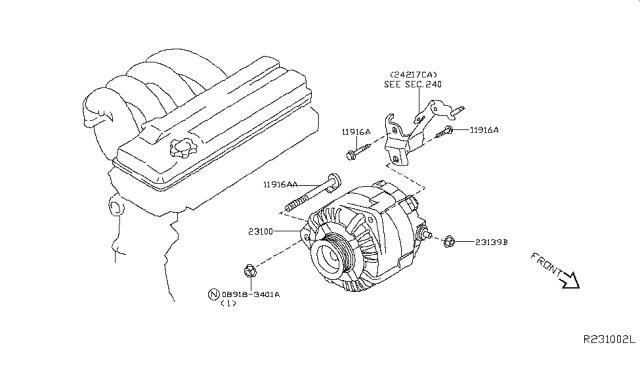
Okay, so you're tackling the alternator wiring on a 2010 Nissan Maxima. Good choice! Understanding this system is crucial for everything from diagnosing charging issues to performing custom electrical modifications. This guide will break down the 2010 Maxima's alternator wiring diagram, explaining its components, how it functions, and how to troubleshoot common problems. We'll keep it technical but easy to understand, like a seasoned mechanic explaining it to a competent DIYer.
Purpose of Understanding the Wiring Diagram
Why bother with the wiring diagram at all? Simple: it's your roadmap to the charging system. It's essential for:
- Troubleshooting Charging Problems: Is your battery not charging? The diagram helps you pinpoint the cause, whether it's a bad wire, a faulty regulator, or a dying alternator.
- Performing Repairs: Replacing a damaged connector, repairing a broken wire, or installing a new alternator becomes significantly easier and safer with the proper diagram.
- Understanding System Function: Gaining a deeper understanding of how the charging system interacts with the rest of the car's electrical system.
- Custom Electrical Modifications: Planning to add aftermarket accessories? Knowing the alternator's capacity and wiring configuration is critical to avoid overloading the system.
- Preventative Maintenance: Identifying potential weak points in the wiring before they cause problems.
Key Specs and Main Parts
The 2010 Nissan Maxima's charging system revolves around the alternator, which is driven by the engine via a belt. Here are the key components and their general specifications:
- Alternator: Typically rated between 130-150 Amps (check your specific Maxima's rating on the alternator housing itself or in the owner's manual). It converts mechanical energy from the engine into electrical energy. This energy is used to charge the battery and power the electrical accessories in the car.
- Voltage Regulator: Integrated within the alternator. This crucial component maintains a constant output voltage (around 13.5-14.5 volts) regardless of engine speed or electrical load. This prevents overcharging the battery and damaging sensitive electronic components.
- Battery: Provides the initial power to start the engine and acts as a reservoir for electrical energy. Typically a 12-volt lead-acid battery.
- Fusible Link/Main Fuse: A high-current fuse located near the battery. It protects the entire electrical system from catastrophic overloads. If you have a short circuit, this is designed to blow *before* other components are damaged.
- Wiring Harness: A bundle of wires that connects all the charging system components. This is where corrosion, breaks, and shorts often occur.
- Battery Light (Charge Indicator): Located on the instrument cluster, it illuminates when the alternator isn't charging properly or when the ignition is on but the engine isn't running.
- ECM (Engine Control Module): In some configurations, the ECM monitors and controls certain aspects of the charging system, such as alternator load based on engine demand. This is usually a more advanced feature found in later model vehicles.
Symbols – Understanding the Language of the Diagram
A wiring diagram uses specific symbols to represent components and connections. Deciphering these symbols is essential to interpreting the diagram correctly. Here are some of the common symbols you'll encounter in the 2010 Maxima's alternator wiring diagram:
- Solid Lines: Represent wires. The thickness of the line *doesn't* necessarily indicate wire gauge, but it may in some enhanced diagrams.
- Dashed Lines: Can represent shielded wires, ground connections, or wires that are part of a larger harness and not directly connected to the alternator itself. Check the diagram legend for clarification.
- Circles with Numbers or Letters: Represent connectors. The numbers or letters correspond to pin numbers on the connector.
- Rectangles: Often represent components like the voltage regulator or the ECM.
- Ground Symbol (Typically three horizontal lines descending in size): Indicates a connection to the vehicle's chassis ground.
- Battery Symbol: A series of alternating long and short lines.
- Fuse Symbol: A squiggly line within a rectangle or a simple "S" shape.
- Color Codes: Wires are typically color-coded. The diagram legend will provide a key to these codes (e.g., "BLU" for blue, "RED" for red, "BLK" for black, "WHT" for white, "GRN" for green, "YEL" for yellow).
Pay close attention to the legend of the specific diagram you're using. Different publishers might use slightly different symbols.
How It Works – The Charging System in Action
The 2010 Maxima's charging system works like this:
- When the engine starts, the alternator's rotor begins to spin, driven by the serpentine belt.
- The spinning rotor generates an alternating current (AC) within the alternator's stator windings.
- The rectifier diodes inside the alternator convert the AC voltage to DC voltage.
- The voltage regulator monitors the battery's voltage and adjusts the alternator's output to maintain a constant charging voltage (around 13.5-14.5 volts).
- The DC voltage flows from the alternator, through the wiring harness, to the battery, charging it and powering the car's electrical system.
- The battery light on the instrument cluster is controlled by the ECM or by a simple circuit that detects the voltage difference between the battery and the alternator output. If the alternator isn't producing enough voltage, the light illuminates.
The key to a healthy charging system is a properly functioning alternator, a good battery, and clean, secure wiring connections. Any weakness in this chain can lead to charging problems.
Real-World Use – Basic Troubleshooting Tips
Here are a few basic troubleshooting tips using the wiring diagram:
- Battery Light On: Check the alternator's output voltage with a multimeter. If it's significantly below 13.5 volts, the alternator may be faulty. Also, check the wiring between the alternator and the battery for breaks or corrosion. Consult the diagram to locate the relevant wires.
- Battery Not Charging: Start by checking the fusible link/main fuse near the battery. If it's blown, there's a short circuit somewhere in the system. Use the diagram to trace the wiring and identify the source of the short.
- Erratic Voltage Readings: Check the ground connections. A poor ground can cause all sorts of electrical problems. Use the diagram to locate the ground points for the alternator and the battery and ensure they are clean and tight.
- Alternator Overheating: Check the voltage regulator. A faulty regulator can cause the alternator to overcharge, leading to overheating and potential damage.
- Using a Multimeter: A multimeter is your best friend. Learn how to use it to check voltage, continuity, and resistance. The diagram will show you which points to test.
Safety – Proceed with Caution!
Working with electrical systems can be dangerous. Always take these precautions:
- Disconnect the Battery: Always disconnect the negative battery terminal before working on the electrical system. This will prevent accidental shorts and potential shocks.
- Be Careful Around the Alternator: The alternator can get very hot, especially after the engine has been running. Allow it to cool down before touching it.
- Avoid Shorts: Be careful not to short any wires to ground. This can damage the electrical system and potentially start a fire.
- Work in a Well-Ventilated Area: Batteries can release hydrogen gas, which is flammable. Work in a well-ventilated area and avoid sparks or open flames.
- Know Your Limits: If you're not comfortable working on the electrical system, take your car to a qualified mechanic.
- High-Current Components: Pay close attention to the high-current wiring (thick wires) connecting the alternator, battery, and starter. These can deliver a significant shock if mishandled.
Remember, the 2010 Maxima, like many modern vehicles, has a complex electrical system. Before attempting any repairs, be sure to consult the wiring diagram and understand the circuit you're working on. Incorrect repairs can lead to serious damage.
You now have a good understanding of the 2010 Nissan Maxima's alternator wiring diagram. By understanding the components, symbols, and functions, you're well-equipped to diagnose and repair charging system problems or perform custom electrical modifications. Remember safety first, and consult the diagram regularly!
We have the complete 2010 Nissan Maxima alternator wiring diagram file available for download. This detailed diagram will be invaluable for your diagnostic and repair work. Click here to download the file: [Download Link - Replace this with your actual download link]