
2010 Ram 1500 Serpentine Belt Diagram
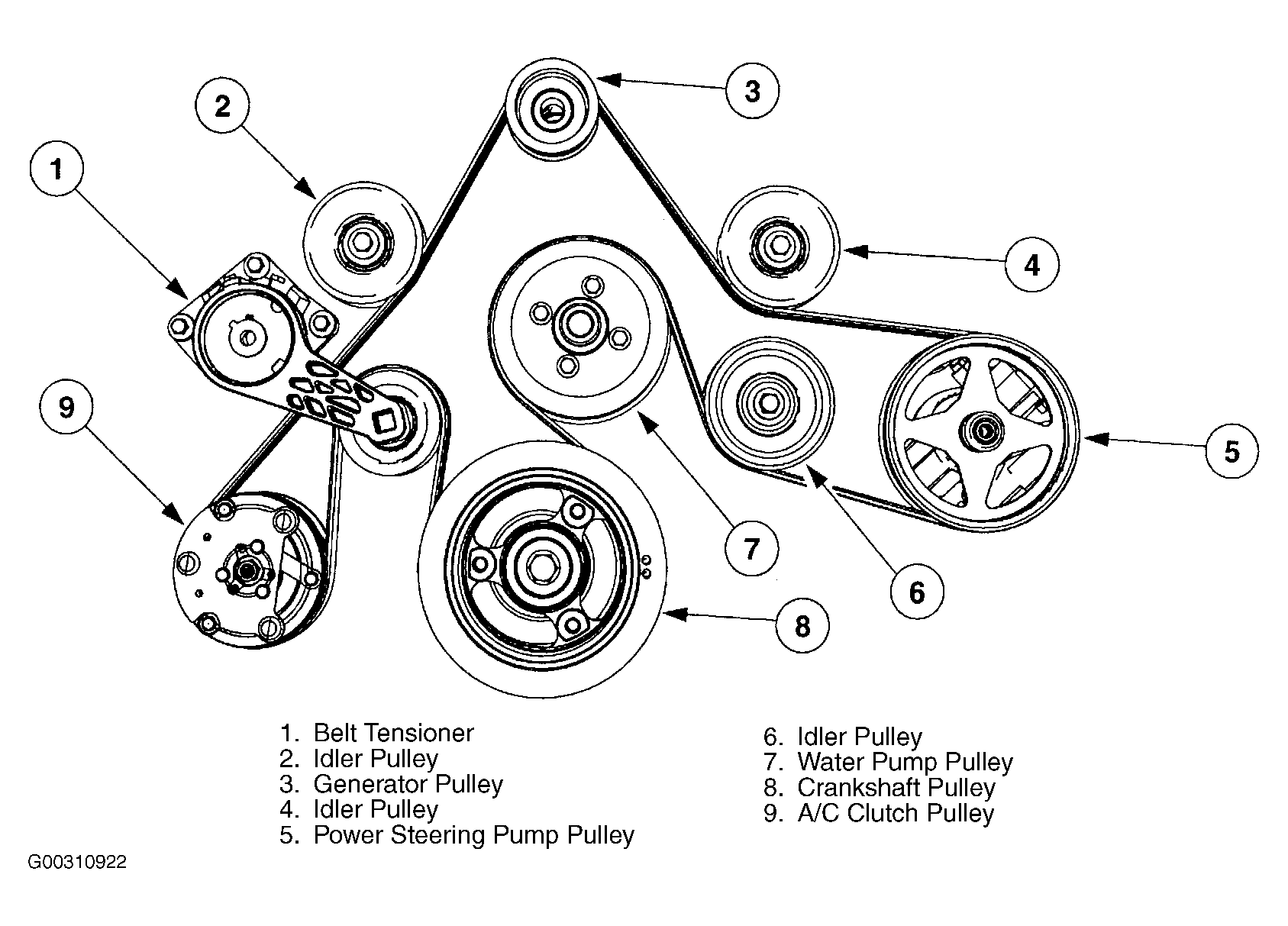
Alright, let's dive into the serpentine belt system on your 2010 Ram 1500. This article will serve as your comprehensive guide to understanding the serpentine belt diagram, its components, how it functions, and how to troubleshoot common issues. Whether you're replacing the belt, diagnosing a squealing noise, or just curious about how your truck's accessories are powered, this guide will arm you with the knowledge you need.
Purpose of the Serpentine Belt Diagram
The serpentine belt diagram is your roadmap to understanding the layout of your engine's accessory drive system. Why is this important? Several reasons:
- Repair and Replacement: When replacing a worn or broken serpentine belt, the diagram is crucial for ensuring correct routing. Incorrect routing can lead to belt slippage, accessory malfunction, and premature wear.
- Troubleshooting: A diagram helps you identify the individual components driven by the belt, which is vital when diagnosing accessory-related issues. For instance, if your power steering isn't working, the diagram will immediately tell you if the power steering pump is driven by the serpentine belt.
- General Understanding: Even if you're not actively working on your truck, understanding the serpentine belt system helps you appreciate the complexity of your engine and how its various components work together.
- Peace of Mind: Knowing that you have a quick reference guide can be invaluable when you are on the side of the road.
Key Specs and Main Parts
The exact configuration of your serpentine belt system can vary slightly depending on the engine in your 2010 Ram 1500 (3.7L V6, 4.7L V8, or 5.7L Hemi V8). However, the fundamental principles and components remain the same. Here's a breakdown:
- Crankshaft Pulley (or Crank Pulley): This is the driving force behind the entire system. Bolted to the crankshaft, it transfers rotational power to the serpentine belt.
- Serpentine Belt: A single, continuous belt (typically made of reinforced rubber) that wraps around multiple pulleys, transmitting power to the accessories. The term "serpentine" refers to its snake-like path.
- Alternator: Generates electrical power to charge the battery and run the vehicle's electrical systems.
- Power Steering Pump: Provides hydraulic pressure to assist steering.
- Air Conditioning Compressor: Compresses refrigerant to cool the cabin.
- Water Pump: Circulates coolant through the engine to prevent overheating.
- Idler Pulley(s): Smooth, non-driven pulleys that guide the belt and maintain proper tension. They help the belt navigate around other components.
- Tensioner Pulley: A spring-loaded pulley that automatically maintains the correct tension on the serpentine belt. This is crucial for optimal performance and preventing belt slippage. The tensioner usually pivots to maintain the correct tension.
It's crucial to know the belt length and belt type for your specific engine. This information can be found in your owner's manual or at any auto parts store. Using the wrong belt can lead to improper tensioning and accessory malfunctions.
Understanding the Symbols on the Diagram
The serpentine belt diagram isn't just a picture; it's a symbolic representation of the system. Understanding these symbols is essential for interpreting the diagram correctly.
- Solid Lines: Typically represent the serpentine belt itself. The thickness of the line might indicate the belt's width.
- Circles/Pulleys: Represent the various pulleys driven by or guiding the belt. Different pulley types might be indicated by slight variations in the circle (e.g., a ribbed pulley vs. a smooth idler pulley).
- Arrows: Indicate the direction of belt travel around each pulley. This is critical for ensuring correct routing.
- Tensioner Symbol: Usually depicted as a pulley with a spring or damper attached, indicating its function as a tensioning device. You'll often see an arrow indicating the direction the tensioner arm pivots.
- Component Labels: Abbreviations or acronyms (e.g., ALT for alternator, P/S for power steering) identify each component driven by the belt.
Some diagrams may also use color coding. For example, a section of the belt path might be highlighted in red to indicate a critical section for routing.
How the Serpentine Belt System Works
The serpentine belt system operates on a relatively simple principle: transferring rotational power from the engine's crankshaft to various accessories. Here's a step-by-step breakdown:
- The engine's crankshaft rotates, turning the crankshaft pulley.
- The serpentine belt, wrapped tightly around the crankshaft pulley, is driven by its rotation.
- As the belt moves, it turns the pulleys of the alternator, power steering pump, air conditioning compressor, and water pump.
- Each of these accessories is then powered by the belt's rotation, performing its specific function.
- The idler pulley(s) guide the belt along the optimal path, ensuring proper contact with each driven pulley.
- The tensioner pulley maintains constant tension on the belt, preventing slippage and ensuring efficient power transfer. The spring-loaded design allows the tensioner to compensate for belt stretch and wear over time.
The effectiveness of this system relies on several factors: proper belt tension, good belt condition, properly aligned pulleys, and functioning accessory components. Failure in any of these areas can lead to system malfunction.
Real-World Use: Basic Troubleshooting
The serpentine belt system is generally reliable, but problems can arise. Here are some common issues and how to troubleshoot them:
- Squealing Noise: Often indicates a slipping belt. Check belt tension, belt condition (look for cracks or glazing), and pulley alignment. A worn tensioner can also cause squealing due to insufficient tension. You can spray a tiny amount of belt dressing to see if the sound goes away temporarily (but this is only a diagnostic tool, it's not a fix)
- Accessory Malfunction: If your alternator isn't charging, your power steering isn't working, or your AC isn't cooling, check the serpentine belt first. A broken or slipped belt will prevent the accessory from functioning.
- Belt Damage: Inspect the belt regularly for cracks, fraying, or glazing. Replace the belt if you find any signs of damage. Remember, a broken belt can leave you stranded.
- Tensioner Issues: A tensioner that's bouncing excessively or making noise is likely failing. Replace it promptly to prevent belt damage and accessory malfunction.
- Pulley Alignment: Misaligned pulleys can cause premature belt wear and squealing. Use a straight edge to check pulley alignment.
Important: Before performing any work on the serpentine belt system, disconnect the negative battery cable to prevent electrical shock. Always refer to the service manual for your specific vehicle.
Safety Considerations
Working on the serpentine belt system involves potential hazards. Here are some key safety precautions:
- Engine Heat: Allow the engine to cool completely before working on the system. The engine components, especially the exhaust manifold, can be extremely hot and cause severe burns.
- Moving Parts: Never work on the serpentine belt system while the engine is running. The rotating components can cause serious injury.
- Tensioner Spring: The tensioner spring is under significant tension. When removing the belt, use the appropriate tool (typically a wrench or socket on the tensioner arm) to relieve the tension gradually and safely. Avoid sudden releases, as the spring can snap back with considerable force.
- Eye Protection: Wear safety glasses to protect your eyes from debris.
- Gloves: Wear gloves to protect your hands from dirt, grease, and sharp edges.
The crankshaft pulley and other rotating components are particularly dangerous. Keep hands and loose clothing away from these areas at all times.
Remember, if you're not comfortable working on the serpentine belt system, it's always best to consult a qualified mechanic. Your safety and the proper functioning of your vehicle are paramount.
We have the 2010 Ram 1500 Serpentine Belt Diagram available as a downloadable file. This document provides a detailed visual representation of the belt routing for various engine options. It's an excellent resource to keep handy for reference during maintenance or repair tasks. Request the download.