
2011 Chevy Impala 3.5 Serpentine Belt Diagram
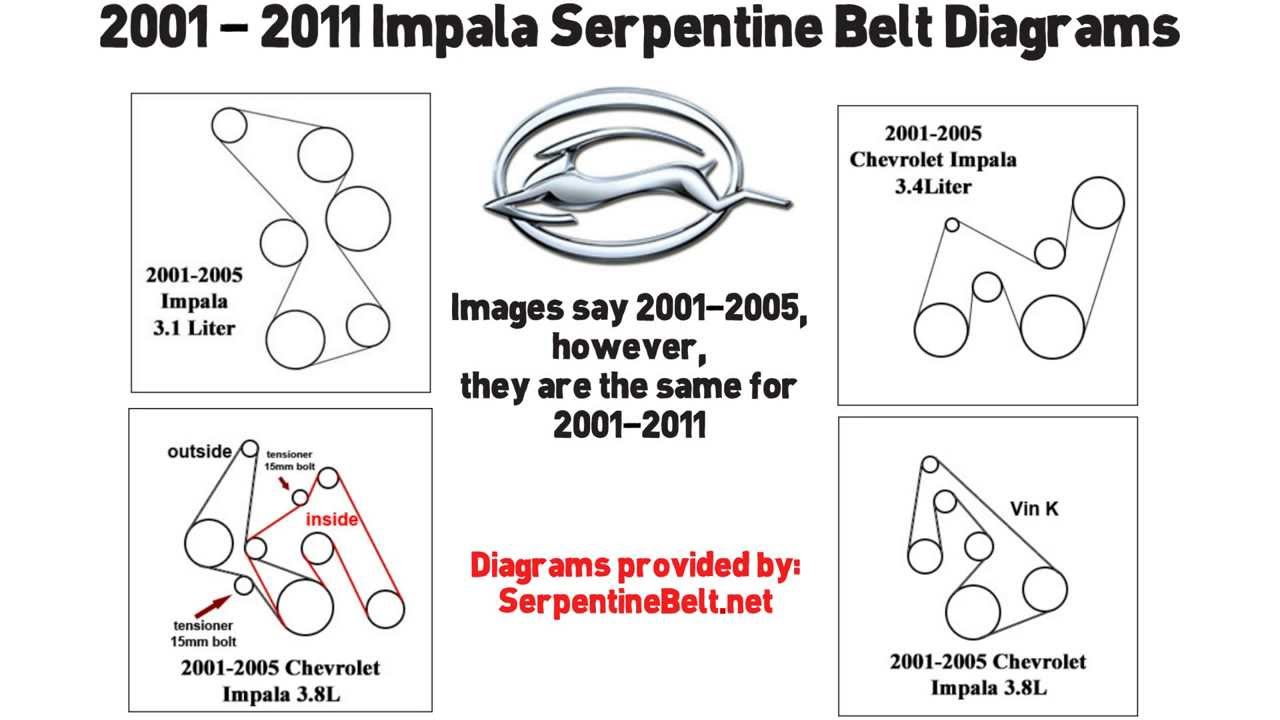
The serpentine belt in your 2011 Chevy Impala 3.5L engine is a critical component, responsible for powering several vital accessories. Having a clear understanding of its layout and routing – a serpentine belt diagram – is invaluable for maintenance, troubleshooting, and repair. This article provides a comprehensive guide to the 2011 Impala 3.5L serpentine belt diagram, assuming you're an experienced DIYer familiar with basic automotive concepts.
Purpose of the Serpentine Belt Diagram
Why bother with a diagram? Several reasons:
- Replacing a worn or broken belt: The most common use. Without a diagram, correctly routing the new belt can be a frustrating and potentially damaging guessing game.
- Diagnosing noise: A squealing or chirping sound often points to a worn, cracked, or misaligned belt. The diagram helps you identify the components the belt drives and systematically check them for issues.
- Inspecting the belt and pulleys: Regular inspection for wear, cracks, or glaze is crucial preventative maintenance. The diagram guides you to each pulley and its function.
- Understanding engine accessory operation: For advanced DIYers, understanding the belt path can provide insights into how the various engine accessories interact and function within the system.
- Learning and education: If you're looking to deepen your automotive knowledge, understanding the serpentine belt system is a great starting point.
Key Specs and Main Parts
The 2011 Chevy Impala 3.5L uses a single serpentine belt to drive the following components:
- Crankshaft Pulley: The driving force of the system, powered directly by the engine.
- Alternator: Generates electrical power for the vehicle.
- Power Steering Pump: Provides hydraulic assistance for steering.
- Air Conditioning Compressor: Compresses refrigerant for the air conditioning system.
- Water Pump: Circulates coolant through the engine to regulate temperature.
- Tensioner Pulley: Maintains proper belt tension to prevent slippage and ensure efficient accessory operation. The tensioner is spring-loaded.
- Idler Pulley: Used to guide the belt around the various components and ensure proper wrap angle on the pulleys. An idler pulley does not drive an accessory.
Knowing the specific belt part number is also crucial. While it's best to verify this with your local parts store based on your VIN, a common replacement belt for the 2011 Impala 3.5L is a Gates K060740 or a similar equivalent from other reputable brands like Dayco or Goodyear. Always double-check compatibility before purchasing.
Understanding Serpentine Belt Diagram Symbols
A serpentine belt diagram uses specific symbols to represent the components and the belt's path. Understanding these symbols is key to interpreting the diagram correctly.
- Solid Lines: Indicate the path of the serpentine belt. The thickness of the line is usually consistent throughout the diagram.
- Pulleys: Typically represented as circles. Smaller circles usually indicate idler or tensioner pulleys, while larger circles represent the driven accessories.
- Direction Arrows: Indicate the direction of rotation for each pulley. This is crucial for understanding how the belt wraps around each component. Pay close attention to whether the pulley rotates clockwise or counter-clockwise.
- Text Labels: Each pulley is labeled with the component it represents (e.g., ALT for alternator, P/S for power steering, A/C for air conditioning, WP for water pump).
- Tensioner Symbol: The tensioner pulley is often depicted with a spring symbol or a specialized icon indicating its spring-loaded mechanism. It often has an arrow showing the direction of movement when tension is relieved.
Color is rarely used in serpentine belt diagrams. The most critical element is the solid line showing the belt path and the direction arrows.
How It Works: The Serpentine Belt System
The serpentine belt system is relatively simple in principle. The crankshaft pulley, directly connected to the engine's crankshaft, is the driving force. As the engine turns, the crankshaft pulley rotates, driving the serpentine belt. The belt, in turn, wraps around the pulleys of the various engine accessories (alternator, power steering pump, etc.), causing them to rotate and perform their functions. The tensioner pulley ensures that the belt maintains the proper tension to prevent slippage and ensure efficient power transfer to all accessories.
The belt tension is critical. Too loose, and the belt will slip, causing squealing and reduced accessory performance (e.g., weak power steering, poor air conditioning, low battery charging). Too tight, and it can damage the accessory bearings or even cause the belt to break prematurely.
Think of it like a series of gears, where the belt acts as the connecting chain. Proper alignment of the pulleys is essential to prevent the belt from running off track or wearing unevenly.
Real-World Use: Troubleshooting with the Diagram
Here are some basic troubleshooting tips using the serpentine belt diagram:
- Squealing Noise: If you hear a squealing noise, especially when the engine is first started or when turning the steering wheel, suspect a slipping belt. Use the diagram to visually inspect the belt for cracks, wear, or glazing (a shiny, hard surface). Also, check the tensioner pulley to ensure it's functioning correctly and maintaining proper belt tension.
- Reduced Accessory Performance: If your air conditioning is weak, your power steering feels heavy, or your battery keeps dying, the serpentine belt may be slipping or not properly driving the accessories. Refer to the diagram to check the belt's path to each accessory and ensure it's properly engaged.
- Belt Coming Off: If the belt keeps coming off, suspect a misalignment issue. Carefully inspect all the pulleys to ensure they are properly aligned and not bent or damaged. A bent or damaged pulley can cause the belt to walk off. Use a straightedge to check pulley alignment.
- Visual Inspection is Key: Before you do anything else, open the hood and visually inspect the belt! Cracks, fraying, missing chunks - these are all signs of a belt that needs replacement. Compare your belt's path to the diagram to ensure it is correctly routed.
Important Note: When replacing a serpentine belt, it's generally a good idea to also replace the tensioner pulley, especially if it's showing signs of wear or if it's been in service for a long time. A worn tensioner can cause premature belt failure.
Safety Considerations
Working on the serpentine belt system can be dangerous if proper precautions are not taken.
- Disconnect the Negative Battery Terminal: Before working on any part of the engine, disconnect the negative battery terminal to prevent accidental electrical shocks or damage to electronic components.
- Keep Hands and Clothing Clear: The engine's moving parts, including the serpentine belt and pulleys, can cause serious injury. Ensure that your hands, clothing, and tools are kept clear of the belt and pulleys when the engine is running or when manually rotating the engine.
- Hot Engine: Avoid working on the engine immediately after it has been running, as components can be extremely hot. Allow the engine to cool down before proceeding.
- Tensioner Spring: Be extremely careful when releasing the tension on the tensioner pulley. The spring can be strong, and if not handled properly, it can cause injury. Use the correct tool to relieve the tension and follow the manufacturer's instructions carefully.
- Eye Protection: Always wear safety glasses when working on your vehicle to protect your eyes from debris.
The alternator is particularly sensitive to being back-driven. Avoid rotating the alternator pulley backwards against the normal direction of belt travel.
We have a printable PDF version of the 2011 Chevy Impala 3.5L Serpentine Belt Diagram available for download. This resource provides a clear and concise visual reference to assist you in your maintenance and repair tasks.