
2012 5.7 Hemi Serpentine Belt Diagram
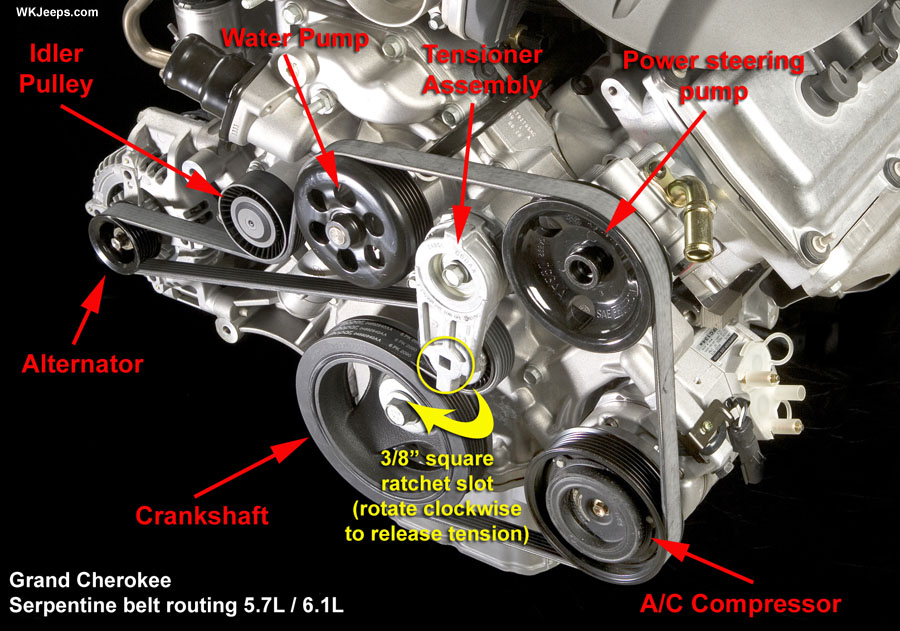
Alright, let's dive into the serpentine belt diagram for the 2012 5.7L Hemi. This isn't just a pretty picture; it's your roadmap for understanding, maintaining, and potentially troubleshooting one of the most vital systems in your engine bay. Whether you're planning a belt replacement, diagnosing a squealing noise, or just want a deeper understanding of how your engine works, knowing this diagram inside and out is crucial.
Purpose: Your Guide to Belt-Driven Components
The serpentine belt diagram serves several important purposes:
- Belt Routing: The primary purpose is to illustrate the correct routing of the serpentine belt around all the pulleys. Incorrect routing can lead to component malfunction and belt damage.
- Troubleshooting: When you're experiencing issues like a squealing belt, lack of power steering, or overheating, the diagram helps you visually inspect the belt's condition and the components it drives.
- Component Identification: The diagram clearly identifies each component driven by the belt, helping you understand the system as a whole.
- Maintenance & Repair: This is invaluable when replacing the belt, water pump, alternator, or any other component along the belt's path. You can use it as a reference to ensure everything is reassembled correctly.
Key Specs and Main Parts
Before we dissect the diagram, let's talk about the key components and specs involved:
Main Components
- Crankshaft Pulley (Harmonic Balancer): The central driving force, directly connected to the engine's crankshaft. It's responsible for transferring rotational energy to the serpentine belt.
- Alternator Pulley: Powers the electrical system, charging the battery and providing power to various electrical components.
- Water Pump Pulley: Circulates coolant throughout the engine, regulating temperature and preventing overheating.
- Power Steering Pump Pulley: Provides hydraulic pressure to assist with steering, making it easier to turn the wheels.
- A/C Compressor Pulley: Compresses refrigerant for the air conditioning system.
- Idler Pulley(s): These pulleys are strategically placed to guide the belt and maintain proper tension. They're typically smooth and don't drive any specific component.
- Tensioner Pulley: The most important. The tensioner maintains the correct tension on the serpentine belt. This is usually spring-loaded or hydraulically damped.
Key Specs
- Belt Length: While not directly visible on the diagram, knowing the correct belt length is paramount when ordering a replacement. Refer to your owner's manual or a reliable parts catalog for the specific belt length for your 2012 5.7L Hemi configuration (with or without A/C, for example).
- Belt Material: Serpentine belts are typically made of EPDM (Ethylene Propylene Diene Monomer) rubber, known for its durability and resistance to heat and abrasion.
- Pulley Groove Design: V-ribbed or multi-V. The belt must match this.
- Torque Specs: When replacing components like the tensioner or idler pulleys, be sure to consult your service manual for the correct torque specifications. Over-tightening can damage the components.
Symbols and Diagram Conventions
Understanding the symbols and conventions used in the diagram will make it much easier to interpret:
- Solid Lines: Represent the serpentine belt itself. The path of the solid line shows how the belt is routed around the various pulleys.
- Arrows: Indicate the direction of belt rotation. Pay close attention to these arrows to ensure the belt is installed correctly.
- Pulley Icons: Each pulley is typically represented by a circle. Some diagrams may differentiate between grooved pulleys (driving a component) and smooth pulleys (idler pulleys).
- Component Labels: Each pulley will be labeled with its corresponding component (e.g., ALT for alternator, WP for water pump, PS for power steering, AC for A/C compressor, CRANK for crankshaft).
- Tensioner Indicator: The tensioner pulley is often shown with an arrow indicating the direction it moves to apply tension.
- Dotted Lines (Rare): In some cases, dotted lines may indicate the rear side of the belt, if applicable to the diagram.
How It Works: The Serpentine Belt System in Action
The serpentine belt system is elegantly simple in principle: The crankshaft pulley, driven by the engine's rotation, transfers that rotational energy to the serpentine belt. The belt then drives all the other accessory pulleys (alternator, water pump, power steering pump, and A/C compressor). The tensioner pulley plays a critical role in maintaining the proper tension on the belt, ensuring optimal grip and preventing slippage. Without proper tension, the belt can slip, leading to reduced performance from the accessories and potentially causing damage. A slipping belt also creates that irritating squealing noise you might hear.
Think of it like a chain reaction: the engine spins the crankshaft, which spins the belt, which spins everything else. Each component is essential for the vehicle's operation.
Real-World Use: Troubleshooting Tips
Here's how you can use the serpentine belt diagram for basic troubleshooting:
- Squealing Belt:
- Visual Inspection: Use the diagram to locate the tensioner. Check if the tensioner arm is excessively bouncing or vibrating. This could indicate a worn-out tensioner or a stretched belt. Look for signs of cracking, fraying, or glazing on the belt itself.
- Pulley Alignment: Ensure all the pulleys are properly aligned. Misalignment can cause the belt to rub against the edges of the pulleys, leading to squealing. A straight edge can be helpful for checking alignment.
- Pulley Condition: Check each pulley for damage or wear. A damaged pulley can cause the belt to wear prematurely or make noise. Spin each pulley by hand (with the engine off and the belt removed!) to check for roughness or play.
- Lack of Power Steering/Overheating/Charging Issues: These problems could be a result of a broken or slipping serpentine belt. Use the diagram to verify that the belt is properly routed and in good condition. If the belt is broken, you'll need to replace it. If it's slipping, address the tension or the belt condition.
- Belt Wear: Regularly inspect the belt for signs of wear and tear. Refer to the diagram to check its routing and identify any areas where it might be rubbing or contacting other components.
Safety Considerations
Working on the serpentine belt system involves potential risks. Here's what to keep in mind:
- Engine Off: Always work on the serpentine belt system with the engine turned off and the key removed from the ignition.
- Hot Components: Be cautious of hot engine components, especially after the engine has been running. Allow the engine to cool down before working on the belt system.
- Rotating Parts: Keep your hands, clothing, and tools clear of the serpentine belt and pulleys when the engine is running. The rotating parts can cause serious injury.
- Tensioner Spring: The tensioner pulley is spring-loaded. When releasing the tension on the belt, use the proper tools and techniques to avoid injury. The tensioner can snap back forcefully if not handled carefully.
- Battery Disconnect (Recommended): While not always necessary for a belt change, disconnecting the negative battery terminal can provide an extra layer of safety, especially when working near the alternator.
Remember, if you're unsure about any aspect of the serpentine belt system, it's always best to consult a qualified mechanic.
We've got a detailed, printable serpentine belt diagram specifically for the 2012 5.7L Hemi readily available. You can download it to keep in your garage for easy reference during maintenance or repairs. It includes all the specifics we've discussed, making your job even easier.