
2012 Chevy Malibu Exhaust System Diagram
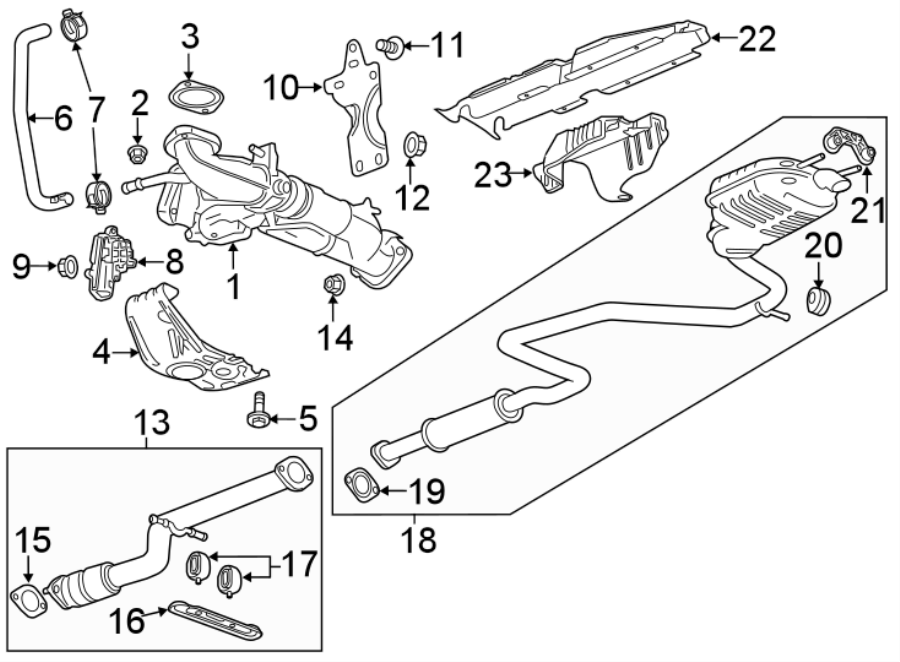
Alright, let's dive into the 2012 Chevy Malibu's exhaust system. Understanding this system is crucial for a few reasons. Whether you're tackling a repair, planning modifications, or just want to better understand your car's inner workings, having a solid grasp of the exhaust system layout and function is invaluable. This isn't just about knowing where the pipes go; it's about understanding the entire process from engine to tailpipe.
Purpose of the Exhaust System Diagram
The exhaust system diagram serves as a roadmap for the entire exhaust pathway. It's your go-to resource for:
- Diagnostics: Pinpointing the source of exhaust leaks, unusual noises, or performance issues.
- Repairs: Identifying the exact components you need to replace (e.g., a cracked manifold, rusted pipe section, or failing catalytic converter).
- Modifications: Planning and executing aftermarket exhaust upgrades (e.g., cat-back systems, headers).
- General Understanding: Improving your overall knowledge of your vehicle's engine and emissions control systems.
Think of it as a detailed instruction manual tailored specifically to your exhaust system. Without it, you're essentially working blind.
Key Specs and Main Parts of the 2012 Chevy Malibu Exhaust System
The 2012 Malibu came with a few engine options, each with slightly different exhaust setups. However, the fundamental components remain the same:
Exhaust Manifold(s)
The exhaust manifold is the first component in the exhaust stream, bolted directly to the engine's cylinder head(s). Its primary function is to collect exhaust gases from each cylinder and direct them into a single pipe. The Malibu 2.4L engine has an integrated exhaust manifold. The 3.6L V6 has two manifolds, one for each bank of cylinders. Cracks or leaks in the manifold can lead to exhaust leaks, reduced engine performance, and increased noise.
Catalytic Converter
The catalytic converter is a crucial emissions control device. It uses a catalyst (typically platinum, palladium, and rhodium) to convert harmful pollutants in the exhaust gases (like hydrocarbons, carbon monoxide, and nitrogen oxides) into less harmful substances (like carbon dioxide, water, and nitrogen). A clogged or damaged catalytic converter can cause significant performance issues, including reduced power and poor fuel economy. It is also a federal crime to remove or tamper with a catalytic converter.
Oxygen Sensors (O2 Sensors)
Oxygen sensors are strategically placed before (upstream) and after (downstream) the catalytic converter. These sensors measure the oxygen content in the exhaust gases. The engine control unit (ECU) uses this data to adjust the air-fuel mixture for optimal combustion and emissions control. Faulty O2 sensors can trigger the "check engine" light and lead to poor fuel economy and increased emissions.
Resonator (If Equipped)
The resonator is a chamber designed to cancel out specific frequencies in the exhaust sound, reducing noise and drone. Not all 2012 Malibus have resonators, depending on the trim level and engine. If present, it's usually located between the catalytic converter and the muffler.
Muffler
The muffler is the final component responsible for significantly reducing exhaust noise. It uses a series of chambers and baffles to dampen sound waves. A damaged or rusted muffler can result in a louder-than-normal exhaust note.
Pipes and Connectors
The various pipes and connectors link all these components together, creating a sealed pathway for the exhaust gases. Clamps, flanges, and gaskets are used to ensure airtight connections. Leaks at any of these connections can cause noise, reduced performance, and potentially allow harmful exhaust gases to enter the cabin.
Understanding Symbols on the Exhaust Diagram
Exhaust system diagrams use standard symbols to represent different components and features. Here's a breakdown:
- Lines: Solid lines typically represent exhaust pipes. Dashed lines may indicate vacuum lines or other related systems.
- Arrows: Arrows indicate the direction of exhaust gas flow.
- Component Shapes: Each component (catalytic converter, muffler, etc.) will have a specific shape that represents its physical form. Look for a legend on the diagram that explains these shapes.
- Colors: Colors can be used to differentiate between different sections of the exhaust system or to highlight specific components. Again, consult the diagram's legend.
- Numerical Labels: Numbers are often used to identify specific parts or connections. These numbers usually correspond to part numbers or torque specifications listed elsewhere in the service manual.
Take the time to familiarize yourself with the symbols used in your specific diagram. Understanding these symbols is key to accurately interpreting the information presented.
How the 2012 Malibu Exhaust System Works
The process is fairly straightforward, but understanding the nuances can help with troubleshooting:
- Combustion: The engine's combustion process produces hot, high-pressure exhaust gases.
- Manifold Collection: These gases are collected by the exhaust manifold(s).
- Catalytic Conversion: The exhaust gases then flow through the catalytic converter, where harmful pollutants are converted into less harmful substances.
- Oxygen Sensing: Oxygen sensors monitor the oxygen content before and after the catalytic converter, providing feedback to the ECU.
- Noise Reduction: The resonator (if equipped) and muffler work together to reduce exhaust noise.
- Exhaust Discharge: Finally, the treated and silenced exhaust gases are expelled through the tailpipe.
The entire system is designed to efficiently remove exhaust gases from the engine while minimizing emissions and noise.
Real-World Use: Basic Troubleshooting
Here's how you can use the exhaust system diagram for basic troubleshooting:
- Exhaust Leaks: If you hear a hissing or roaring sound coming from under the car, use the diagram to identify potential leak points. Inspect flanges, connections, and the exhaust manifold for cracks or corrosion.
- Rattling Noises: A rattling noise could indicate a loose heat shield, a damaged muffler, or a broken hanger. The diagram will help you locate these components and inspect them for damage.
- "Check Engine" Light: If the "check engine" light is on, and you suspect an exhaust-related issue (e.g., a faulty O2 sensor), use the diagram to locate the relevant sensors and check their wiring and connections. You'll likely need an OBD-II scanner to read the trouble codes.
- Reduced Performance: A clogged catalytic converter can cause significant performance loss. While you can't visually inspect the inside of the converter, the diagram can help you check for external damage or restrictions.
Important: Always start with a visual inspection before attempting any repairs. Look for obvious signs of damage, such as cracks, rust, or loose connections.
Safety Considerations
Working on the exhaust system can be dangerous due to the high temperatures involved and the potential for exposure to harmful exhaust gases. Here are some critical safety precautions:
- Allow the Exhaust System to Cool: Never work on the exhaust system while it's hot. Allow ample time for it to cool down completely before starting any repairs. Burns are a serious risk.
- Wear Safety Glasses: Protect your eyes from debris and rust.
- Wear Gloves: Protect your hands from sharp edges and hot surfaces.
- Work in a Well-Ventilated Area: Exhaust gases contain carbon monoxide, which is a deadly poison. Work outdoors or in a well-ventilated garage.
- Use Jack Stands: If you need to raise the vehicle, always use jack stands to support it securely. Never rely solely on a jack.
- Beware of Oxygen Sensors: O2 sensors can be easily damaged if dropped or mishandled. Handle them with care.
The catalytic converter also becomes extremely hot during operation and can cause severe burns if touched. Exercise extreme caution when working near the catalytic converter.
By understanding the 2012 Chevy Malibu's exhaust system diagram, you'll be better equipped to diagnose problems, perform repairs, and even plan modifications. Remember safety first, and always consult a qualified mechanic if you're unsure about any aspect of the repair.
We have access to detailed diagrams. Please reach out if you need a copy for your specific 2012 Chevy Malibu configuration and we'll gladly provide it.