
2012 Ford F150 Exhaust System Diagram
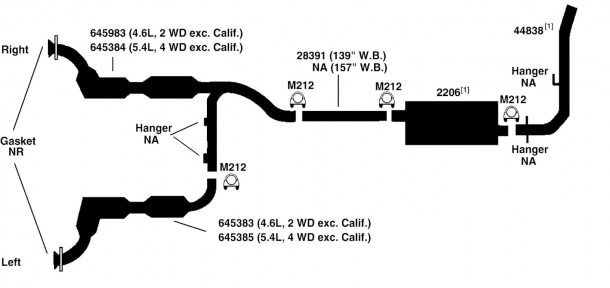
For the experienced DIY mechanic or the aspiring gearhead, understanding your vehicle's exhaust system is crucial. This article focuses on the 2012 Ford F150 exhaust system diagram, providing a comprehensive overview to aid in repairs, modifications, and general knowledge. Having a clear understanding of this system can save you money on mechanic fees and empower you to tackle maintenance tasks with confidence.
Why This Diagram Matters
An exhaust system diagram isn't just a pretty picture; it's your roadmap for understanding how your F150's exhaust functions. It's essential for:
- Diagnosis: Pinpointing the source of exhaust leaks, unusual noises, or performance issues.
- Repair: Identifying the exact parts needed for replacement and understanding their location.
- Modification: Planning and executing upgrades, such as installing aftermarket mufflers, headers, or catalytic converters.
- Learning: Gaining a deeper understanding of automotive systems and how they contribute to overall vehicle performance.
Key Specs and Main Parts of the 2012 F150 Exhaust System
The specific configuration of the 2012 F150's exhaust system varies depending on the engine (3.7L V6, 5.0L V8, 6.2L V8, and 3.5L EcoBoost V6). However, the fundamental components remain consistent.
Main Components:
- Exhaust Manifolds/Headers: These collect exhaust gases directly from the engine cylinders. They are bolted to the cylinder head. Headers are often aftermarket upgrades designed for improved flow.
- Catalytic Converters: These use chemical reactions to reduce harmful emissions like hydrocarbons (HC), carbon monoxide (CO), and nitrogen oxides (NOx). The 2012 F150 typically has two or four catalytic converters, depending on the engine and configuration.
- Oxygen Sensors (O2 Sensors): These sensors monitor the oxygen content in the exhaust stream, providing feedback to the engine control unit (ECU) to optimize fuel-air mixture. There are typically upstream (before the catalytic converter) and downstream (after the catalytic converter) sensors.
- Exhaust Pipes: These connect the various components of the system, channeling the exhaust gases towards the rear of the vehicle.
- Muffler: The muffler reduces the noise produced by the engine's exhaust pulses.
- Resonator (Optional): Some F150 models have a resonator, which further reduces noise and can help tune the exhaust note.
- Tailpipe: The final section of the exhaust system, which directs the exhaust gases out of the vehicle.
- Hangers and Mounts: These support the exhaust system and prevent it from vibrating against the vehicle's chassis.
Understanding the Diagram Symbols
A typical exhaust system diagram uses a variety of symbols to represent different components and connections. Here's a breakdown:
- Solid Lines: Represent exhaust pipes and tubes. Thicker lines may indicate larger diameter pipes.
- Dotted Lines: May represent vacuum lines or control lines associated with emissions control systems (e.g., EGR valve).
- Boxes or Rectangles: Typically represent components like catalytic converters, mufflers, and resonators.
- Circles or Ovals: Can represent sensors (like O2 sensors) or connection points.
- Arrows: Indicate the direction of exhaust gas flow.
- Numbers and Letters: These are usually part numbers or identification codes for specific components. Refer to the legend on the diagram or the vehicle's parts catalog to decipher them.
Color Coding: Some diagrams use color coding to distinguish between different sections of the exhaust system or to highlight specific materials (e.g., stainless steel vs. aluminized steel).
How the Exhaust System Works
The exhaust system's primary function is to safely and efficiently remove combustion gases from the engine. Here's a step-by-step explanation:
- Exhaust Gases Exit the Engine: After the combustion stroke, the exhaust valve opens, and the piston pushes the spent gases into the exhaust manifold or header.
- Gases Travel to Catalytic Converter(s): The exhaust gases flow through the exhaust pipes to the catalytic converter(s). The converter(s) use a catalyst (typically platinum, palladium, and rhodium) to convert harmful pollutants into less harmful substances like carbon dioxide, water, and nitrogen.
- Oxygen Sensors Monitor Exhaust: Upstream O2 sensors monitor the oxygen content before the catalytic converter, providing feedback to the ECU. Downstream O2 sensors monitor the oxygen content *after* the converter, allowing the ECU to assess the converter's efficiency.
- Sound Reduction: The exhaust gases then pass through the muffler (and possibly a resonator) to reduce noise. The muffler uses baffles and chambers to dampen the sound waves.
- Exhaust Exit: Finally, the exhaust gases exit the vehicle through the tailpipe.
Real-World Use and Troubleshooting Tips
Here are some common issues and troubleshooting tips related to the 2012 F150 exhaust system:
- Exhaust Leaks: Listen for hissing or ticking sounds, especially when the engine is cold. Inspect exhaust pipes, flanges, and connections for cracks, rust, or loose bolts. A common location for leaks is at the exhaust manifold gasket.
- Check Engine Light (CEL): A CEL related to the exhaust system often indicates a problem with the catalytic converter, O2 sensors, or emissions control system. Use an OBD-II scanner to retrieve the diagnostic trouble code (DTC) and diagnose the issue.
- Rattling or Clanging Noises: This could indicate a loose exhaust hanger, a damaged muffler, or a broken catalytic converter. Inspect the system for loose components or signs of damage.
- Reduced Fuel Economy: A failing catalytic converter or a malfunctioning O2 sensor can lead to reduced fuel economy.
- Smell of Exhaust Inside the Cabin: This is a serious safety issue and indicates a leak in the exhaust system. Immediately inspect the system and have it repaired.
Safety Precautions
Working on the exhaust system can be dangerous due to the high temperatures and potentially harmful gases. Always follow these safety precautions:
- Work on a Cold Exhaust: Never work on the exhaust system when it's hot. Allow the engine to cool down completely before starting any work.
- Use Proper Tools: Use appropriate wrenches, sockets, and penetrating oil to avoid damaging the components.
- Wear Safety Glasses and Gloves: Protect your eyes and hands from debris and sharp edges.
- Work in a Well-Ventilated Area: Exhaust gases contain carbon monoxide, which is deadly. Work outdoors or in a well-ventilated garage.
- Support the Vehicle Properly: Use jack stands to support the vehicle safely when working underneath it. Never rely on a jack alone.
- Be Careful with O2 Sensors: O2 sensors are fragile and can be easily damaged. Handle them with care.
The Catalytic Converter is particularly risky. It operates at very high temperatures, and the catalyst inside can be harmful if inhaled. Avoid damaging or disassembling the catalytic converter.
We understand the importance of having the right resources at your fingertips. To further assist you with your 2012 Ford F150 exhaust system endeavors, we have the detailed exhaust system diagram available for download. This diagram provides a precise visual representation of all components and their arrangement, enabling you to confidently navigate repairs, modifications, or simply deepen your understanding of your vehicle's inner workings.
Remember to always consult your vehicle's service manual for specific instructions and torque specifications.