
2012 Subaru Forester Serpentine Belt Diagram
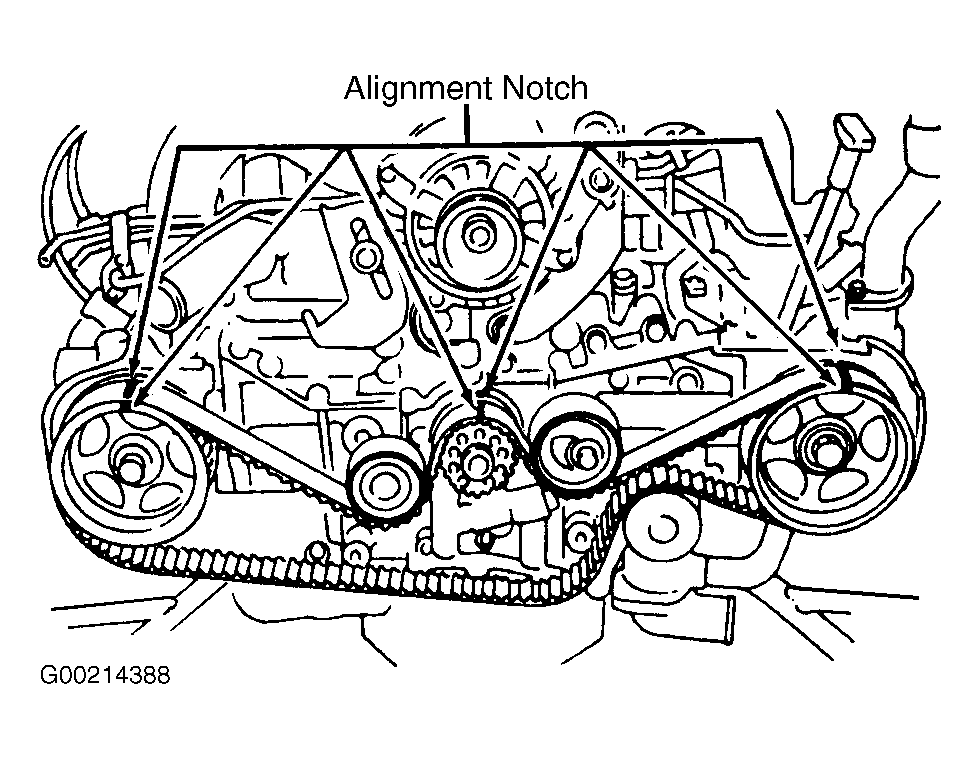
The serpentine belt, also known as the accessory drive belt, is a critical component in your 2012 Subaru Forester. It's responsible for powering several essential systems, including the alternator, power steering pump, air conditioning compressor, and sometimes the water pump (though on the Forester, the water pump is usually timing belt-driven). Understanding the serpentine belt diagram is crucial for proper maintenance, troubleshooting, and repair. Without a properly functioning serpentine belt, you could be stranded with a dead battery, loss of power steering, or a non-functional AC system. This guide will walk you through understanding the diagram, its components, and how to use it for practical purposes.
Purpose of the Serpentine Belt Diagram
The diagram serves several vital purposes:
- Repair and Replacement: Knowing the exact routing of the belt is essential when replacing a worn or damaged belt. Incorrect routing can lead to system failure and potential engine damage.
- Troubleshooting: A visual reference helps diagnose issues like belt slippage, squealing, or component failure. By comparing the actual belt path to the diagram, you can quickly identify misalignment or incorrect installation.
- Preventative Maintenance: The diagram helps you inspect the belt's condition and ensure it's properly tensioned. Regular inspection can prevent unexpected breakdowns.
- Understanding System Interdependencies: The diagram illustrates how various engine accessories are interconnected and rely on the serpentine belt for operation.
Key Specs and Main Parts
Let's break down the key components involved in the serpentine belt system of a 2012 Subaru Forester:
- Serpentine Belt: The main component, a continuous rubber belt with multiple ribs that transmit power to the accessories. It's designed to be durable but will eventually wear down and need replacement.
- Crankshaft Pulley (Harmonic Balancer): Connected directly to the engine's crankshaft, this pulley drives the serpentine belt. Its size and location are fixed.
- Alternator Pulley: The alternator converts mechanical energy into electrical energy to charge the battery and power electrical components.
- Power Steering Pump Pulley: This pulley drives the power steering pump, which provides hydraulic assistance for steering.
- Air Conditioning Compressor Pulley: Engages when the AC is turned on, driving the compressor to circulate refrigerant.
- Tensioner Pulley: This spring-loaded pulley maintains proper tension on the serpentine belt, preventing slippage and premature wear. It’s a critical component.
- Idler Pulley(s): Smooth pulleys that guide the belt around the various accessories and ensure proper wrap angle (the amount of contact the belt makes with each pulley).
The 2012 Forester typically uses a single serpentine belt to drive all these accessories. Variations may exist depending on specific trim levels and options (e.g., a Forester with or without air conditioning).
Symbols and Diagram Interpretation
Serpentine belt diagrams usually employ standardized symbols and conventions:
- Solid Lines: Represent the belt itself and its routing around the pulleys. The thickness of the line doesn't necessarily indicate the belt's actual thickness but rather its path.
- Circles/Disks: Represent the pulleys. They're often labeled with abbreviations indicating the component they belong to (e.g., ALT for alternator, P/S for power steering).
- Arrows: Indicate the direction of rotation for each pulley. Knowing the direction is crucial for understanding how the belt transmits power.
- Tensioner Symbol: The tensioner pulley is often depicted with a spring or an arrow indicating its direction of movement to maintain belt tension.
- Smooth Pulleys vs. Grooved Pulleys: Smooth pulleys (idler pulleys) are typically shown without grooves, while pulleys driving accessories have grooved surfaces where the belt ribs make contact.
The diagram provides a top-down or slightly angled view of the engine, focusing specifically on the serpentine belt's path. It's not a detailed mechanical drawing of the engine itself, but rather a simplified representation to aid in belt routing and troubleshooting.
How It Works
The engine's crankshaft, via the crankshaft pulley (harmonic balancer), provides the rotational force that drives the entire serpentine belt system. The belt wraps around the crankshaft pulley and then snakes its way around the other accessory pulleys, transferring power to each component. The tensioner pulley ensures that the belt remains taut, preventing slippage and maximizing power transfer. Without proper tension, the belt will slip, leading to reduced performance or complete failure of the accessories. The belt's path is carefully designed to provide adequate wrap angle on each pulley, ensuring sufficient friction for effective power transmission.
Think of it like a series of gears, but instead of meshing teeth, the belt relies on friction to transfer motion. The tensioner acts like an adjustable clutch, maintaining the optimal amount of friction between the belt and the pulleys.
Real-World Use: Basic Troubleshooting Tips
Here are some common issues and how the serpentine belt diagram can help:
- Squealing Noise: Often indicates a loose belt. Use the diagram to check the tensioner pulley and ensure it's functioning correctly. Inspect the belt for wear or damage.
- Belt Slippage: Evidenced by reduced accessory performance (e.g., weak AC, poor power steering). Verify the belt's routing matches the diagram. Look for worn or glazed pulleys.
- Belt Damage: Cracks, fraying, or missing ribs indicate the need for replacement. The diagram helps you confirm the correct belt size and routing before installation.
- Accessory Failure: If an accessory isn't working, check the serpentine belt and its routing. A broken or misrouted belt can prevent the accessory from functioning.
When troubleshooting, always start by visually inspecting the belt and pulleys. Look for signs of wear, damage, or misalignment. Compare the actual belt path to the diagram to ensure it's correct. A multimeter is useful for checking the alternator's output, and a pressure gauge can diagnose power steering pump issues, but the serpentine belt is often the first suspect.
Safety Considerations
Working on the serpentine belt system involves several safety risks:
- Moving Parts: The engine must be turned off and the key removed before working on the serpentine belt. Accidental engine starting can cause serious injury.
- Hot Surfaces: Allow the engine to cool down completely before working on the serpentine belt system. Exhaust manifolds and other engine components can be extremely hot.
- Spring-Loaded Tensioner: The tensioner pulley is spring-loaded and can snap back forcefully. Use the correct tools and techniques to release the tension safely. Wearing safety glasses is highly recommended.
- Sharp Edges: Be careful of sharp edges on pulleys and other engine components. Wear gloves to protect your hands.
Specifically, the tensioner pulley's spring mechanism stores a significant amount of energy. Releasing it without the proper tool or technique can result in serious injury. Refer to the service manual for your 2012 Forester for detailed instructions on how to safely release the tensioner.
Always disconnect the negative battery cable before working on any electrical components in the engine bay. This prevents accidental shorts and protects you from electrical shock.
Remember, if you're not comfortable working on the serpentine belt system yourself, it's best to consult a qualified mechanic. Improper installation or maintenance can lead to further damage and potential safety hazards.
We have the 2012 Subaru Forester Serpentine Belt Diagram file available for download. Having this diagram will be beneficial for any of the work you may need to do.