
2013 Ford Explorer Serpentine Belt Diagram
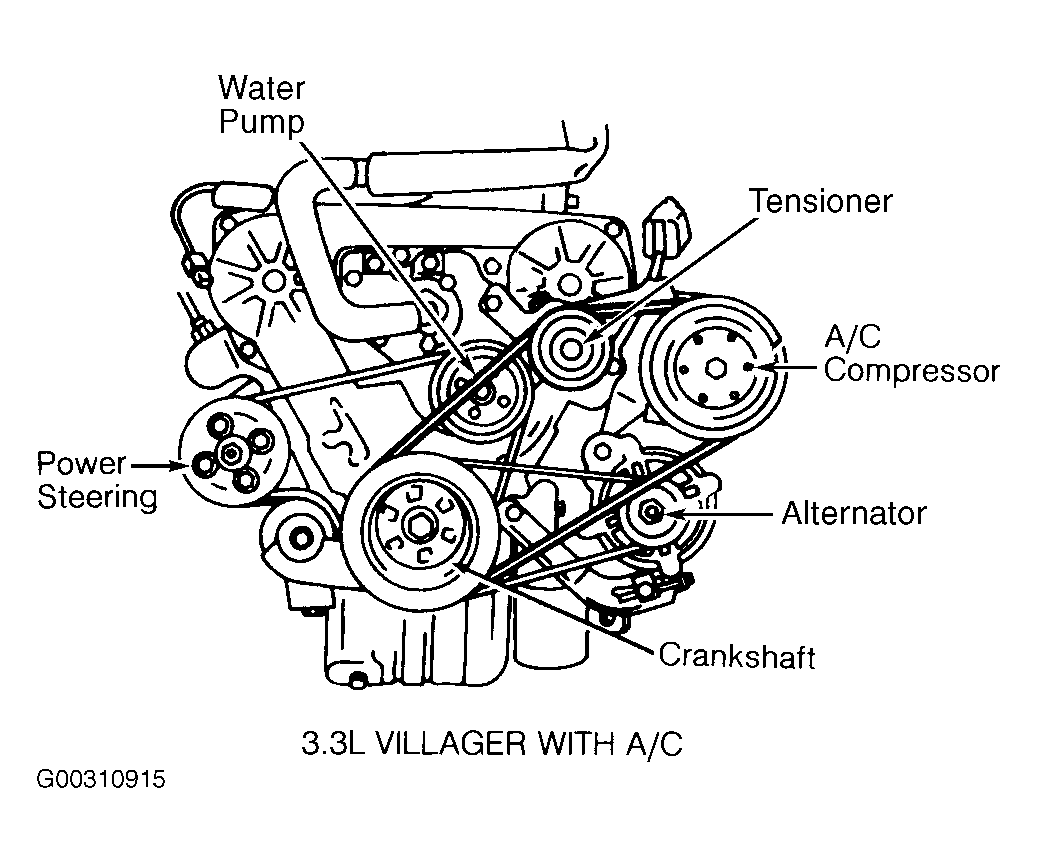
If you're the kind of car owner who likes to get under the hood and tackle your own repairs, or if you're simply interested in learning more about how your 2013 Ford Explorer works, understanding the serpentine belt system is crucial. This article will provide a detailed look at the 2013 Ford Explorer serpentine belt diagram, explaining its purpose, components, operation, and troubleshooting tips. Think of this as your expert guide to navigating this often-overlooked but vitally important part of your vehicle.
Purpose of the Serpentine Belt Diagram
The serpentine belt diagram is essentially a roadmap for the serpentine belt. Its primary purpose is to show the routing of the serpentine belt around various engine components. This is invaluable for several reasons:
- Replacement: When the serpentine belt needs replacing (due to wear, cracking, or damage), the diagram ensures you install the new belt correctly. Improper routing can lead to serious engine damage.
- Troubleshooting: Identifying the path of the belt can help you pinpoint the source of squealing noises, which often indicate a worn belt, misaligned pulleys, or a failing component driven by the belt.
- Component Identification: The diagram clearly labels each component that the serpentine belt interacts with, allowing you to familiarize yourself with the engine's layout and identify potential issues.
- Learning: Even if you're not currently experiencing problems, studying the diagram is a great way to learn about the various systems powered by the engine, such as the alternator, power steering pump, and air conditioning compressor.
Having access to this diagram can save you time, money, and potential headaches down the road. Speaking of which, we have the 2013 Ford Explorer Serpentine Belt Diagram file available for download, so you can easily reference it while working on your vehicle.
Key Specs and Main Parts
The 2013 Ford Explorer could come with different engines. The 3.5L V6 (naturally aspirated) and the 2.0L EcoBoost I4 (turbocharged) were common options. The serpentine belt configuration will vary slightly depending on the engine. Therefore, before using *any* diagram, double-check that it matches *your specific* engine configuration. A diagram for a 3.5L engine may not be accurate for a 2.0L engine, and vice versa.
Here are the main components that the serpentine belt typically drives:
- Crankshaft Pulley: The heart of the system, driven directly by the engine's crankshaft. It transfers rotational energy to the serpentine belt.
- Alternator: Generates electrical power to charge the battery and run electrical components while the engine is running.
- Power Steering Pump: Provides hydraulic pressure to assist in steering, making it easier to turn the wheel.
- Air Conditioning (A/C) Compressor: Compresses refrigerant to cool the cabin air.
- Idler Pulley(s): Smooth, non-driven pulleys that guide the belt along its desired path and prevent it from rubbing against other components.
- Tensioner Pulley: A spring-loaded pulley that maintains proper tension on the serpentine belt. This is critical for efficient power transfer and preventing slippage. The tensioner pulley is a key part, and its proper function is essential for the belt's performance.
Understanding the Symbols
Serpentine belt diagrams typically use various symbols to convey information. Here's a breakdown of common symbols you might encounter:
- Solid Line: Represents the serpentine belt itself. The thickness of the line may vary but generally indicates the belt's routing path.
- Dashed Line: Sometimes used to indicate the back of the belt (the side that doesn't contact the pulleys) or areas where the belt passes behind other components, to prevent confusion.
- Arrows: Indicate the direction of belt rotation. These are crucial for understanding how each component is driven.
- Circles: Represent pulleys. The size may indicate the relative size of the pulley. Labels (e.g., ALT, P/S, A/C) identify the component associated with each pulley.
- Squares/Rectangles: May represent other engine components or mounting points.
Color coding is not commonly used in serpentine belt diagrams, but if present, it will usually be explained in a legend accompanying the diagram.
How It Works
The serpentine belt system operates on a simple principle: rotational energy from the engine's crankshaft is transferred to various accessories via the belt. The crankshaft pulley turns the serpentine belt, which then drives the pulleys of the alternator, power steering pump, A/C compressor, and other components. The tensioner pulley is crucial because it maintains the correct amount of tension on the belt. Too little tension, and the belt will slip, resulting in reduced performance and potential damage. Too much tension, and it can prematurely wear out the belt and the bearings of the driven components.
The routing of the belt is designed to maximize contact with each pulley, ensuring efficient power transfer. The idler pulleys help to guide the belt and prevent it from rubbing against other components, extending its lifespan.
Real-World Use: Troubleshooting Tips
Here are some common problems related to the serpentine belt and how the diagram can help you troubleshoot them:
- Squealing Noise: A squealing noise, especially when the engine is first started or under load (e.g., turning the steering wheel), often indicates a slipping belt. Use the diagram to inspect the belt for wear, cracks, or glazing. Also, check the tensioner pulley to ensure it's functioning properly. A weak tensioner spring can cause slippage.
- Cracked or Damaged Belt: Visually inspect the belt for cracks, fraying, or missing chunks. If you find any damage, replace the belt immediately, using the diagram to ensure proper routing.
- Component Failure: If a component driven by the serpentine belt (e.g., the alternator) fails, it can put excessive strain on the belt, leading to premature wear or breakage. Use the diagram to identify the component and its location for easier inspection and replacement.
- Misalignment: Misaligned pulleys can cause the belt to wear unevenly and eventually fail. Use a straightedge to check the alignment of the pulleys, referring to the diagram to ensure they are properly positioned.
When troubleshooting, remember to always disconnect the negative battery terminal before working on the serpentine belt system to prevent electrical shocks.
Safety Considerations
The serpentine belt system involves moving parts and potentially hazardous components. Always exercise caution when working on this system. Here are some key safety tips:
- Disconnect the Battery: As mentioned, disconnect the negative battery terminal to prevent electrical shocks.
- Hot Engine: Allow the engine to cool completely before working on the serpentine belt system. Contact with hot engine components can cause burns.
- Moving Parts: Never attempt to inspect or adjust the serpentine belt while the engine is running. The moving belt and pulleys can cause serious injury.
- Tensioner Tool: Use the correct tool to release the tension on the belt before removing it. Improperly releasing the tension can cause injury.
- Eye Protection: Wear safety glasses to protect your eyes from debris.
- Gloves: Wear gloves to protect your hands from dirt, grease, and sharp edges.
Specifically, be extremely careful around the crankshaft pulley when the engine is running. Its speed and power make it a major hazard.
By understanding the 2013 Ford Explorer serpentine belt diagram, you can gain valuable insights into your vehicle's engine and perform basic maintenance and repairs. Remember to always prioritize safety and consult a qualified mechanic if you're unsure about any procedure. Good luck!
To reiterate, we have the complete 2013 Ford Explorer Serpentine Belt Diagram file available for download. It includes all the necessary details for both the 3.5L V6 and the 2.0L EcoBoost I4 engines.